Major Project to Boost Carbon Removal in Oman: Key Opportunities for Investors and Businesses
MUSCAT, JUNE 9 — Trufud Oman, a private-sector firm dedicated to sustainable agriculture, food security, and climate-positive investments, has launched a major agricultural and environmental initiative in Hanfit, Thamrait. The project aims to showcase how commercial farming can effectively balance food production, environmental restoration, and carbon management.
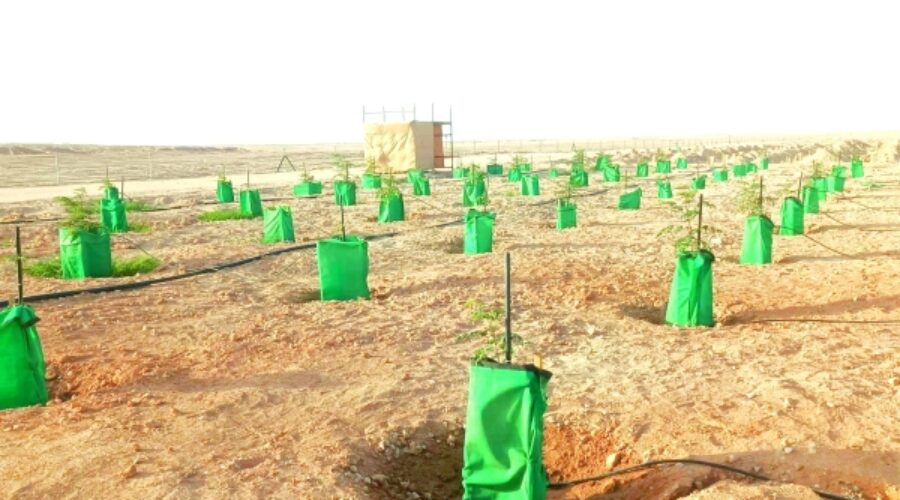
Covering approximately 10.5 million square meters (1,050 hectares), the initiative will integrate large-scale moringa cultivation with desert greening, carbon sequestration, renewable-energy-powered irrigation, and export-driven agricultural production. This positions the project as one of the largest integrated climate-smart agriculture efforts underway in Oman.
Affiliated with Al Adrak Trading & Development, Trufud Oman plans to cultivate nearly 15 million moringa trees. These will be supported by strategically planted subabul (Leucaena leucocephala), a fast-growing, nitrogen-fixing species used primarily as windbreaks around the moringa farms.
Richard Sathish Sequeira, Deputy General Manager – Facility Management at Al Adrak Trading & Contracting, described the initiative as a pioneering model that aligns commercial agriculture with environmental responsibility. “This project demonstrates that agriculture can be a powerful tool not only for food production but also for environmental restoration, carbon removal, and sustainable economic development,” he said. “Our goal is to establish a commercially viable agricultural ecosystem that boosts Oman’s food security while delivering measurable environmental benefits.”
The Wilayat of Thamrait in Dhofar Governorate was selected due to its advantageous combination of available land, favorable climate, abundant solar energy, and access to groundwater—making it ideal for large-scale cultivation in arid conditions.
Irrigation will utilize borewell water powered by solar energy, minimizing reliance on conventional energy sources and enhancing the project’s sustainability.
The primary commercial output will be high-value moringa products, including organic moringa oil and nutritional moringa powder for export markets in North America, Europe, and Asia. Trufud Oman anticipates that exports could generate annual revenues between RO 4 million and RO 5 million once fully matured.
Beyond commercial prospects, the project is expected to deliver significant environmental benefits. The planned plantation of approximately 15 million moringa trees is projected to absorb over 400,000 tonnes of carbon dioxide annually, while enhancing biodiversity, restoring soil health, and controlling erosion.
Sequeira emphasized that the project is designed to create a synergy between economic returns and environmental outcomes. “In addition to supporting agricultural production, the plantations will rehabilitate degraded land, improve soil fertility, and establish long-term carbon assets,” he noted.
The initiative also taps into the emerging voluntary carbon market, where verified carbon sequestration can generate tradable credits. Trufud intends to develop measurable carbon-removal assets that could provide an additional revenue stream and support Oman’s climate goals.
The project’s development phase is expected to last about 36 months, with commercial moringa production starting early in the plantation cycle.
Looking ahead, Sequeira highlighted a broader vision: “Our aim is to integrate agriculture, environmental restoration, and green economic development into a sustainable model that meaningfully contributes to Oman’s future. By combining food security, desert greening, and carbon sequestration within one project, Oman can position itself as a regional leader in climate-smart agriculture and sustainable investment.”
تحلیل ویژه از عمانت | بازار عمان را کشف کنید
Trufud Oman’s large-scale, climate-smart agricultural project in Dhofar presents a groundbreaking model for sustainable agribusiness that integrates food security, environmental restoration, and carbon management. For businesses and investors, this initiative signals major opportunities in export-driven high-value moringa products and emerging carbon credit markets, while positioning Oman as a regional leader in green investment. Smart entrepreneurs should consider aligning ventures with sustainability and leveraging renewable energy and carbon sequestration to tap into global climate-focused economic trends.