S&P Assigns Inaugural ‘BBB-‘ Global Issuer Rating to OQEP: Implications for Investors and Business Growth in Oman
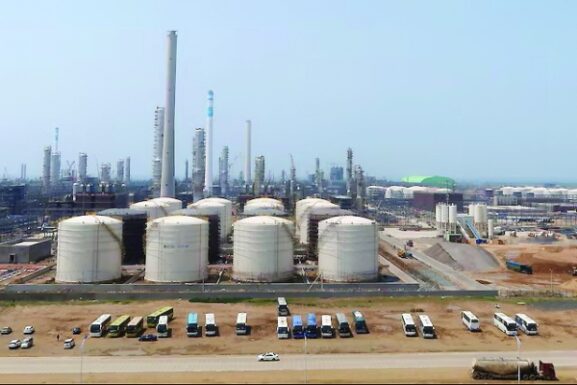
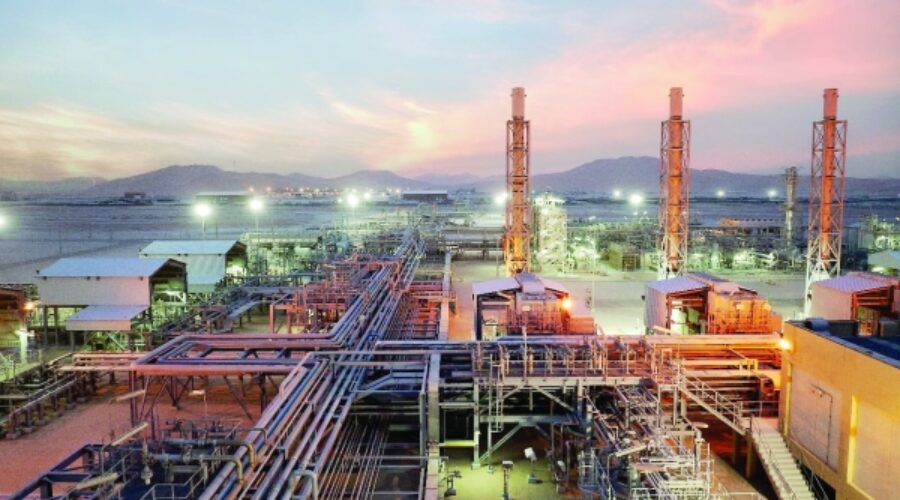
مسقط: OQ Exploration & Production SAOG (OQEP), the upstream division of Oman’s integrated energy firm OQ, has received its first global credit rating. S&P Global Ratings has assigned OQEP a ‘BBB-‘ long-term issuer credit rating and a ‘gcAA-‘ regional scale rating for the Gulf Cooperation Council (GCC), both with a Stable outlook.
This inaugural investment-grade rating represents a significant achievement for OQEP as it follows their listing on the Muscat Stock Exchange in late 2024. The rating validates the company’s financial stability and enhances its reputation among international investors and lenders.
According to S&P, the global rating reflects OQEP’s status as a key subsidiary of state-owned OQ SAOC, which holds a 75% stake in the company. The ratings agency highlighted that OQEP contributes between 45% and 60% of the OQ Group’s reported EBITDA and is essential in generating the cash flows that underpin the group’s strategic shift toward lower-carbon initiatives.
S&P noted that OQEP’s creditworthiness aligns with OQ’s ‘bbb-‘ group credit profile, emphasizing the firm’s strategic and operational integration within the larger OQ Group.
The agency praised OQEP’s robust operational fundamentals, including its preferential rights to new upstream blocks as a favored partner of the Omani government, an 11-year proved and probable (2P) reserve life as of the end of 2025, and long-term Exploration and Production Sharing Agreements (EPSAs) that cover approximately 90% of its production.
These EPSAs enable OQEP to recover exploration and development costs before sharing profits with the government, incorporating deferred cost-recovery mechanisms during periods of reduced oil prices or output. Notably, the contracts incur no royalty payments, and the government handles income tax for its share of hydrocarbon production, bolstering profitability and cash-flow stability.
S&P also highlighted OQEP’s prudent financial policy as a credit strength. The company aims to maintain a net debt-to-EBITDA ratio below 1.0 times under standard market conditions, with a maximum of 1.5 times even under conservative oil price assumptions of $55 per barrel. The agency anticipates that these metrics will remain well within targets through 2026 and 2027, despite potential fluctuations in global crude markets.
Since its inception in 2009, OQEP has more than tripled its production through a mix of organic growth, acquisitions, and participation in the Omani government’s “back-in rights” program, allowing it to acquire stakes in proven upstream projects at historical costs.
However, S&P indicated that OQEP’s business profile is limited by its concentration in Oman, its mid-sized operational scale, and its vulnerability to the cyclical nature of the hydrocarbon industry. By the end of 2025, the company reported a working-interest production of 224,000 barrels of oil equivalent per day and 2P reserves of 0.9 billion barrels of oil equivalent.
Additionally, the agency noted that Oman’s strategic export infrastructure contributes positively. Unlike some Gulf producers, Omani crude exports do not depend on the Strait of Hormuz, with oil primarily shipped via Mina Al Fahal on the Arabian Sea. This arrangement has reduced the country’s vulnerability to maritime disruptions during recent regional tensions, further strengthening the resilience of its hydrocarbon exports.
تحلیل ویژه از عمانت | بازار عمان را کشف کنید
OQ Exploration & Production’s inaugural investment-grade credit rating from S&P signals a pivotal moment for businesses in Oman, enhancing the country’s international investment appeal. This development opens فرصتهایی برای سرمایهگذاران to engage with a more secure and financially robust energy sector while also presenting risks tied to market volatility and dependence on hydrocarbon revenues. Savvy entrepreneurs should focus on diversifying investments in renewable sectors and other emergent industries to mitigate risks associated with oil price fluctuations and leverage potential growth in low-carbon initiatives.