Global Economic Slowdown Warned by IMF: What Investors and Businesses in Oman Need to Know
The International Monetary Fund (IMF) has issued a stark warning that the global economy is expected to slow significantly in 2026, following disruptions in energy supply chains and a resurgence of inflation triggered by the ongoing war with Iran.
The IMF’s updated World Economic Outlook highlights the severe economic consequences stemming from the United States and Israel’s decision this year to conduct attacks on Iran. These actions provoked Iranian retaliatory strikes on energy infrastructure within the region, further destabilizing a world economy still recovering from the COVID-19 pandemic and the conflict in Ukraine.
Global economic growth is forecast to decline to 3% in 2026, down from 3.5% last year. This projection is slightly lower than the IMF’s April estimate of 3.1%, reflecting the prolonged impact of the conflict.
The outlook carries considerable uncertainty. Recent attacks on tankers navigating the Strait of Hormuz have raised questions about the stability of the recent ceasefire between the U.S. and Iran. Additionally, the U.S. government recently revoked a waiver that had permitted increased sales of Iranian oil on the global market. Amid these tensions, former U.S. President Donald Trump expressed skepticism over the truce, stating at a NATO meeting in Turkey that, “I think it’s over.”
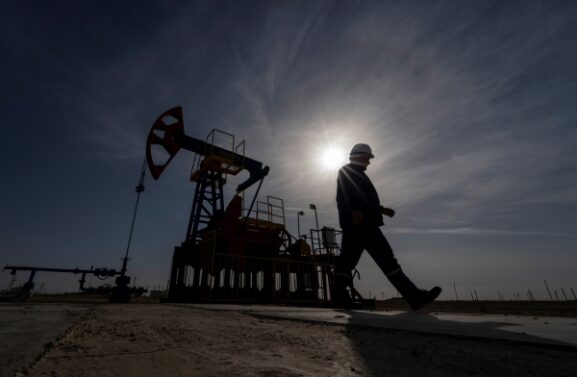
The Strait of Hormuz has experienced months of disrupted shipping traffic, driving up energy prices and consequently pushing inflation higher worldwide. The IMF projects global inflation to rise to 4.7% in 2026, up from 4.1% in 2025, due to sustained high commodity prices.
Despite the bleak outlook for 2026, the IMF notes that the global economy has demonstrated resilience. Economic growth in the first quarter of the year surpassed expectations, supported by renewable energy adoption and increased investments in artificial intelligence.
“The global economy as a whole has, so far, weathered the shock from the war better than feared,” the IMF economists commented in their report.
The Middle East’s oil-producing nations have borne the brunt of the conflict, facing sharp economic contractions this year. However, Iran’s outlook has seen a slight improvement since April, benefiting from a temporary easing of U.S. sanctions on its oil exports. That reprieve ended this week when the U.S. revoked a 60-day license allowing Iranian energy product sales, following attacks on oil tankers in the Strait of Hormuz.
Energy-consuming countries are also confronting growth slowdowns tied to high oil prices. India’s growth is expected to decline to 6.4% in 2026 from 7.7% in 2025, while China’s output is projected to fall to 4.6% from 5% last year.
The U.S. growth forecast remains stable at 2.3%, buoyed by strong oil exports and technology investment. Although elevated gas prices have raised political concerns in the U.S., Federal Reserve Chair Kevin Warsh indicated last week that inflation risks have moderated since he assumed office. Speaking at a European event, Warsh reaffirmed his commitment to achieving price stability after a prolonged period during which the central bank struggled to meet its 2% inflation target.
The IMF urges policymakers to maintain a strong focus on price stability as they navigate the complexities posed by volatile commodity markets and the rising demand for AI technologies.
تم نشر هذا التقرير أصلا في صحيفة نيويورك تايمز.
تحليل خاص من عمانت | تصفح سوق عُمان
The IMF’s warning of a global economic slowdown in 2026 driven by Middle East energy disruptions signals heightened risks for Oman’s energy-dependent economy, emphasizing the need for diversification and resilience planning. ينبغي على المستثمرين الأذكياء أن يأخذوا بعين الاعتبار opportunities in renewable energy and technology sectors as these areas show growth potential amid geopolitical uncertainties and rising inflation.