Drop in International Passengers at Muscat Airport in March: What It Means for Oman’s Travel and Business Sectors
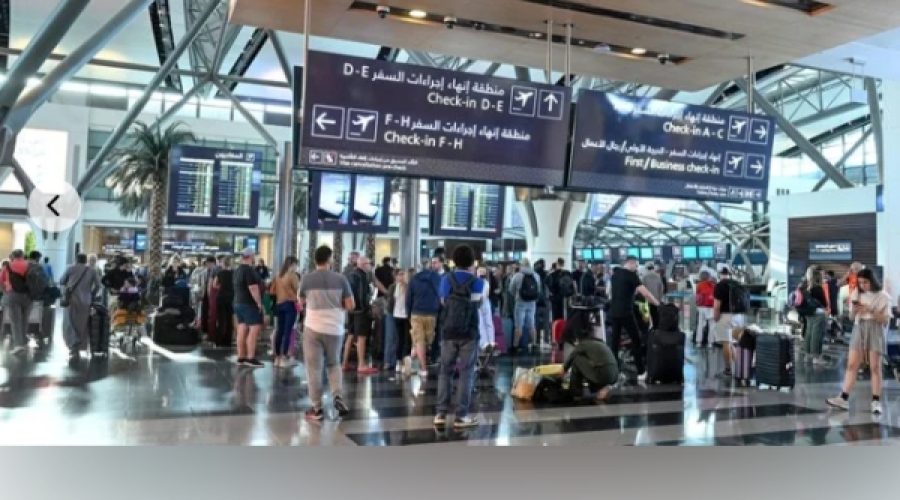
Muscat: Muscat International Airport experienced a decline in international passenger traffic in March 2026 compared to earlier months this year.
According to the National Center for Statistics and Information (NCSI), the number of international passengers arriving dropped from 1,189,938 in January to 939,921 in February, and further decreased to 728,588 in March.
Overall, international passenger traffic at the airport for the first three months of 2026 fell by 2.4 percent, totaling 2,857,817 passengers, down from 2,929,495 during the same period in 2025.
Flight operations also saw a reduction, with the number of flights decreasing from 7,594 in January to 5,515 in March.
While Oman’s airspace, airports, and airlines have not been directly affected by the ongoing conflict in Iran, services to certain regional destinations have been suspended.
Eng Said bin Hamoud al Maawali, Minister of Transport, Communications, and Information Technology (MTCIT), recently told the Oman Observer that the current regional tensions will impact national carriers Oman Air and SalamAir. He highlighted that the aviation sector is undergoing changes due to rising fuel costs and intensified competition for the remaining passengers traveling to the region.
He emphasized, “We need to ensure top-notch service quality while carefully managing costs.”
Special Analysis by Omanet | Navigate Oman’s Market
The decline in international passengers and flights at Muscat Airport highlights the immediate challenges posed by regional instability and rising fuel costs to Oman’s aviation sector. For businesses, this signals the need to adapt to reduced travel demand and explore alternative revenue streams, while investors and entrepreneurs should consider innovations in cost control and service quality enhancements to stay competitive amid intensified regional competition. Proactive strategic planning will be crucial to weather the turbulence and seize emerging market opportunities as the region stabilizes.