Oil and Stock Market Decline: What Investors and Business Owners Need to Know Now
Hong Kong – Oil prices declined alongside stock markets on Wednesday as investors evaluated the prospects of US-Iran peace talks. This followed President Donald Trump’s decision to extend a ceasefire with Iran at the last minute, while maintaining the blockade of the Strait of Hormuz.
U.S. stock futures rose and the dollar remained steady after Trump announced he would indefinitely extend the ceasefire, a move that helped sustain positive market sentiment. However, with the Strait of Hormuz still closed, oil prices remained close to the $100 per barrel mark.
The two-week truce was nearing its end when Trump agreed to postpone the deadline indefinitely. This extension came in response to a request from mediator Pakistan and was intended to give Tehran’s divided leadership additional time to develop a proposal.
Earlier, Trump had signaled he would not prolong the ceasefire and had warned he would resume bombing Iran once the truce expired.
Both major oil contracts experienced slight declines amid volatile trading, after having surged approximately three percent on Tuesday.
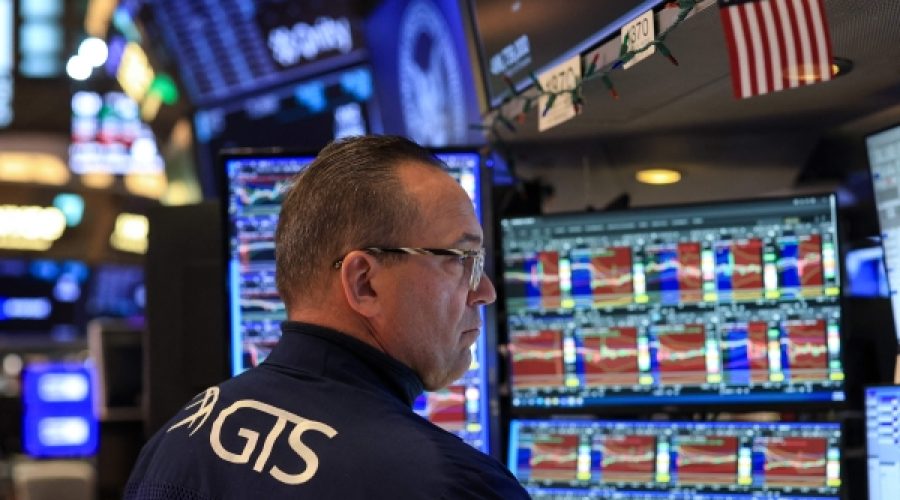
Equity markets were largely down following another weak day on Wall Street. Markets in Hong Kong, Sydney, Singapore, Seoul, and Wellington fell, while Shanghai remained flat and Tokyo, Taipei, and Wellington saw gains.
Traders have faced challenges in determining market direction this week due to conflicting signals from Tehran. On Friday, Iran indicated it would allow ships through the Strait of Hormuz—effectively closed since the conflict began on February 28—only to retract that statement the next day, citing the ongoing US blockade and the seizure of a vessel.
Trump has accused Tehran of breaching the ceasefire by harassing ships navigating the waterway, which handles about one-fifth of the world’s oil supply.
These developments have caused crude oil prices to fluctuate sharply but remain under $100. Meanwhile, equity markets have shown more stability amid enduring optimism that an agreement will eventually end the seven-week conflict, which has adversely affected the global economy.
Fawad Razaqzada, an analyst at FOREX.com, noted, “With markets surging amid optimism that the war is soon going to end, and the Hormuz Strait to open, markets are now more cautious. If there’s no deal, I would imagine that oil prices could climb back above $100, which would likely invite pressure on equities.”
Investors are also closely monitoring the Senate confirmation hearings for Kevin Warsh, Trump’s nominee to succeed Jerome Powell as Federal Reserve Chair when Powell’s term ends next month.
During his hearing, Warsh emphasized his independence from the president, assuring lawmakers he would not be influenced by Trump. He stressed his commitment to maintaining the Federal Reserve’s autonomy, stating he would “absolutely not” act as a “puppet” for the president.
Since returning to office last year, Trump has harshly criticized Powell for not lowering interest rates more aggressively and expressed disappointment on Tuesday, saying he expects the new Fed chair to swiftly reduce borrowing costs.
Special Analysis by Omanet | Navigate Oman’s Market
The sustained closure of the Strait of Hormuz amid US-Iran tensions poses a strategic risk to Oman’s energy exports and supply chains, with oil prices hovering near $100 potentially increasing regional cost pressures. However, the indefinite extension of the ceasefire offers a window of cautious optimism for stability, presenting opportunities for businesses to strengthen resilience and for investors to monitor geopolitical developments closely. Smart investors should remain alert to shifts in the conflict’s dynamics, as any escalation could sharply impact oil markets and economic conditions in Oman.