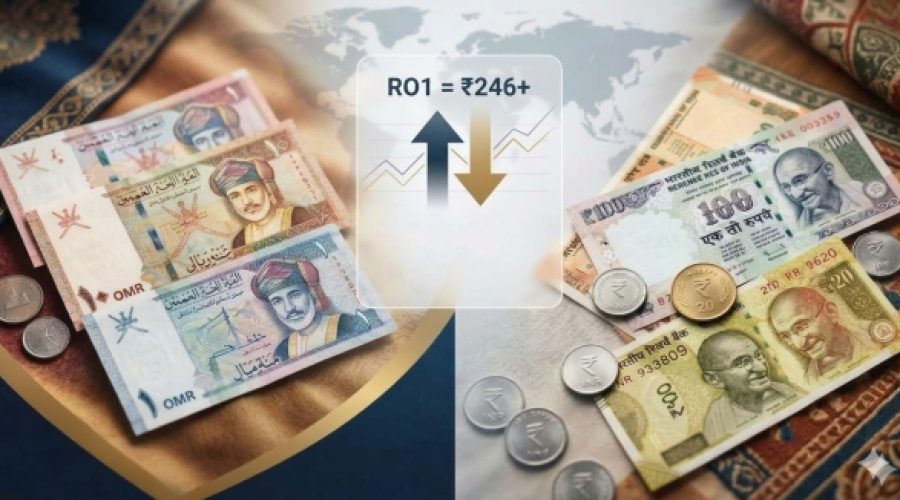
Indian Rupee Hits Record Low Against Omani Rial: Implications for Investors and Businesses in Oman
Muscat: On April 30, 2026, the Indian rupee plummeted to a record low of over Rs 95 per dollar, hitting Rs 95.30, as global crude oil prices surged amid the ongoing US-Iran conflict and the closure of the Strait of Hormuz.
The decline of the rupee is largely attributed to rising energy costs and supply chain disruptions resulting from heightened geopolitical tensions. In Oman, money exchanges are currently offering around Rs 246.35 per Omani rial.
Demand for the US dollar is intensifying, further pressuring the Indian rupee. Financial expert Advocate R. Madhusoodanan, based in Oman, noted that increased shipping costs and war-related premiums have driven up India’s import bill.
Additionally, recent industrial production data has reached a five-month low, reflecting domestic challenges. However, the Reserve Bank of India maintains a robust foreign exchange reserve of $703 billion, providing it the capacity to intervene in the foreign exchange market to stabilize the rupee.
With the ongoing conflict, the outlook for the Indian rupee remains precarious, and further declines could be on the horizon.
Special Analysis by Omanet | Navigate Oman’s Market
The recent decline of the Indian rupee, breaching Rs 95 per dollar amidst rising crude oil prices and geopolitical tensions, presents both risks and opportunities for businesses in Oman. Importing costs may increase, impacting profit margins for companies reliant on Indian goods, while heightened demand for US dollars may incentivize localized production to buffer against currency instability. Smart investors should consider diversifying into sectors less affected by currency fluctuations, and entrepreneurs could explore opportunities in local manufacturing or alternative supply chains to mitigate risks from global market disruptions.