“Oman-Philippines Labor Relations Strengthen: Implications for Business Growth and Workforce Development in Oman”
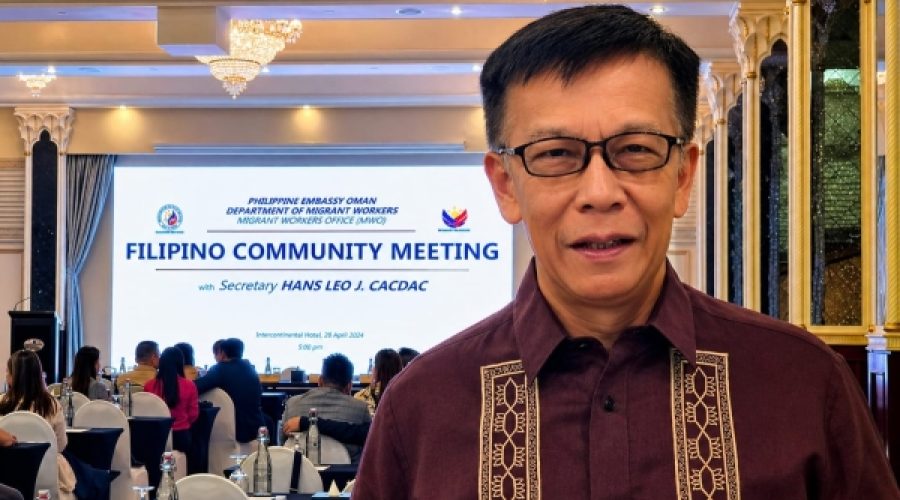
MUSCAT: Labour cooperation between the Sultanate of Oman and the Philippines is entering a more robust phase, driven by enhanced institutional collaboration, shared policy objectives, and a renewed emphasis on worker welfare and skills development, according to Hans Leo J. Cacdac, Secretary of the Department of Migrant Workers of the Philippines.
In an exclusive interview with the Observer during his visit to Muscat, Cacdac characterized the bilateral relationship as "very strong" and increasingly "dynamic." He noted the continuous dialogue between the two governments and close daily coordination through diplomatic and labour channels.
"This relationship is founded on consistent communication and goodwill. Daily, our migrant workers office and embassy liaise with the Omani government, particularly the Ministry of Labour," he said. "At the leadership level, there is clear acknowledgment of the support provided by the Omani side to Filipino workers."
Cacdac’s visit is part of ongoing high-level engagement between the two countries, which includes recent discussions with Dr. Mahad bin Said Baowain, Oman’s Minister of Labour, at regional forums such as the Global Labour Market Conference and the World Government Summit. The two nations have also collaborated closely within the Abu Dhabi Dialogue, where Oman recently transferred its chairmanship to the Philippines.
According to Cacdac, these engagements are yielding tangible results, particularly in strengthening labour governance frameworks and aligning bilateral priorities with broader regional initiatives. "We are in constant contact to enhance our labour cooperation measures, both bilaterally and through multilateral platforms," he stated.
A critical aspect of this partnership is Oman’s evolving policies to protect migrant workers. Cacdac highlighted Oman’s regulatory measures and leadership commitment to welfare as essential factors in building confidence among overseas Filipino workers (OFWs).
"His Majesty Sultan Haitham bin Tarik has consistently emphasized the importance of protection and welfare for all migrant workers in Oman," he noted, emphasizing the need to further strengthen these discussions.
Looking forward, both nations aim to deepen collaboration in areas such as welfare protection, social safeguards, and skills development. As the Philippines takes over the chairmanship of the Abu Dhabi Dialogue through 2028, it plans to advance an agenda that prioritizes upskilling initiatives and improved social protection systems, with Oman’s support deemed crucial.
"Upskilling is a key priority. We want to ensure that workers are not only protected but can also advance to higher-value roles through certification and training," Cacdac said. "This topic is being addressed at both the multilateral level and within our bilateral discussions with Oman."
The economic implications of labour mobility remain substantial, with remittances continuing to bolster Filipino households. Although Oman represents a smaller share compared to other Gulf nations, Cacdac emphasized the broader significance of overseas employment.
"Remittances are vital, particularly during periods of global uncertainty. Beyond financial contributions, returning workers bring back skills, knowledge, and experience—valuable social remittances," he explained.
He also mentioned strengthened reintegration programmes under President Ferdinand Marcos Jr.’s administration, focusing on recognizing skills gained abroad and facilitating re-employment in sectors such as healthcare and education. Filipino workers in Oman are appreciated for their adaptability, communication skills, and professionalism—traits that maintain demand despite shifting labour market conditions.
"Filipino workers are recognized for their quality service, effective communication, and willingness to exceed expectations," Cacdac stated. "These attributes foster long-term employability and mutual benefit."
Additionally, he underscored ongoing discussions about standardizing employment contracts to enhance transparency and mitigate disputes, alongside efforts to ensure fair compensation aligned with experience and skill levels.
Concluding his visit, Cacdac reaffirmed the Philippine government’s commitment to supporting its nationals in Oman, especially during challenging global economic conditions.
"We are here to support our workers, particularly in difficult times," he said. "Our aim is to ensure they receive comprehensive assistance from government programs and services, wherever they may be."
He added that the trajectory of Oman-Philippines labour relations reflects a mutual commitment to responsible migration governance, balancing economic needs with human development and a long-term partnership.
Special Analysis by Omanet | Navigate Oman’s Market
The deepening labour cooperation between Oman and the Philippines presents significant opportunities for businesses looking to enhance productivity through skilled migrant workers. Companies should capitalize on the increased focus on worker welfare and skills development, potentially boosting their competitive edge in a dynamic market. Smart investors and entrepreneurs should closely monitor these evolving regulatory frameworks and consider aligning their operations with the growing emphasis on transparent employment contracts and fair compensation, ensuring both compliance and talent retention.