Oil Prices Stabilize and Stock Divergence: Key Insights for Investors in Oman’s Market
Oil Prices Stabilize as Global Stocks Show Mixed Performance Amid Ongoing Middle East Tensions
Oil prices steadied, and global stock markets exhibited divergent trends on Friday amidst minimal holiday trading. Investors remained on alert for developments in the Middle East crisis and continued to evaluate corporate earnings reports.
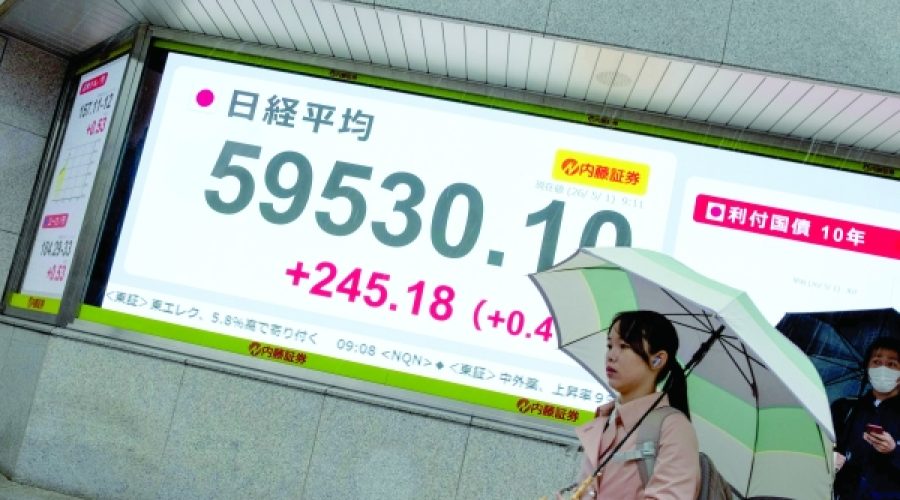
Many markets in Europe and Asia were closed in observance of the May 1 holiday, including significant exchanges in France, Germany, Hong Kong, and mainland China. Among the markets that remained open, Tokyo experienced a rise, while London recorded a decline, primarily due to NatWest, a British bank, which reported increased quarterly net profits but cautioned about worsening economic conditions.
The international oil benchmark, Brent, rose to approximately $111 per barrel following significant fluctuations on Thursday, driven by concerns over the potential resumption of hostilities in the Middle East. Investors remained apprehensive about the impasse between the U.S. and Iran, raising fears of a prolonged closure of the Strait of Hormuz, a vital route for one-fifth of the world’s oil supplies.
Matt Britzman, a senior equity analyst at Hargreaves Lansdown, remarked, "If oil stays in the $100-a-barrel range for an extended period, the broader economic costs will eventually become more pronounced." However, he added, "For now, earnings are the bigger fish, and markets are content to proceed with the current."
After a decline earlier in April due to reports of a potential U.S.-Iran ceasefire, crude oil prices have surged in recent weeks. Brent reached a four-year high exceeding $126 per barrel on Thursday, following a report from Axios indicating that former President Donald Trump would be briefed on possible military actions. This report heightened concerns after Trump suggested that the blockade of Iranian ports could endure for months.
The energy crisis triggered by the ongoing conflict has raised inflation worries, prompting major central banks to maintain interest rates while evaluating economic forecasts. The European Central Bank and the Bank of England both decided to keep rates steady on Thursday but hinted at potential increases in the future. Meanwhile, the U.S. Federal Reserve and the Bank of Japan also opted to leave borrowing costs unchanged this week.
On Wall Street, two key indices, the S&P 500 and the Nasdaq, concluded Thursday at new all-time highs, buoyed by optimism surrounding corporate earnings and resilient economic growth in the U.S. AJ Bell investment director Russ Mould noted, “The latest U.S. earnings season has demonstrated strength, which has helped avert significant losses in global markets despite the Iran conflict’s impact.”
Following a strong earnings report on Wednesday, Google’s parent company, Alphabet, saw its shares surge by 10 percent. After market closure on Thursday, Apple reported earnings that exceeded expectations, driven by robust iPhone demand.
In currency markets, the yen experienced a slight decline against the dollar after a previous surge, attributed to speculation about support from Japanese authorities. Officials had recently signaled concerns about the yen’s movement, indicating readiness to intervene if necessary.
Market Highlights:
- Brent North Sea Crude: UP 0.7% to $111.20 a barrel
- West Texas Intermediate: UP 0.3% at $105.39 a barrel
- London – FTSE 100: DOWN 0.6% at 10,313.70
- Tokyo – Nikkei 225: UP 0.4% at 59,513.12 (close)
- New York – Dow: UP 1.6% at 49,652.14 (close)
- Dollar/Yen: DOWN at 156.50 from 156.60
- Euro/Dollar: UP at $1.1742 from $1.1731
— AFP
Special Analysis by Omanet | Navigate Oman’s Market
With oil prices stabilizing around $111 per barrel amid geopolitical tensions, businesses in Oman must remain vigilant about potential supply disruptions that could inflate costs. The ongoing Middle East crisis presents both risks and opportunities, particularly for energy and logistics sectors looking to adapt to market fluctuations. Investors should consider diversifying their portfolios now, focusing on resilient industries or alternatives to fossil fuels, as an extended period of high oil prices could reshape economic landscapes.