War and Energy Shortages Shift Business Power: How China’s Growing Influence in Asia Impacts Your Investments
HONG KONG — As the conflict in Iran persists, China has strategically expanded its influence among fuel-scarce neighboring countries by offering to alleviate energy shortages while promoting its renewable energy technologies.
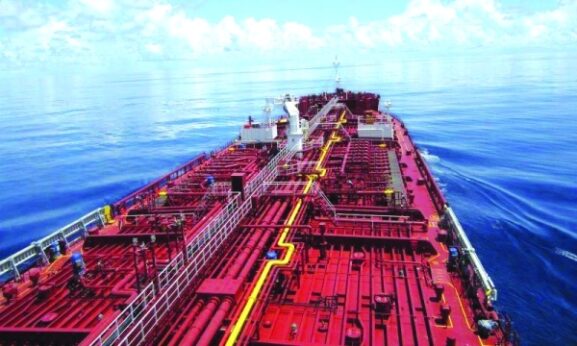
In the aftermath of U.S. and Israeli attacks on Iran and the closure of the Strait of Hormuz, China imposed a ban on oil-product exports, tightening supply for Asian nations reliant on its refineries for jet fuel, gasoline, and diesel.
Throughout Asia, governments have turned to Beijing for assistance in mitigating the war’s impact. Unlike other regional players, China approaches the situation from a position of strength. As the world’s largest crude oil importer, China has accrued substantial reserves, reduced its reliance on foreign oil over decades, and invested hundreds of billions of dollars into clean energy technologies.
Vietnam requested China’s help over an impending jet fuel shortage, while the Philippines urged Beijing not to curb fertilizer exports. After a recent visit to China, Australia’s foreign minister announced Beijing’s commitment to cooperate with Australian companies regarding jet fuel shipments.
These diplomatic efforts yielded Chinese assurances to support regional energy security and fostered commitments from several countries to enhance diplomatic ties and collaborate on future renewable energy initiatives, according to official statements. This diplomacy ensured continued Chinese fuel supplies, helping Asia avoid the worst-case scenarios initially feared at the war’s onset.
Since the conflict began, China has engaged in high-level talks with officials from the Philippines, Australia, Vietnam, Cambodia, Laos, Thailand, Myanmar, and Bangladesh.
China’s consistent stance is that it neither initiated the conflict nor desires the Strait of Hormuz to remain closed, while presenting itself as a champion of renewable and domestically sourced energy—contrasting with the fossil-fuel-centric policies of former U.S. President Donald Trump that expose much of the world to Middle East market volatility.
Michal Meidan, head of China energy research at the Oxford Institute for Energy Studies, observes, "China is stepping in cautiously to support its neighbors, using this as a soft-power tool to affirm it will support regional energy security, with the caveat that China’s priorities come first, thus laying a foundation for future green technology sales."
For years, China has leveraged its economic power and technological expertise through the Belt and Road Initiative, committing an estimated $1 trillion in loans and grants to infrastructure worldwide, primarily in developing countries. However, the Iran war has enabled China to expand its influence without the reputational risks associated with lending to heavily indebted nations.
Dan Wang, China director at Eurasia Group, notes, "Chinese officials recognize the backlash linked to the Belt and Road Initiative and view clean energy as a remedy to that negative image."
Amid the conflict’s first month, China continued fuel exports, with jet fuel shipments to Vietnam rising 34%, fertilizer exports to the Philippines up 33%, and diesel exports to the Philippines surging 187% in March compared to February. Nonetheless, experts caution against overinterpreting short-term export fluctuations.
Asian economies continue to suffer significant economic repercussions from the war, on a scale unseen since the COVID-19 pandemic disrupted global trade. Prolonged Strait of Hormuz closures could cause severe long-term damage, given Asia’s heavy dependence on Middle Eastern oil.
Still, selective Chinese fuel shipments have provided relief and illustrate how Beijing uses incentives in crises to foster goodwill, according to analysts and energy experts.
"China’s export ban was not absolute; it was selective, influenced greatly by diplomatic relations," explains Wang. Countries like Vietnam and Australia benefited due to improving ties with Beijing, receiving partial fuel supplies.
At times, China has coupled offers of assistance with political conditions. In March, as Taiwan scrambled for new energy sources, China’s Taiwan Affairs Office suggested that Taiwan would experience better resource security following peaceful reunification under Beijing’s governance—a pointed message, given Taiwan’s energy import dependence and the strait’s critical role in its oil transit.
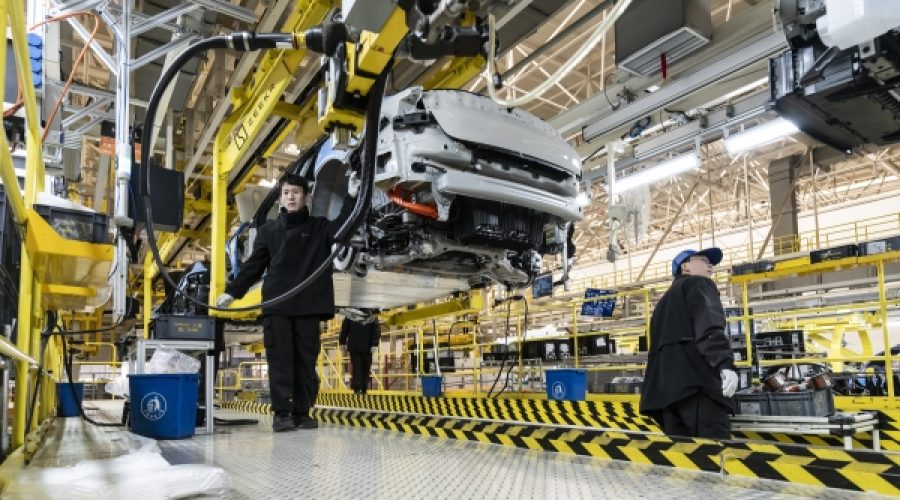
While China is not the only country aiding Asia during the energy crisis—Japan has pledged $10 billion to help Southeast Asian nations combat rising oil prices and support supply chains—it has uniquely capitalized on the situation to expand its renewable energy technology footprint across the region. China leads globally in manufacturing equipment for solar and wind farms, smart grids, and electric vehicles. Exporting these technologies supports China’s foreign trade, a vital growth driver amid its slowing domestic economy.
Erica Downs, senior research scholar at Columbia University’s Center on Global Energy Policy, states, "The conflict offers China a springboard to solidify its position as an energy powerhouse. Using renewable energy technology as either an incentive or leverage is highly advantageous."
In a pre-war opinion piece, Chinese state media heralded the emergence of China as an "energy powerhouse," strengthening its strategic position in great power competition while emphasizing resilience and self-sufficiency in energy, raw materials, critical minerals, and supply chains.
Wei Xiaowei, director of the International Cooperation Department at China’s National Energy Administration, highlighted China’s global clean energy projects shortly after the war began. Many, backed by Chinese state-owned enterprises, include wind farms in Kazakhstan and Montenegro, and solar plants in the UAE, Argentina, and Algeria.
The Middle East conflict has accelerated markets for China’s electric vehicles, solar panels, and other green technologies. Chinese solar panel exports more than doubled in March, and electric vehicle exports increased despite tariffs in several markets aimed at limiting their penetration.
Previously critical voices reproaching China’s overcapacity and low-priced exports have softened amid the ongoing energy crisis.
Downs comments, "Although many countries criticized China for flooding international markets with cheap goods, such criticism diminishes during a crisis when supplies are critical."
This article originally appeared in The New York Times.
Special Analysis by Omanet | Navigate Oman’s Market
China’s strategic use of its vast energy reserves and renewable technology amid the Iran war underscores a shift in regional energy dynamics, offering Oman an opportunity to leverage its geographic and resource strengths in diplomatic and energy cooperation with China. Smart investors should consider partnerships in clean energy infrastructure and technology, while businesses must navigate evolving trade flows influenced by China’s selective fuel exports and its growing soft power in Asia. This move signals a broader trend where energy security is increasingly linked to political alliances and green technology, positioning Oman to benefit from aligning with China’s energy transition ambitions.