Oman’s Mountains Become Prime Summer Escape as Extreme Heat Soars Above 40°C: Business Opportunities for Tourism and Hospitality Investors
MUSCAT: Each summer, as temperatures soar above 40°C across Oman’s plains and coastal regions, a quiet migration unfolds. Families pack their vehicles and head to higher ground — toward Al Jabal Al Akhdhar, Jabal Shams, and the mist-shrouded slopes of the Dhofar Highlands. Their aim is not merely to enjoy the scenery but to seek relief from the intense heat.
The science behind this natural respite is clear. Al Muathir al Kindi, an Omani geological explorer and PhD candidate, explains that temperatures drop with increasing altitude. This explains why Al Jabal Al Akhdhar and Jabal Shams experience cooler summers compared to the surrounding lowlands, offering a welcome break from extreme heat. A similar phenomenon occurs in the elevated areas of Dhofar, where altitude moderates the harsh desert climate.
Beyond cooling the air, these mountains play a crucial role in generating rainfall. When moisture-laden winds meet the steep slopes of the Al Hajar mountains, the air rises, cools, and condenses to form clouds and precipitation. These rains nourish wadis that carve through valleys and replenish underground aquifers. Al Muathir describes this as a complex natural reservoir system, shaped over millions of years.
This process is currently underway. The Meteorology Department at the Civil Aviation Authority has reported early cumulus cloud formation over the Al Hajar mountains, with scattered rainfall possible, sometimes accompanied by thunderstorms and active downdrafts. Additionally, low clouds and fog are increasing over parts of Dhofar’s coastal areas and nearby mountains, bringing light drizzle. On Sunday, rainfall was recorded in Samayil, Izki, along Al Dakhliyah road, and in the Wilayat of Al Rustaq — highlighting that Oman’s mountains are dynamic weather systems, not just scenic landscapes.
In Dhofar, the impact is even more pronounced. The southern escarpments of the Dhofar Highlands act as barriers to monsoon winds from the Arabian Sea. As these moisture-filled winds rise along the slopes, they cool and condense, giving rise to the annual khareef season. This transformation turns the hills into lush, mist-covered greenery that attracts visitors from throughout the region each summer.
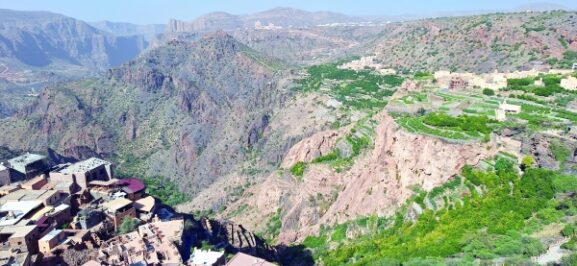
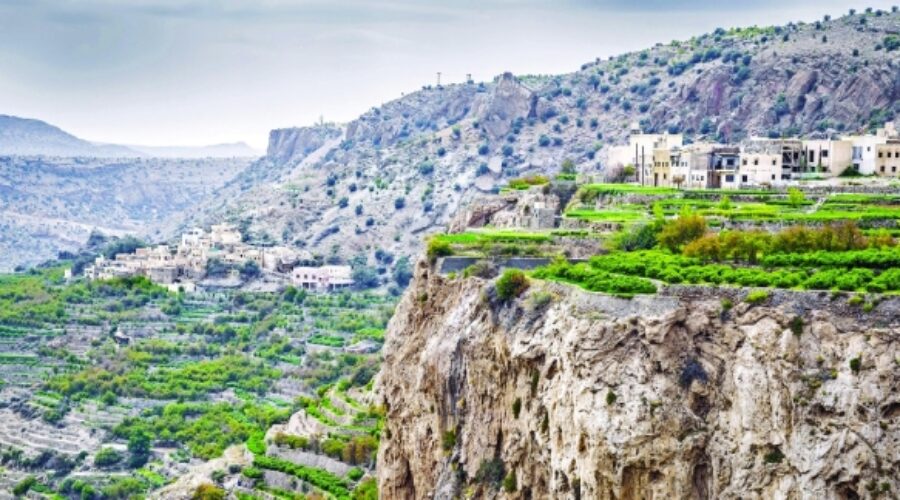
For visitors to Al Jabal Al Akhdhar, relief goes beyond cooler temperatures. Local resident Hamda al Sa’adi describes terraced farms cascading down steep slopes, rose gardens, and pomegranate orchards lining winding paths, alongside aflaj irrigation channels connecting villages. Life here is simple and deeply connected to the land. The cooler climate supports crops such as apricots, peaches, figs, and apples — varieties that cannot thrive in the hotter lowlands.
Visitor Said al Sayyadi, who trekked the 4.5-kilometre trail between Al Jabal Al Akhdhar villages, found more than a memorable hike. For him, the journey revealed how Omanis inhabit and shape their environment in harmony with its natural rhythms. The cool air, sweeping vistas, and balance between heritage and modest development underscore the profound influence of geography on culture.
Ultimately, Oman’s mountains are far more than passive backdrops. They regulate temperatures, draw rainfall from passing winds, store water underground, and sustain the communities along their slopes. Each summer, as the lowlands grow hotter, these mountains provide something invaluable and increasingly rare: natural, unhurried cool.
Special Analysis by Omanet | Navigate Oman’s Market
Oman’s mountainous regions, with their natural cooling effect and water-generating capacity, present strategic opportunities for eco-tourism and sustainable agriculture, attracting visitors and enabling cultivation of high-value crops like apricots and pomegranates. For businesses and investors, emphasizing climate-resilient ventures and heritage-focused tourism could capitalize on the growing demand for natural summer retreats, while also addressing the risks posed by increasing lowland heat. Smart entrepreneurs should consider integrating environmental harmony with development to leverage Oman’s unique geographic advantages sustainably.