RO 36 Million Livestock & Fish Feed Factory Opens: What It Means for Oman’s Agricultural and Aquaculture Businesses
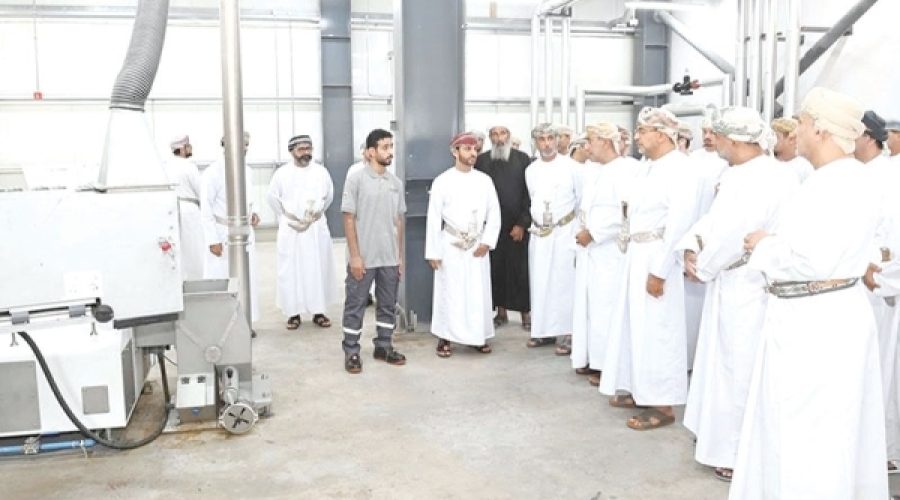
BARKA, DECEMBER 4 — The largest animal and aquatic feed factory in Oman was officially inaugurated on Thursday, with Dr. Saud bin Hamoud al Habsi, Minister of Agriculture, Fisheries and Water Resources, presiding over the ceremony.
Operated by Oman Bio-Products, a subsidiary of Oman Flour Mills, this RO 36 million facility is situated in the Khazaen Economic Zone. It utilizes recycled green agricultural waste to produce animal and aqua feed. The first phase is projected to yield 48,000 tonnes of animal feed and 15,000 tonnes of aquatic feed annually.
Haitham bin Shakhbout al Saadi, Chairman of Oman Bio-Products Company, emphasized the project’s critical role in enhancing food security in Oman. He noted, “This factory is more than a production site; it is a strategic initiative that aligns with Oman’s national goals of food security and circular economy adoption.” He highlighted its innovative approach of recycling agricultural and biological by-products, including date residues, into specialized, value-added products.
Al Saadi further stated, “The project marks a significant advancement towards boosting self-sufficiency in the animal and aquatic feed sectors, reducing reliance on imports, and providing high-quality, competitive local products to support farmers, livestock, and fisheries producers. This contributes to market stability and strengthens national food security.”
Abdullah bin Said al Muzaini, Operations Manager, told the Oman Observer that the factory sources green agricultural waste from several local landfills, including Barka Landfill. “What sets this factory apart is the technology we employ to convert green waste into high-quality animal feed after thorough treatment to eliminate impurities,” he explained. “We have arrangements ensuring the collection, segregation, and shredding of waste before it is transported here for processing.”
Al Muzaini also emphasized the factory’s economic impact, noting that it provides employment for many Omanis. “Over 90% of our workforce are Omanis, and we have equipped them with the necessary training to operate the plant at full capacity.”
The entire project, comprising three phases, is planned for completion between 2027 and 2030.
Special Analysis by Omanet | Navigate Oman’s Market
The inauguration of Oman’s largest animal and aquatic feed factory marks a strategic leap towards food security and circular economy adoption, reducing import dependency by leveraging recycled agricultural waste. For businesses and investors, this project signals new opportunities in sustainable agribusiness and local supply chain development, while also underscoring the need to align with Oman’s national priorities in food self-sufficiency and environmental innovation. Entrepreneurs should consider partnering in green tech and agro-industrial ventures to capitalize on this expanding, government-backed ecosystem.