India-Oman CEPA Signed: What It Means for Investment and Omanisation Policies in Your Business
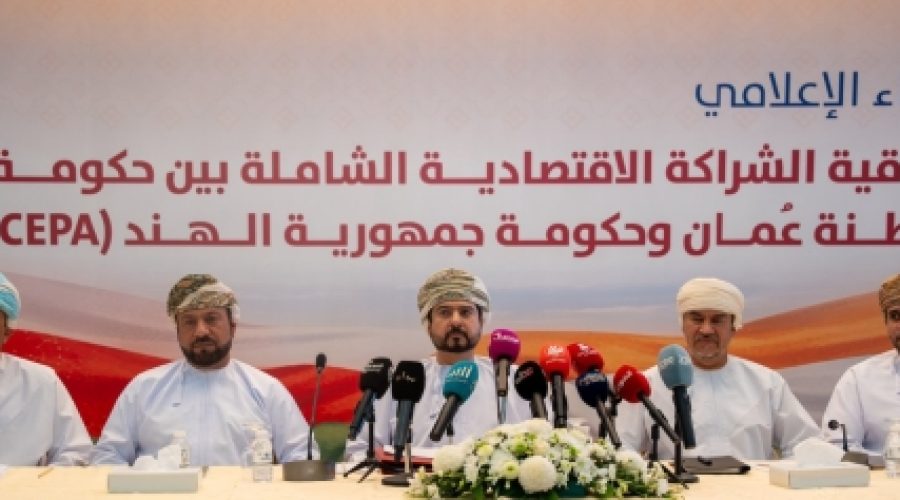
The Ministry of Commerce and Investment Promotion (MOCIIP) is organizing an engagement session on Tuesday with media representatives and stakeholders to explain the details and answer questions regarding the Comprehensive Economic Partnership Agreement (CEPA) between the Sultanate of Oman and the Republic of India. Qais bin Mohammed al Yousef, Minister of Commerce and Investment Promotion, alongside officials from related entities, will participate in the discussion.
Key Highlights
- The agreement will not impact Omanization policies. All existing laws and regulations governing the labor market and investment in Oman will remain fully applicable.
- This CEPA is the Sultanate’s first bilateral free trade agreement since 2006.
- The agreement’s provisions have not yet been published online because it requires approval from the State Council and Majlis al Shura, in line with Omani procedures differing from those in India.
- The Omani economy faces challenges including slowed growth, weak job creation, and a concentration in oil and gas sectors. Expanding trade through bilateral agreements is a vital strategy to address these issues.
- Signing the CEPA with India gives Oman a first-mover advantage before other Gulf countries formalize their agreements.
- Negotiations spanned five major rounds from 2023 to 2025.
- Oman retains full sovereignty to enforce anti-dumping, safeguard, and countervailing laws without any change.
- CEPA empowers the government to take protective measures when harm to local industries is proven or suspected.
- India’s large population and robust economic growth offer significant opportunities for Omani products.
- The agreement marks a milestone in enhancing trade exchange, easing access to goods and services, attracting quality investments, and expanding cooperation in priority sectors on both sides.
- GCC countries are pursuing similar trade agreements with Pakistan, South Korea, and New Zealand, while negotiations with China, Turkey, and the UK are ongoing.
- Trade agreements are crucial for Oman’s strategy to broaden market access for its products, facilitate trade and investment, and link its economy to global markets. With a domestic market of around 5 million people and an economy valued at approximately RO40 billion, these agreements allow access to markets exceeding one billion consumers.
- Opening the Indian market strengthens Oman’s position as a regional logistics and industrial hub, serving as a strategic gateway to Asian markets.
- CEPA will help diversify Oman’s non-oil revenues and boost investment attractiveness.
- Oman is the only Arab country with free trade agreements with both the United States (the largest economy) and India (the fourth largest economy).
- Only six countries globally have FTAs with both the US and India, including Oman.
Specialized Studies
The ministry highlighted that negotiations were supported by expert analyses, including an economic study by Deloitte & Touche commissioned by MOCIIP. The study assessed the effects of customs duty liberalization, export growth, and investment expansion, confirming the agreement’s feasibility and its potential to maximize national economic value and improve the competitiveness of Omani exports in international markets.
Custom Duties
Lowering customs duties on raw materials imported from India will help reduce production costs within Oman, strengthen supply chains for manufacturing industries, and enhance Oman’s role as a trade and logistics center connecting Gulf countries, the Middle East, and the Far East.
Implementation
A national rapid intervention team will be established to monitor the agreement’s implementation and resolve any sectoral or company-specific challenges. The ministry aims to complete legislative procedures to ratify the agreement soon, advancing Oman’s position in the global trade system and supporting efforts to build a diversified, value-added, competitive, and sustainable economy.
Negotiation Process
The negotiations included five main rounds between 2023 and 2025, covering general frameworks, legal and regulatory chapters, technical rules of origin, health and technical measures, trade facilitation, trade in goods and services, trade remedies, cooperation, intellectual property, and dispute resolution. The final agreement balances the interests of both parties and aligns with Oman’s Gulf and international commitments.
Trade Volume
Trade between Oman and India reached approximately $7 billion in 2024, making India one of Oman’s key trading partners, especially in non-oil exports such as polyethylene, urea, gypsum, ethylene, and petrochemical and metal products. The agreement is expected to further expand trade through enhanced preferential access to Indian markets.
Oman achieved a high trade liberalization rate covering 97.4% of its goods based on current export volumes. Market access to India stands at roughly 77.8%, with special liberalization for goods strategic to Omani industries. India, in return, receives gradual customs liberalization totaling 99.22%, consistent with Oman’s economic policies to protect local industries.
Agreement Structure
The agreement contains 16 main chapters and technical annexes regulating trade in goods, national treatment, customs duties, import/export procedures, rules of origin, trade remedies, sanitary and technical measures, trade facilitation, intellectual property, movement of natural persons, SMEs, economic and technical cooperation, and trade in services. It emphasizes protection of national industries with provisions on anti-dumping, countervailing, safeguard measures, and balance of payments. Omanization and professions restricted to Omanis are also safeguarded.
Investments
India ranks among the top ten foreign investors in Oman, with foreign direct investments totaling approximately RO286 million in the first quarter of 2025. Investments span sectors such as iron and steel, fertilizer, clean energy, healthcare, and petrochemicals. These investments support industrial value chains, boost production capacity, and create jobs.
The agreement is also expected to enhance food and drug security, and boost cooperation in agriculture, health, biotechnology, digital trade, logistics, mining, innovation, space, and tourism, aligning with Oman Vision 2040 goals.
Private Sector Involvement
The Omani private sector actively contributed during negotiations, particularly major industrial companies, helping shape a negotiating position that reflects market realities and national business opportunities in India.
MOCIIP confirmed the agreement aligns with GCC obligations and does not disrupt trade flows within the Gulf Cooperation Council. Government procurement was excluded to preserve legislative sovereignty, and legal reviews confirmed compliance with Oman’s Basic Law and international agreements.
Economic Impact
Trade liberalization is expected to enhance Omani goods’ competitiveness in India, where tariffs averaged 17%, previously limiting export flow. Post-agreement, Omani companies will access a market valued over $17 trillion with 400 million consumers, fostering industrial growth and expanded production capacity.
Special Analysis by Omanet | Navigate Oman’s Market
The Oman-India CEPA marks a strategic breakthrough for Oman, offering a gateway to one of the largest and fastest-growing consumer markets, which positions Oman as a pivotal logistics and industrial hub connecting the Gulf and Asia. Businesses and investors should capitalize on this first-mover advantage, focusing on sectors like petrochemicals, manufacturing, and digital trade where preferential access and reduced tariffs will significantly reduce costs and expand market reach. However, protective measures remain intact, so entrepreneurs must navigate regulatory frameworks carefully while leveraging opportunities created by enhanced trade liberalization and diversified economic partnerships.