Oman’s Eleventh Five-Year Plan: What Investors and Business Owners Need to Know for Future Growth Opportunities
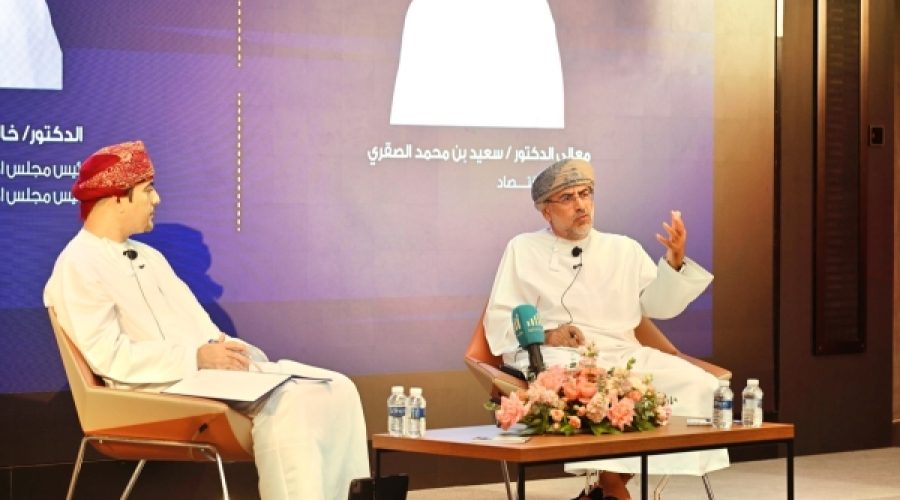
MUSCAT, DEC 31 — The Omani Economic Association convened its 29th Economic Council on Tuesday, December 30, 2025, at Madinat Al Irfan, Muscat. The event centered on the theme “Oman’s Economic Performance 2020–2025” and featured Dr. Said bin Mohammed al Saqri, Minister of Economy, as the keynote speaker.
Dr. Al Saqri delivered a comprehensive presentation addressing three main pillars: the global economic outlook and trends, Oman’s national economic performance, and the Eleventh Five-Year Development Plan (2026–2030).
He highlighted that the global economy is entering a phase of slower growth, with projections estimating rates between 3.1% and 3.8% by 2026. This subdued growth is influenced by escalating geopolitical tensions, tighter trade policies, and global debt levels nearing 324% of GDP. Furthermore, there is a notable shift in economic power as emerging markets strengthen while several advanced economies experience declining momentum. Climate change remains a significant factor, disrupting supply chains and increasing production costs.
In contrast, Oman has maintained inflation at a low 0.76% from January to August 2025, demonstrating the resilience of national policies in navigating an increasingly uncertain global landscape.
Regarding national metrics, Dr. Al Saqri reported that Oman’s public debt reached RO 14.1 billion in the first half of 2025. The targeted average annual economic growth rate for 2021–2024 was around 5.0%. Non-oil sectors contributed 73% of Oman’s GDP at constant prices in 2024, underscoring ongoing strides in economic diversification. According to the International Monetary Fund (IMF), Oman’s economy is projected to grow by 4% in 2026, improving on 2.9% in 2025, while the Ministry of Economy forecasts a more conservative increase from 2.2% in 2025 to 2.6% in 2026, reflecting steady economic momentum supported by national development strategies.
Dr. Al Saqri outlined that the Eleventh Five-Year Development Plan aims to deliver tangible developmental outcomes and ensure broad community involvement during its formulation. The plan seeks to integrate government institution activities and align medium-term objectives (2026–2030) with Oman Vision 2040 through a series of targeted programmes with clearly defined goals.
He emphasized the adoption of economic modelling and results-based planning, consistent with Oman’s transition toward a performance- and programme-based budgeting system. This framework allows for effective tracking of progress, outcome measurement, and impact assessment using intelligent performance indicators.
Additionally, the Minister noted that the plan accounts for evolving global and regional dynamics by incorporating scenario planning. This approach facilitates anticipation of various future scenarios, enabling proactive responses by identifying key change drivers, monitoring early indicators of emerging trends, and developing risk management strategies to address potential challenges.
Special Analysis by Omanet | Navigate Oman’s Market
Oman’s steady inflation control and growing non-oil sector signal robust economic resilience and diversification, positioning the country well amid global uncertainties and slower growth. The Eleventh Five-Year Development Plan’s focus on performance-based budgeting and scenario planning offers a strategic advantage for businesses to align with national goals and mitigate emerging risks. Smart investors should prioritize sectors linked to Vision 2040 and leverage government-supported programmes to capitalize on Oman’s forward-looking development trajectory.