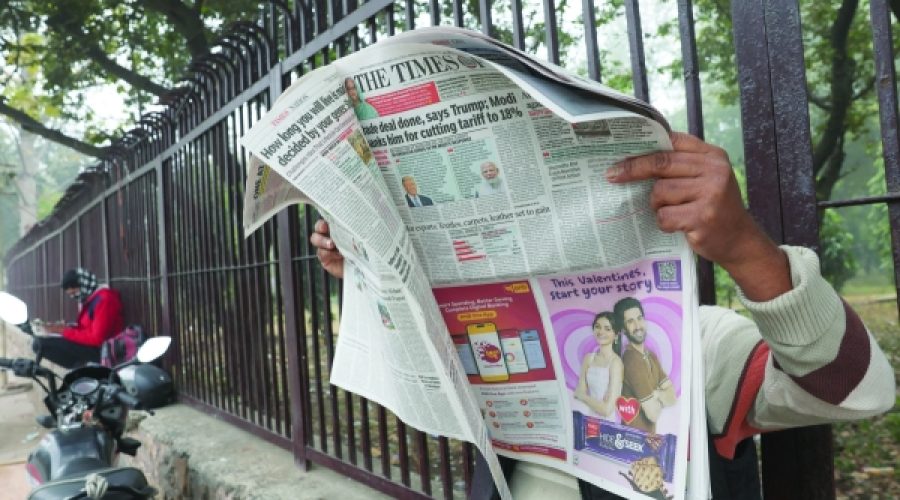
Trump’s Tariff Cuts: What Relief Means for Indian Businesses and Investors
NEW DELHI — US President Donald Trump’s decision to significantly reduce tariffs on Indian imports triggered a strong rally in Indian markets on Tuesday, boosting confidence among exporters and policymakers despite limited details on the agreement.
Trump announced on Monday a trade deal with India that lowers tariffs on Indian goods to 18% from the previous 50%, in exchange for India halting its purchases of Russian oil and reducing trade barriers.
However, no comprehensive statement has been issued yet by either the White House or the Indian government following Trump’s social media announcement.
An Indian government official revealed that under the deal, India has agreed to increase its purchases of petroleum, defense equipment, and aircraft from the United States, while partially opening its highly protected agricultural sector. Additionally, India has reduced tariffs on imported cars to meet US demands.
Trump stated that India’s imports of American goods would surge to more than $500 billion, covering energy, coal, technology, and agricultural products, though he did not specify a timeline for this increase.
Neelkanth Mishra, chief economist at Axis Bank, emphasized that the tariff agreement eliminates India’s previous disadvantage compared to regional competitors. He noted that sectors such as gems and jewelry, leather, plastics, ceramics, auto components, and non-technology foreign investment stand to benefit significantly.
For context, US tariffs on Indonesian goods are currently at 19%, while tariffs on imports from Vietnam and Bangladesh are 20%.
Indian exports to the United States grew by 15.88% year-on-year to $85.5 billion from January to November, while imports from the US totaled $46.08 billion, according to official Indian government data.
The announcement has also alleviated global uncertainty, said Anuradha Thakur, India’s Economic Affairs Secretary, at a New Delhi event. Investor sentiment responded positively, with the Nifty 50 index rising nearly 3% and the Indian rupee strengthening more than 1% to 90.40 against the US dollar in early trading.
Following the deal, all Indian goods exported to the US will now face an 18% tariff, reduced from 50%.
S C Ralhan, president of the Federation of Indian Export Organisations, remarked that the tariff cut will enhance price competitiveness and enable Indian exporters to integrate more deeply into US supply chains.
Moody’s Ratings also highlighted that the reduction in US tariffs on most Indian goods is likely to revitalize India’s exports to the US market. — Reuters
Special Analysis by Omanet | Navigate Oman’s Market
The US-India tariff reduction deal presents a strategic opportunity for Omani businesses, especially those linked to export and supply chain sectors, to explore new collaborations with the rapidly expanding Indian market benefiting from enhanced competitiveness. However, investors should be mindful of shifts in regional trade dynamics and potential pressures on tariffs from other trade partners, positioning Oman to leverage its geographical and economic ties to become a pivotal trade hub in the evolving US-India economic landscape.