Tariff Agenda Update: What Investors Need to Know for Strategic Business Decisions in Oman
President Trump’s hallmark economic policy—his global tariff regime—faces a significant legal setback, yet financial markets are expected to rally despite the challenges, according to Nigel Green, CEO of the global financial advisory firm deVere Group.
This assessment follows a ruling by the US Supreme Court on Friday, which declared that President Trump exceeded his legal authority by imposing sweeping global tariffs without securing congressional approval. The decision marks a major blow to a policy that has been central to Trump’s economic agenda and, to a lesser extent, his foreign policy since January 2025.
Nigel Green commented, “This ruling strikes at the core of the administration’s economic doctrine. Trade confrontation was promoted as the engine for domestic renewal. Instead, it now faces constitutional constraints, intense market scrutiny, and diminishing economic benefits.”
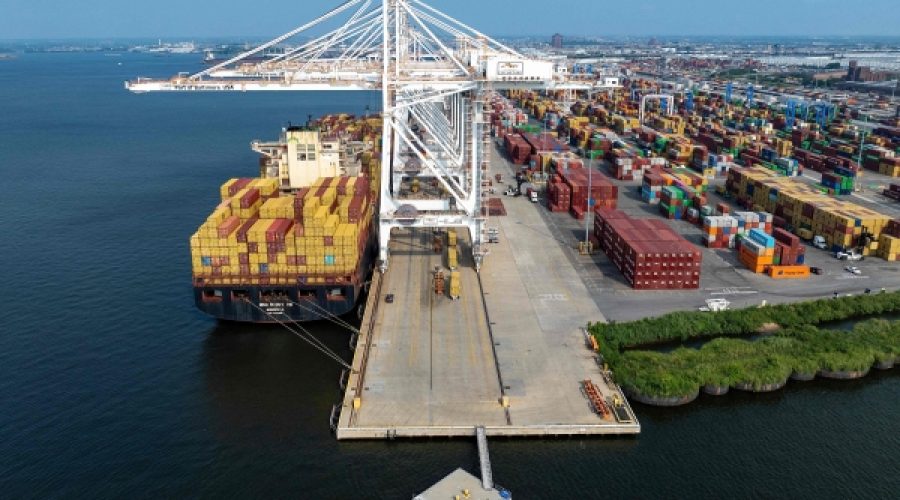
Green further explained that tariffs, initially justified as tools to rebalance trade and protect American industry, have effectively operated as a tax on importers—many of whom have passed these costs directly to consumers. This has led to tighter corporate profit margins in sectors dependent on global supply chains and delayed business investments amid ongoing policy uncertainty.
Recent economic indicators highlight the fragility of the current environment. Economic growth has slowed compared to last year, while inflation remains stubborn in categories affected by higher import costs. Wage growth continues robustly, but household purchasing power is limited by rising prices of goods and services.
“The economy is not collapsing, but it is losing momentum,” Green noted. “Inflation’s persistence restricts policy flexibility, and business confidence is sensitive to sudden regulatory and trade changes. The Supreme Court’s decision adds a new variable to this complex equation.”
Despite the political setback, Green believes financial markets will not succumb to prolonged panic. “Investors distinguish between political drama and corporate earnings potential. Equity markets, which look ahead, are supported by strong balance sheets in major US companies, ongoing investments in AI and technology, and expectations that policymakers will avoid extreme measures.”
He highlighted that large-cap stocks, especially in AI infrastructure, semiconductors, and cloud computing, continue to attract global investment. “Even if the authority to impose tariffs is limited, the fundamental investment cycle in advanced computing and automation remains robust.”
Bond markets may respond with more nuance. “If tariffs are reduced or eliminated, some inflationary pressure from import costs could ease, potentially supporting long-term Treasury bonds. However, persistent fiscal deficits and strong wage growth are likely to keep yields elevated,” Green explained.
The US dollar could face volatility amid competing forces. With a reduction in trade tensions, global risk appetite might increase, reducing safe-haven demand for the dollar.
Green cautioned against simplistic conclusions: “A judicial ruling does not automatically reverse economic trends. Timing of implementation, possible legislative reactions, and geopolitical factors will all influence outcomes. Markets will weigh probabilities accordingly.”
He also observed that corporate America is expected to adapt rapidly. “Many multinational companies have already diversified their supply chains and sourced materials differently in anticipation of extended trade disputes. While a recalibration of tariff powers may gradually ease cost pressures, strategic changes made over the past year will not be undone overnight.”
In conclusion, Nigel Green stated, “President Trump’s tariff-centric strategy is clearly under strain following this ruling. Legal limits have been reinforced, and the economic argument for broad trade barriers has weakened. Yet financial markets remain pragmatic. If this leads to greater policy clarity, less unpredictability, and sustained investment in AI and tech, equity markets can thrive even as the political narrative fractures.”
He advises investors to prepare for volatility around policy announcements and court rulings, closer scrutiny of fiscal sustainability, and selective strength in sectors with durable earnings growth.
Special Analysis by Omanet | Navigate Oman’s Market
The US Supreme Court’s ruling limiting tariff authority signals a shift away from broad trade barriers, reducing policy unpredictability and potentially easing inflationary pressures. For businesses in Oman, this could mean stabilized global trade conditions and opportunities to deepen ties with the US market as multinationals recalibrate supply chains. Smart investors should focus on sectors with durable earnings like AI, tech, and advanced manufacturing, while preparing for volatility linked to geopolitical and fiscal developments.