Impact of Suspended Shipments via Hormuz: What Oil and Gas Traders Need to Know for Business Stability in Oman
LONDON: In the wake of recent military actions by the US and Israel against Iran, numerous tanker owners, major oil companies, and trading houses have halted shipments of crude oil, fuel, and liquefied natural gas through the Strait of Hormuz. Sources in the trading sector confirmed this suspension on Saturday.
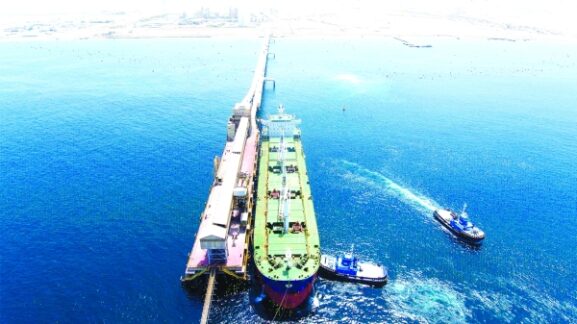
An executive from a prominent trading desk stated, “Our ships will stay put for several days.” Satellite imagery from tanker tracking services indicates a growing backlog of vessels at significant ports, such as Fujairah in the UAE, with ships refraining from transiting through Hormuz.
Various ships in the vicinity have received communications from Iran’s Revolutionary Guards, which declared that “no ship is allowed to pass the Strait of Hormuz,” as reported by an official connected to the EU naval mission, Aspides. However, the British Navy has deemed these orders non-binding and has advised vessels to exercise caution while navigating the area.
Although maritime traffic through the Strait of Hormuz has not come to a complete halt, disruptions are escalating rapidly, according to a note from shipbroker Poten & Partners.
The tanker association INTERCARGO has reported that the US Navy has issued warnings against navigation throughout the entirety of the Gulf, the Sea of Oman, the North Arabian Sea, and the Strait of Hormuz, indicating it cannot ensure the safety of shipping in these waters.
The shipping ministry in Greece has also advised vessels to steer clear of the Arabian Gulf, the Sea of Oman, and the Strait of Hormuz.
Approximately 20% of the world’s oil, sourced from Saudi Arabia, the UAE, Iraq, Kuwait, and Iran, transits through the Strait, along with significant quantities of LNG from Qatar. Laura Page from consultancy Kpler noted that fourteen LNG tankers have begun to slow, U-turn, or stop in the region, suggesting that this number may increase, which poses risks to Qatari LNG exports.
German container shipping firm Hapag-Lloyd announced it would suspend all vessel transit through the Strait of Hormuz until further notice, warning of potential delays and disruptions to services calling on Gulf ports.
While oil prices have reached a six-month high, attracting interest in the energy sector, questions remain about its potential for further acceleration. Denmark’s Maersk noted on its website that it is coordinating with security partners regarding operations in the Red Sea and the Gulf of Aden, although cargo acceptance in the Middle East is still ongoing.
Meanwhile, French shipping group CMA CGM has instructed its vessels currently in or heading to the Gulf to seek shelter following the military actions against Iran.
Special Analysis by Omanet | Navigate Oman’s Market
The recent escalation of tensions following attacks in Iran has heightened risks for businesses reliant on energy exports, particularly those passing through the strategically vital Strait of Hormuz. As shipping disruptions mount, opportunities may arise for local logistics and alternative energy investments while necessitating a reevaluation of risk management strategies for stakeholders. Smart investors should consider diversifying supply chains and looking into emerging markets less impacted by regional geopolitical instability.