Fitch Forecasts Limited Impact on Oman’s Economy from Hormuz Shutdown: What Investors Need to Know
MUSCAT: According to Fitch Ratings, a prolonged closure of the Strait of Hormuz would leave Oman notably more insulated compared to most of its Gulf neighbors.
In a detailed analysis of the potential effects of a closure of this critical shipping route on Middle Eastern sovereign states, Fitch highlighted that while the impact would vary across the Gulf Cooperation Council (GCC) countries, all six GCC members considered can manage the disruption within their current credit rating levels, assuming the conflict’s duration aligns with Fitch’s baseline expectations.
Fitch’s baseline scenario projects that the Strait would remain effectively closed for less than one month, with no significant damage to energy production or transportation infrastructure, though it acknowledged these assumptions carry considerable risks.
Most GCC countries, excluding Oman, along with Iraq, rely heavily on the Strait of Hormuz for exporting hydrocarbons. Bahrain, Iraq, Kuwait, and Qatar channel between 87% and 95% of their exports through this route. Notably, Iraq and Qatar have already significantly reduced production.
Fitch estimates that each additional week of closure would reduce hydrocarbon export revenues by approximately 0.4% of GDP for Bahrain, Iraq, Kuwait, and Qatar, based on 2025 shipment data and an assumed oil price of $85 per barrel during the disruption.
Oman emerges as the only Gulf sovereign with zero hydrocarbon export exposure through the Strait of Hormuz. Consequently, Fitch projects that Oman’s GDP would actually increase modestly in response, by 0.2% after one week, 0.4% after two weeks, and 0.8% after four weeks of closure.
In contrast, other Gulf exporters heavily dependent on the Strait would suffer sharp economic contractions. After four weeks, Bahrain, Iraq, and Qatar’s GDPs are expected to decline by between 1.8% and 1.9%. Kuwait, which exports nearly 100% of its hydrocarbons via the Strait, faces a 1.5% GDP loss, with Abu Dhabi’s GDP declining by 0.6%.
Saudi Arabia is relatively less vulnerable, with only about 20% of its exports passing through Hormuz due to the availability of its East-West pipeline. Its GDP impact remains minimal, even under a four-week closure.
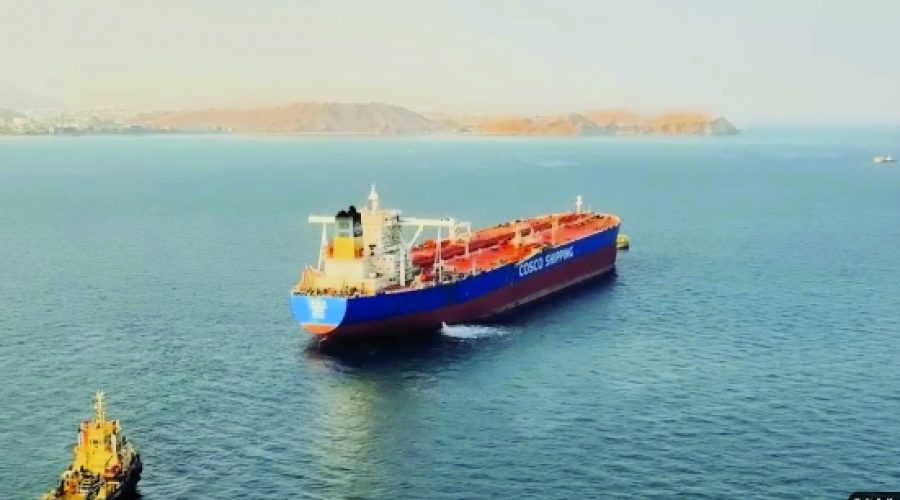
Oman’s resilience is due to its geography, as all of its crude oil exports are shipped from terminals located outside the Strait of Hormuz, mainly through ports on the Sea of Oman and the Arabian Sea.
In conclusion, Fitch emphasizes that Oman stands to benefit from higher oil prices during a closure, as its exports do not transit the Strait of Hormuz.
Special Analysis by Omanet | Navigate Oman’s Market
Oman’s unique geographic advantage of routing its crude exports outside the Strait of Hormuz insulates it from potential economic shocks caused by any closure, presenting a rare growth opportunity amid regional instability. For businesses and investors, this signals a strategic window to leverage Oman’s stability and capitalize on rising oil prices, while minimizing exposure to the risks that heavily impact neighboring Gulf economies. Smart stakeholders should consider expanding investments and trade partnerships in Oman as a resilient hub in the Gulf energy landscape.