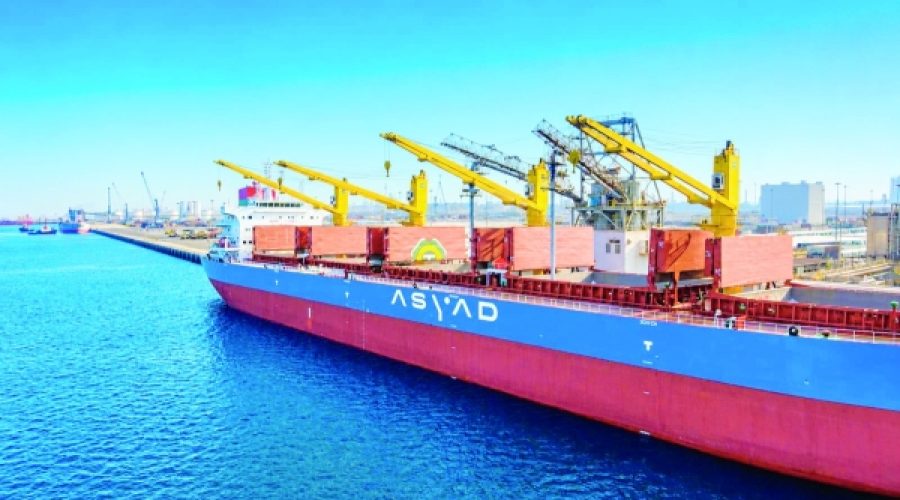
Asyad Shipping Reports 41% Q1 Profit Surge to RO 16.1 Million: Key Insights for Investors and Business Owners in Oman
MUSCAT, MAY 13 – Asyad Shipping reported a significant 41% increase in net profit for the first quarter of 2026, bolstered by enhanced profitability, high fleet utilization, and ongoing expansion of its shipping portfolio, according to its recent filing on the Muscat Stock Exchange (MSX).
The company achieved a net profit after tax of RO 16.1 million for the three months ending March 31, 2026, compared to RO 11.4 million for the same period in 2025. Earnings before interest, taxes, depreciation, and amortization (EBITDA) rose to RO 51.8 million, up from RO 49.1 million a year prior, with the EBITDA margin expanding to 67%.
Gross revenue totaled RO 77.3 million, down from RO 83.8 million in Q1 2025. However, direct costs experienced a sharp decline to RO 52.6 million, down from RO 62.2 million, contributing to enhanced operational efficiency and profitability.
Dr. Ibrahim al Nadhairi, Chief Executive Officer of Asyad Shipping, emphasized that the first-quarter results illustrate the resilience of the company’s business model amid cyclical market conditions. “Our results reflect strong margins, improved profitability, and high fleet utilization, driven by robust operations and a commitment to long-term value creation,” he stated.
He noted that Asyad Shipping has adeptly navigated various market cycles and global disruptions since its inception, thanks to disciplined operations and a focus on sustainable growth. “The strength of our business model is further underscored by a strong EBITDA margin of 67% and a 41% increase in net profit year-on-year, demonstrating solid performance across our diversified shipping portfolio,” Al Nadhairi added.
The company highlighted that its long-term resilience is enhanced by a strategic balance between owned and chartered vessels, long-term charter coverage, and selective exposure to spot markets, which helps maintain earnings visibility while seizing growth opportunities.
Operationally, Asyad Shipping achieved an impressive fleet utilization rate of 99.7% during the quarter, an increase from 97% in Q1 2025. The company reported zero lost-time incidents and major incidents during this period.
As part of its fleet renewal and expansion strategy, Asyad Shipping successfully completed the sale of four older LNG carriers—Salalah, Ibri, Ibra, and Nizwa—as well as one Very Large Crude Carrier (VLCC). Furthermore, two of three Newcastle dry bulk carriers were delivered under 10-year contracts.
As of March 31, 2026, Asyad Shipping’s fleet consisted of 89 vessels, including 77 operational vessels and 12 on order. The company also signed an agreement for three new-build VLCCs valued at RO 149.6 million, with deliveries scheduled for 2028 and 2029.
Looking ahead, the company anticipates the delivery of 10 vessels in 2026, which includes two LNG carriers, four VLCCs, two medium-range tankers, and two Kamsarmax vessels. Five of these will operate under long-term contracts, while the remaining vessels will be deployed in spot markets to leverage market opportunities.
“Asyad Shipping is committed to advancing its fleet renewal and expansion program to strengthen our asset base and enhance operational efficiency for long-term growth,” Al Nadhairi stated. “We are optimistic about the year ahead, with the delivery of 10 vessels expected to bolster our fleet across all segments.”
The company reported contracted revenues of approximately $2.2 billion extending beyond 2030, ensuring long-term cash flow visibility despite market fluctuations.
Special Analysis by Omanet | Navigate Oman’s Market
Asyad Shipping’s 41% increase in net profit signals a robust outlook for the shipping sector in Oman, underscoring operational efficiency and resilience amid market fluctuations. Businesses should view this as an opportunity to engage with a growing and diversified shipping portfolio, while investors should focus on companies with disciplined operations and strong long-term strategies to capitalize on potential market upswings. Additionally, the firm’s strategic fleet expansion presents new avenues for collaboration and investment in logistics infrastructure.