Oman Positions Itself as a Gateway for Space Applications: Key Benefits for Investors and Entrepreneurs
MUSCAT: The Sultanate of Oman is establishing a unique position within the regional space economy, emphasizing its role as a gateway for space-enabled applications rather than as a launch-capable nation. This strategy focuses on downstream services, leadership from the private sector, and swift implementation.
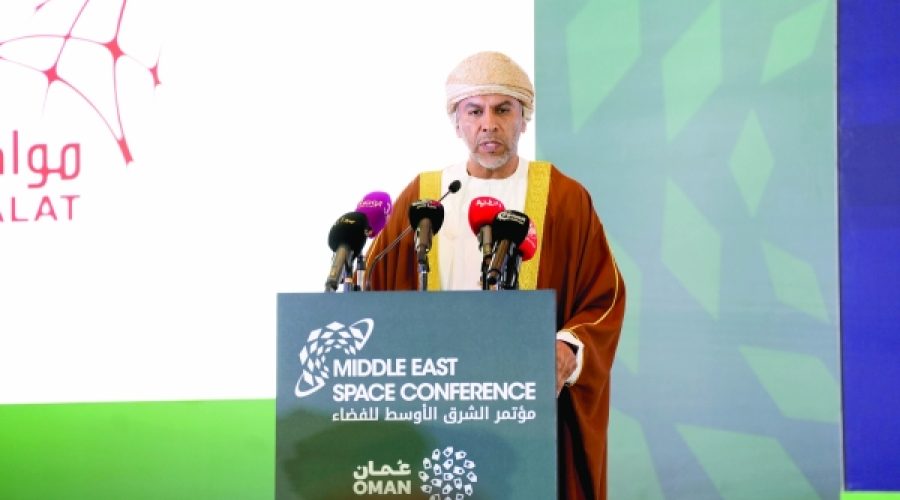
At the Middle East Space Conference held in Muscat, Dr. Ali bin Amer al Shaithani, Under-Secretary of the Ministry of Transport, Communications and Information Technology for Communications and Information Technology, presented a pragmatic vision that prioritizes economic impact over prestigious missions.
“Our vision is very clear,” Dr. Al Shaithani stated. “We see Oman becoming a gateway for space applications, particularly in the downstream sector, where the true economic value resides.”
Oman aims to avoid direct competition with established spacefaring nations in upstream activities, such as launching vehicles or conducting deep-space missions. Instead, the country is focusing on data-driven services, satellite-enabled solutions, and commercial applications tailored to its national needs, which include logistics, environmental monitoring, food security, and urban planning.
This strategic direction is underpinned by the National Space Policy and Executive Programme, encompassing over 15 projects, many of which are already underway. Dr. Al Shaithani emphasized that the immediate priorities involve building capacity, developing infrastructure, and nurturing talent.
“Our primary focus today is on building capabilities—upskilling youth, enhancing infrastructure, and creating a supportive ecosystem for the space economy,” he remarked. “While the progress we’ve made is encouraging, we aim for even more.”
A fundamental aspect of Oman’s approach involves empowering the private sector to take the lead, with the government serving as an enabler rather than the primary operator. Dr. Al Shaithani highlighted the Oman Space Accelerator Programme as a pivotal example of how clear policy can encourage market participation.
“The Space Accelerator opened the market to new companies and directed them toward genuine opportunities in the space sector,” he noted. “This is how we convert policy into tangible action.”
Among the key initiatives is OmanSat, a national satellite communications project intended not only to establish sovereign capabilities but also to facilitate knowledge transfer, infrastructure development, and downstream services.
“OmanSat is not just about launching a satellite,” Dr. Al Shaithani explained. “It is about fostering national expertise, sharing knowledge, and creating value-added services that will benefit the broader economy.”
He also pointed to the spaceport initiative as a demonstration of Oman’s investment logic, illustrating how private sector-led projects, supported by government facilitation, can draw capital and accelerate execution.
“The spaceport exemplifies what is achievable,” he stated. “It was propelled by the private sector, with government backing, and it demonstrated to decision-makers that space investments can yield visible outcomes.”
Dr. Al Shaithani asserted that execution speed is Oman’s competitive advantage.
“What truly sets Oman apart is its speed of execution,” he said. “Government entities are aligned, decisions are swiftly made, and there is a collective understanding of the necessity for experimentation.”
This clarity has already resulted in new services that did not exist in Oman a few years ago, such as Earth observation, health monitoring, and remote-sensing applications provided by emerging private firms.
International collaborations remain crucial to Oman’s space aspirations. On the sidelines of the conference, new coordination frameworks were signed to enhance cooperation with global space entities.
“International partnership is vital in the space sector,” Dr. Al Shaithani emphasized. “Since we do not yet possess all the required skills locally, we must collaborate with experienced partners to expedite learning and delivery.”
With a well-defined policy framework, increasing private-sector involvement, and a disciplined focus on downstream value, Oman’s space strategy embodies a broader economic philosophy: measured ambition, commercial relevance, and a focus on execution rather than spectacle.
Special Analysis by Omanet | Navigate Oman’s Market
Oman’s strategy to become a gateway for space-enabled applications presents significant opportunities for businesses, particularly in the private sector, where innovative ventures can thrive in a supportive ecosystem. The emphasis on data-driven services and international partnerships positions the nation to leverage its strengths while fostering a new economic landscape; however, companies must be agile and prepared to capitalize on these shifting dynamics. Smart investors and entrepreneurs should focus on aligning their efforts with national priorities like infrastructure development and capacity building, ensuring they remain at the forefront of this burgeoning space economy.