Stocks Rally Amid Peace Hopes: Implications for Investors and Oman’s Oil Market
Hong Kong – Global markets experienced a rise in stock prices on Wednesday, accompanied by a decline in crude oil prices, following remarks from Donald Trump about potential renewed negotiations between the United States and Iran within the next two days. This announcement has sparked optimism regarding the reopening of the Strait of Hormuz, vital for oil transportation.
Traders were further encouraged by the agreement to commence direct talks between Israel and Lebanon, which raises hopes for a resolution to a long-standing conflict that has complicated the fragile ceasefire between Washington and Tehran.
Despite the ongoing U.S. blockade of Iranian ports, which stemmed from unsuccessful negotiations in Islamabad over the weekend, President Trump indicated, in a phone interview with the New York Post, that talks could soon resume. “You should stay there, really, because something could be happening over the next two days, and we’re more inclined to go there,” he stated.
Further comments on FOX Business’s “Mornings with Maria” suggested that the conflict was “very close to being over.” Senior officials in Pakistan have reportedly been working to mediate between the two sides, aiming to extend the existing two-week ceasefire.
Trump’s statements provided a significant boost to equities, which were already rising amid hopes for an end to the six-week conflict that has unsettled the global economy. All three major U.S. stock indexes saw gains, with the Nasdaq and S&P 500 surpassing pre-war levels and nearing record highs.
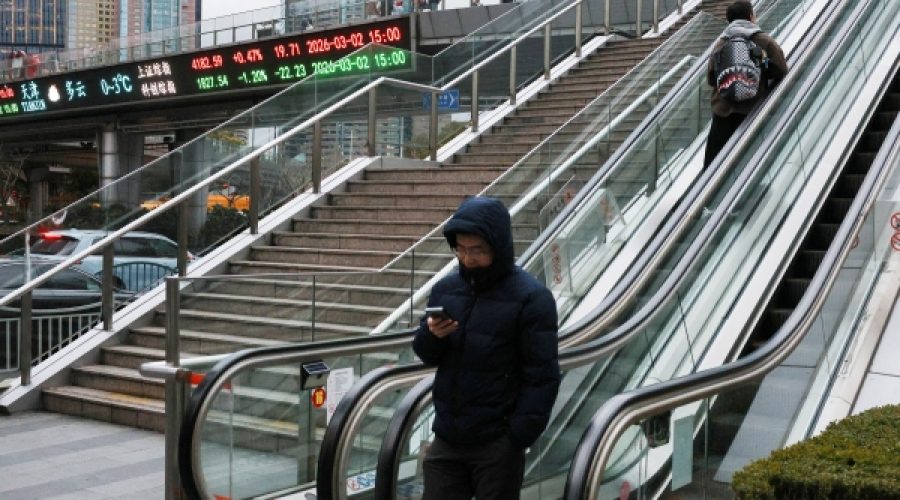
In Asia, gains were notably prominent, particularly in Seoul, which had previously suffered following the onset of hostilities on February 28. The Kospi index surged by more than two percent, approaching its historic high, while markets in Tokyo, Hong Kong, Sydney, Mumbai, Bangkok, Wellington, Taipei, Singapore, and Manila also showed improvement. In contrast, Shanghai remained stable.
European markets started the day positively, with London and Frankfurt seeing gains, while Paris experienced a slight decline.
Oil prices continued their downward trend, following a significant drop of roughly eight percent for West Texas Intermediate and more than four percent for Brent on Tuesday. Investor enthusiasm was bolstered by the decision of Israel and Lebanon to engage in direct talks, marking a rare diplomatic development between the two nations, which have been in a state of conflict for decades.
The broader war involving Hezbollah, which attacked Israel in support of Iran, resulted in an Israeli ground invasion and has raised concerns in Washington about the potential unraveling of the U.S.-Iran ceasefire.
Fiona Cincotta from City Index noted that “continued pressure alongside hopes of diplomatic engagement” have contributed to oil prices falling below $100 and a decrease in Treasury yields, which has helped support equity markets. “A credible diplomatic off-ramp could further boost risk appetite,” she added.
While the possibility of ending the conflict is generally welcomed, analysts express caution regarding the nature of any potential peace agreement and the time it may take for crude production to return to full capacity. The International Monetary Fund has projected a cut in its 2026 global growth estimate to 3.1 percent, down from 3.3 percent, citing concerns that the ongoing war could disrupt the world economy.
Pierre-Olivier Gourinchas, the Fund’s chief economist, indicated that success in negotiations could have prompted an upgrade in growth forecasts. In light of these developments, Taylor Nugent from National Australia Bank remarked that markets were optimistic, overlooking the immediate disruptions in the Strait while favoring the possibility of negotiations, leading to a lower dollar index.
Saxo’s chief investment strategist Charu Chanana emphasized that renewed diplomatic efforts could quickly bolster market confidence. However, he warned that if hostilities were to escalate, it could lead to a broader and more grave conflict than previously anticipated.
Special Analysis by Omanet | Navigate Oman’s Market
The recent diplomatic developments between the US, Iran, Israel, and Lebanon could herald a transformative moment for businesses in Oman, offering potentially stable oil prices and renewed trade opportunities in local markets. However, this diplomacy also carries risks; if negotiations falter, renewed conflict could disrupt global supply chains and impact economic growth. Smart investors and entrepreneurs should closely monitor these developments, adapting strategies to leverage potential stability while preparing for market volatility.