Al Najd Agricultural City Development: What 13,000 New Residents Mean for Business Opportunities in Oman
Al Najd Agricultural City, currently in the early planning and development stages in Dhofar Governorate, is set to accommodate a population of 13,000 residents and generate approximately 6,500 new jobs within its 5-square-kilometre area.
This information was disclosed on June 24, 2026, by the design consultants commissioned by the Ministry of Housing and Urban Planning. They are responsible for creating detailed masterplan designs for a self-sustaining agricultural city that leverages Al Najd’s fertile land and adapts to the unique environmental characteristics of the region.
The renowned British architecture, engineering, and design firm Foster + Partners, in partnership with Dar Al Handasah—an Oman-based international multidisciplinary consultancy—announced that Al Najd Agricultural City will be Oman’s first zero-waste agricultural development.
“Informed by history and driven by technology, the masterplan will establish a healthy and self-sufficient core for the region. Our design embraces agricultural innovation and fosters community to build a sustainable and resilient environment for future generations,” said Stefan Behling, Head of Studio at Foster + Partners.
Supported by the Ministry of Agriculture, Fisheries and Water Resources, the project aims to enhance food security, encourage agricultural innovation, and contribute to economic diversification in the Sultanate.
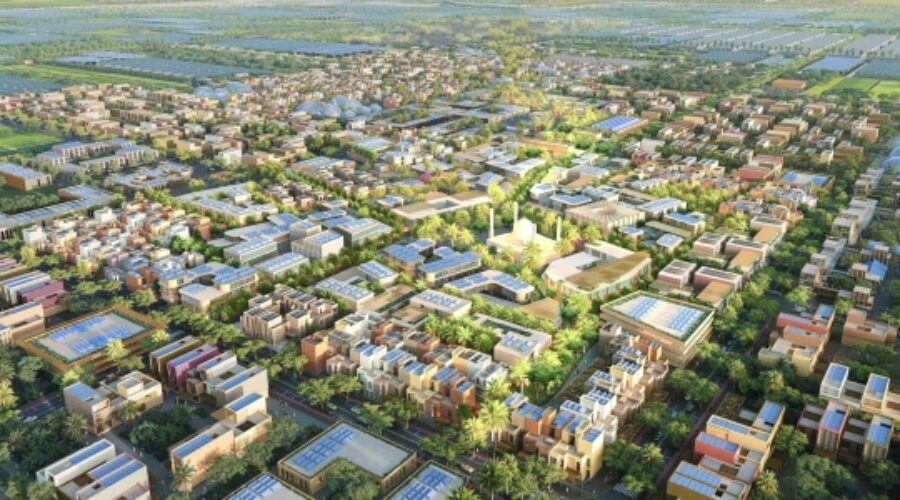
The masterplan features a layered design, with clusters of rectangular farms ranging from 10 to 200 hectares radiating outward from a compact urban center. Agricultural zones will be seamlessly integrated into parks, streets, and public spaces, giving the city a prominent green identity.
At the heart of the city, shaded walkways, public transport connections, and essential facilities—including schools, hospitals, cultural and religious centers, retail outlets, and leisure areas—will be developed. The city will also be connected to nearby regional hubs and farms to bolster food production systems and sustain long-term economic growth.
A dedicated team of agricultural experts will select crops well-suited to Al Najd’s soil and climate, including date palms, greenhouse tomatoes, and industrial crops used for raw materials. The project also aims to promote exports and agro-processing activities, such as producing dried and frozen foods, oils, compost, and fertilizers.
Innovative farming methods will be employed, including shade nets to control heat and sunlight, agrivoltaics which combine solar energy production with crop cultivation, and aquaponics systems that recycle water and nutrients. Advanced water and energy management technologies will further enhance efficiency.
Water for agriculture will be sourced from multiple channels: groundwater, rainwater harvested from mountain dams, and desalinated seawater. Irrigation will be managed carefully, with a focus on cultivating water-efficient crops, the consultants confirmed.
“Guided by the region’s distinct landscape and climate, we have integrated sustainable strategies into the masterplan that foster strong connections between people, place, and nature,” added Stephanie Tunka, Partner at Foster + Partners.
Special Analysis by Omanet | Navigate Oman’s Market
Al Najd Agricultural City represents a transformative opportunity for Oman’s economic diversification and food security, promising to create 6,500 jobs and integrate cutting-edge sustainable farming technologies. Businesses and investors should strategically consider agro-tech innovations, export potential, and eco-friendly supply chains as key growth sectors, while capitalizing on the government’s strong support for green, self-sustaining urban-agricultural developments.