Oman CSR Forum Drives Shift to Integrated, Impact-Driven Programmes: What It Means for Businesses and Investors
MUSCAT: The second edition of the Oman Corporate Social Responsibility (CSR) Forum and Awards emphasized the importance of transitioning from isolated initiatives to a cohesive, governance-driven national CSR framework that delivers measurable social and economic outcomes.
Organized by United Media Services Company and inaugurated by Dr. Mahad bin Said Baowain, Minister of Labour, the forum centered on aligning CSR efforts with the Sustainable Development Goals and the strategic priorities of Oman Vision 2040.
Saeed bin Masoud al Mashani, Deputy CEO of United Media Services, described CSR as a strategic tool that reinforces national policies and builds trust between institutions and society. He highlighted the critical role of governance, coordinated action, and optimizing returns from community investments.
Addressing global trends, Mubarak bin Khamis al Hamdani, Director of the National Office for Future Foresight at the Ministry of Economy, noted CSR’s growing connection to long-term financial performance. He emphasized the shift towards structured frameworks based on legislation, transparency, impact measurement, and integrating social and environmental factors into value and investment chains.
Majida bint Sheikhan al Maamari, Director of the Sustainable Investment Center at the Muscat Stock Exchange, stressed the need to enhance governance and transparency, unify standards, and implement clear methodologies for impact measurement. She acknowledged the exchange’s role in motivating listed companies to adopt sustainability practices and align disclosures with ESG criteria.
The forum featured several institutional case studies. Dr. Waleed bin Khalid al Rajhi, Dean of Planning and Quality Management at the University of Nizwa, presented the university’s integrated CSR framework, which is based on strategic planning, defined roles, and systematic impact assessment.
Hamoud bin Mohammed al Shidhani, Chairman of the Omani Association for People with Hearing Impairments, shared insights on the association’s comprehensive programs focused on empowerment and inclusion, including rehabilitation, training, sign-language awareness, and access to assistive technologies.
Amina bint Ibrahim al Shizawiya from the Jusoor Foundation highlighted their governance-based CSR model, underscoring that sustainable development demands structured planning and rigorous impact evaluation rather than sporadic efforts.
Engineer Ahmed bin Mohammed al Balushi of Dar Al-Atta Association explained how the organization is transforming charitable activities into a sustainable development system through integrated initiatives in housing, education, social support, and economic empowerment, all supported by transparency and exemplary governance.
Basma bint Hamad al Kiyumi from the Omani Women’s Academy outlined the academy’s initiatives to build women’s professional and leadership skills through targeted training programs that enhance their economic and social engagement.
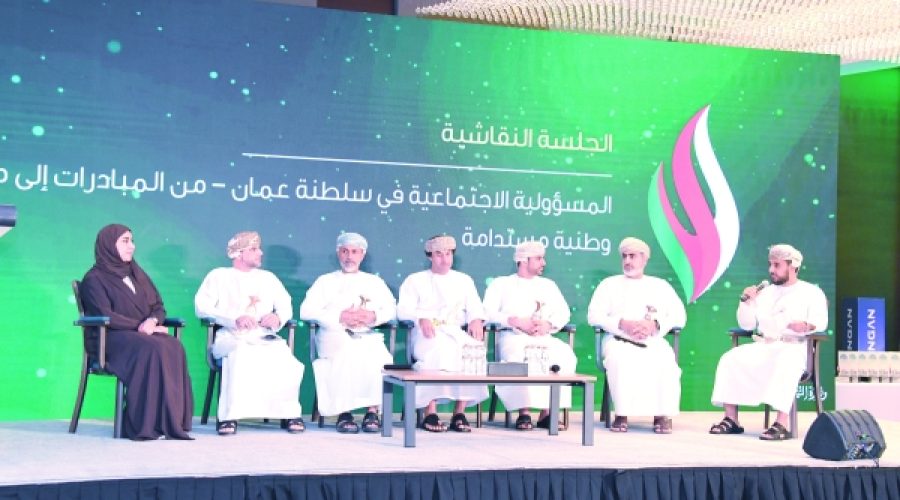
The forum concluded with a panel discussion titled “Social Responsibility in the Sultanate of Oman: From Initiatives to a Sustainable National System.” The panel called for stronger partnerships across the public, private, and civil society sectors, unified CSR frameworks, and robust impact measurement to maximize the long-term benefits of corporate community investments. — ONA
Special Analysis by Omanet | Navigate Oman’s Market
The second Oman CSR Forum signals a strategic shift towards unified, governance-led CSR frameworks aligned with Oman Vision 2040 and SDGs, presenting businesses with opportunities to enhance trust and competitive advantage through transparent, impact-driven social investments. Smart investors and entrepreneurs should prioritize integrating ESG standards and measurable impact metrics into their operations to capitalize on long-term value creation and align with emerging regulatory expectations. This evolution also underscores the risk of fragmented or superficial CSR efforts becoming obsolete in the face of increasing governance and accountability demands.