Oman’s Economic Transformation Unveiled at Key Forum: What It Means for Investors and Entrepreneurs
MUSCAT – Oman’s economy is increasingly demonstrating resilience and adaptability amid global changes, driven by balanced policies and steady structural reforms, stated Mahmoud bin Abdullah al Awaini, Secretary-General of the Ministry of Finance and board member of the International Financial Centre of Oman (IFC Oman).
Citing International Monetary Fund (IMF) projections, Al Awaini highlighted that Oman’s economy is expected to grow by approximately 3.7 percent in 2026 despite ongoing regional tensions. He also noted that Standard & Poor’s recently reaffirmed Oman’s investment-grade credit rating at “BBB-” with a stable outlook.
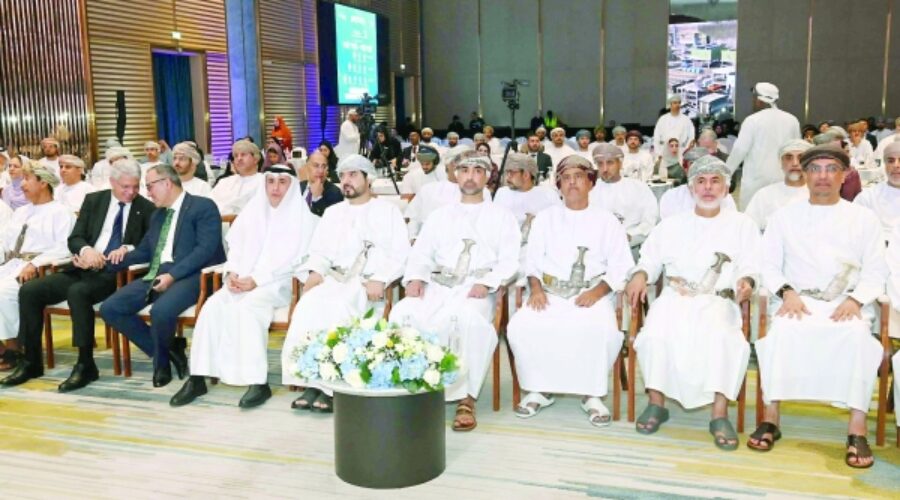
Speaking at the 15th Al Roya Economic Forum on Wednesday, Al Awaini emphasized the significant contribution of non-oil sectors, which now account for about 73 percent of the country’s GDP. He further pointed out the reduction in government debt, which dropped to around 36 percent of GDP in 2025 from 68 percent in previous years. Additionally, Oman achieved a global ranking of 25th among 70 economies in the 2026 World Competitiveness report, including 15th place in government efficiency and 18th in business efficiency.
The two-day forum, titled “The Omani Economy in an Era of Major Transformations,” was inaugurated by HH Sayyid Mohammed bin Thuwaini al Said.
Al Awaini also spoke about the recent Royal Order establishing the board of IFC Oman, chaired by HH Sayyid Theyazin bin Haitham al Said, Deputy Prime Minister for Economic Affairs. He described this move as a strategic milestone for Oman’s financial sector, positioning the Centre as a vital hub connecting the markets of the Gulf, Asia, and Africa.
Hatem bin Hamad al Taie, Editor-in-Chief of Al Roya newspaper, remarked that the forum convened at a critical juncture when global trade, investment, supply chains, and energy landscapes are undergoing rapid transformation. He underscored Oman’s unique geographical, political, and economic strengths as key to converting global uncertainties into development opportunities.
Al Taie contrasted fiscal austerity with broader economic strategy, citing Oman Air’s route closures and flight reductions as examples where cuts were made without fully considering impact on travel and tourism. He advocated for a more proactive role from the Oman Chamber of Commerce and Industry, and welcomed the creation of the Economic Coordination Council, which aims to bridge government policies with private-sector needs.
In the strategic partner’s address, Badr bin Awadh al Shanfari, Chief Operating Officer of Ominvest, argued that geopolitical disruptions have reinforced rather than weakened Oman’s position. During recent escalations and navigation disruptions in the Strait of Hormuz, ports in Duqm, Sohar, and Salalah efficiently managed hundreds of additional vessels.
Al Shanfari reported that total cargo throughput at Oman’s ports reached 45 million tonnes in 2025, marking a 7 percent increase, with Duqm experiencing a remarkable 143 percent growth. He highlighted Salalah’s $300 million port expansion, which raised its capacity to 6.5 million units, and the flourishing Green Corridor with the UAE, where goods value surged from around RO 100 million to over RO 830 million in April. He also referenced the $3 billion Hafeet Rail project, linking Suhar to the UAE railway network, and the Al Rawdah joint economic zone, with non-oil trade between the two countries hitting a record RO 6.2 billion in 2025, up by 11.3 percent.
The forum’s keynote speaker on the first day, Dr. Siham bint Ahmed al Harthy, a board member of the Oman Chamber of Commerce and Industry, addressed the theme “From Resources to Value.” She identified four global economic transformations: supply-chain restructuring, the AI and technology revolution, evolving energy markets, and intensified competition for investment. She stressed that possessing advantages alone is insufficient; these must be effectively translated into productive systems and value creation.
Special Analysis by Omanet | Navigate Oman’s Market
Oman’s robust economic reforms and strategic investments, evidenced by a diversified GDP and reduced government debt, signal strong growth potential and increased resilience to global uncertainties. For businesses and investors, the expanding non-oil sectors, enhanced port capacities, and geopolitical positioning offer significant opportunities in trade, logistics, and regional connectivity. Smart entrepreneurs should focus on integrating advanced technologies and value-driven production systems to capitalize on Oman’s evolving market dynamics and infrastructure projects such as the Hafeet Rail and economic cooperation zones.