Global Market Volatility: What Stock, Silver, and Cryptocurrency Fluctuations Mean for Your Investments
SINGAPORE — A sharp selloff on Wall Street extended into Asian markets on Friday, leaving many regional indices lower amid intense volatility in precious metals and cryptocurrencies. The MSCI All-Country World Index recovered from earlier losses to close flat but remained on track for its worst weekly performance since mid-November.
MSCI’s broad benchmark for Asia-Pacific shares, excluding Japan, dropped 0.7%, marking its second consecutive day of declines. Meanwhile, S&P 500 e-mini futures slipped 0.3%, and Nasdaq e-mini futures fell 0.5%.
Prashant Bhayani, Chief Investment Officer for Asia at BNP Paribas Wealth Management, noted a significant market rotation underway. “Nasdaq is clearly underperforming the S&P and more stable consumer staple stocks,” he explained. “While AI remains an exciting theme, investors are increasingly questioning the timeline for returns.”
The selloff on Wall Street continued for a third day Thursday, driven by concerns that emerging AI technologies could impact software companies’ profits. The S&P 500 also turned negative for the year amid growing worries about the labor market. U.S. layoffs surged in January to the highest January level in 17 years, according to a survey by global outplacement firm Challenger, Gray & Christmas released Thursday.
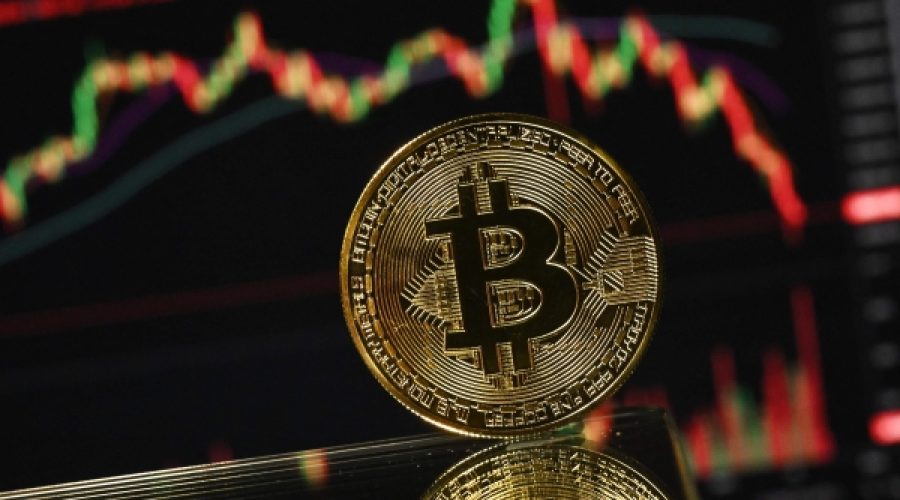
Cryptocurrencies stabilized after a dramatic Thursday decline that wiped $2 trillion from the market. Bitcoin rebounded 2.6% to $64,735.60, recovering from a low near $60,000. Ethereum was up 3.1% at $1,904.01, partially offsetting an earlier 5.1% drop.
Precious metals also showed signs of recovery. Silver climbed 1.9% to $72.54 after a steep 10% plunge, while gold gained 1.6% to $4,843.83, bouncing back from a 2.4% fall. Notably, China’s UBS SDIC Silver Futures fund, a key benchmark in the precious metals rout, was temporarily suspended after hitting its daily 10% limit down, only to drop 10% again upon reopening.
Chris Weston, Head of Research at Pepperstone Group in Melbourne, attributed the volatility to aggressive unwinding of large crowded positions, warning that further market casualties could emerge later this year. “Certain smaller businesses outside the Magnificent Seven mega-cap tech stocks may face a harsher capital market environment,” he said.
The S&P 500 software and services index plunged 4.6%, erasing roughly $1 trillion in value since January 28 in what analysts have dubbed “software-mageddon.” Adding to the pressure, Amazon shares tumbled 11.5% in after-hours trading Thursday after the company forecasted capital expenditures soaring more than 50% this year.
Asian markets were turbulent, with some investors seeking bargains amid widespread losses. South Korea’s KOSPI initially fell 5%, triggering a brief trading halt, but closed down 1.4%. Japan’s Nikkei 225 gained 0.8% ahead of Sunday’s election. Indonesian stocks dropped 2.6% after Moody’s downgraded the country’s credit outlook due to reduced policy predictability, following a transparency-related MSCI market rout that shaved more than $80 billion from its value.
Investors are increasingly speculating the Federal Reserve may cut interest rates at its March meeting, though most still expect rates to hold steady. Fed funds futures now price a 20.7% chance of a 25-basis-point cut, up from 9.4% the previous day, per CME Group data.
The U.S. dollar index eased 0.2% to 97.794, while the 10-year Treasury yield fell 2.2 basis points to 4.186%. In energy markets, Brent crude rose 1.1% to $68.28 a barrel.
Special Analysis by Omanet | Navigate Oman’s Market
The recent global market volatility, marked by sharp selloffs in tech stocks and precious metals, signals heightened investment risks and cautious sentiment. For businesses in Oman, this underscores the importance of diversifying portfolios and preparing for potential capital market tightening. Smart investors and entrepreneurs should monitor Fed policy shifts closely and explore opportunities in more stable sectors, such as energy, while hedging against speculative market swings.