Stocks Surge and Oil Prices Rise on Ceasefire Hopes: What This Means for Investors and Business in Oman
Stocks climbed on Friday as investors maintained cautious optimism regarding the fragile US-Iran ceasefire ahead of upcoming weekend talks. However, oil prices continued to rise amid concerns over Israel’s attacks on Lebanon and Saudi Arabia’s warning about reduced production capacity.
The announcement on Tuesday of a two-week truce, which included reopening the Strait of Hormuz after its closure at the war’s onset, sparked widespread market enthusiasm. Yet, hopes for a resolution have been tempered by disputes over the ceasefire terms and the future operation of the vital waterway, through which approximately 20% of the world’s oil and gas supply transits.
US President Donald Trump issued a stern warning on Thursday against Iran’s plan to impose tolls on vessels passing through the Strait of Hormuz. On social media, he declared: “They better not be and, if they are, they better stop now!” He added shortly afterward that “very quickly, you’ll see Oil start flowing, with or without the help of Iran,” criticizing Tehran’s handling of oil transit as “dishonorable” by some accounts.
Since the ceasefire took effect, maritime tracking data indicate only 10 vessels have passed through the strait, with just one tanker not registered to Iran.
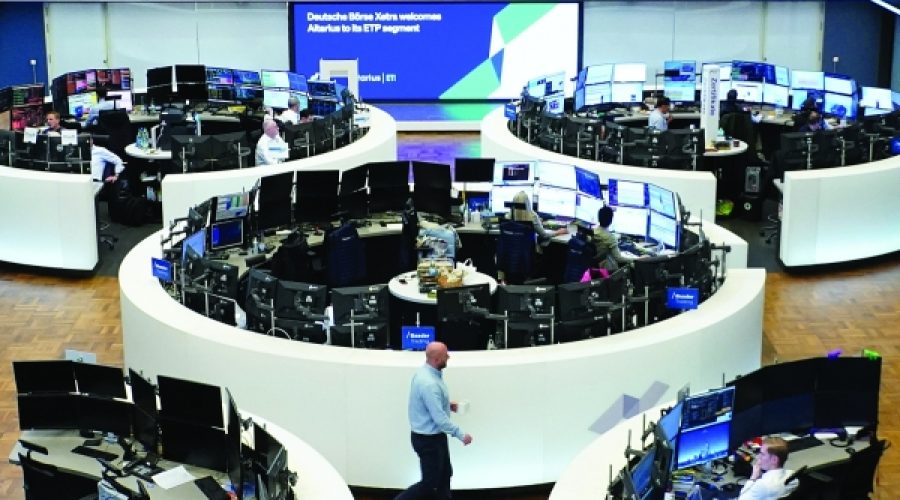
Equity markets, battered since the conflict began on February 28, extended gains this week. Major Asian markets including Tokyo, Hong Kong, Seoul, Shanghai, Taipei, Singapore, Mumbai, Bangkok, Jakarta, and Manila advanced, along with European markets in London, Paris, and Frankfurt. Meanwhile, Sydney and Wellington experienced slight declines. Wall Street also saw a second consecutive strong rally.
Crude oil prices surged, with West Texas Intermediate briefly surpassing $100 on Thursday, before settling near that mark on Friday. Market jitters were amplified by Saudi Arabia’s announcement that Iran’s attacks on its infrastructure had reduced production capacity by about 600,000 barrels per day, roughly 10% of its typical exports, according to Bloomberg.
Analysts pointed to the upcoming talks between Israel and Lebanon in Washington next week as a positive development supporting equity gains. NBC reported that President Trump urged Israeli Prime Minister Benjamin Netanyahu to scale back military strikes in northern Israel to facilitate successful negotiations with Iran.
Michael Brown of Pepperstone noted, “If an Israel-Lebanon ceasefire can be agreed, that is in turn likely to increase the chances of a US-Iran deal being struck, thus raising the likelihood of a swifter normalisation of commodity flows through the Strait of Hormuz.”
IG market analyst Fabien Yip observed that stocks hit hardest during the conflict are “likely candidates for the sharpest near-term recovery.” However, she cautioned that the ceasefire remains temporary and details sparse. With significant differences still existing between Iran’s 10-point proposal and Washington’s positions, the upcoming Islamabad talks offer no guaranteed success.
Furthermore, Yip noted that reopening the Strait of Hormuz, subject to Iran’s “technical limitations,” could take weeks or months to clear shipping backlogs and restore normal supply chains. Consequently, crude oil prices are unlikely to return to pre-war levels in the near term.
The head of the International Monetary Fund also announced plans to revise down global growth forecasts due to the conflict’s “scarring effects.”
— AFP
Special Analysis by Omanet | Navigate Oman’s Market
The fragile US-Iran ceasefire and tentative reopening of the Strait of Hormuz present both opportunities and risks for Oman’s businesses, particularly in the energy and logistics sectors. While the easing of tensions hints at a potential gradual normalization of oil flows, prolonged uncertainties and disruptions underscore the need for cautious, strategic investments focused on resilience and diversification. Smart investors should monitor geopolitical developments closely and prioritize sectors poised for recovery once stability returns to the region.