Trump Announces Trade Deal with India: Key Impact on Tariffs and Business Opportunities for Investors and Entrepreneurs
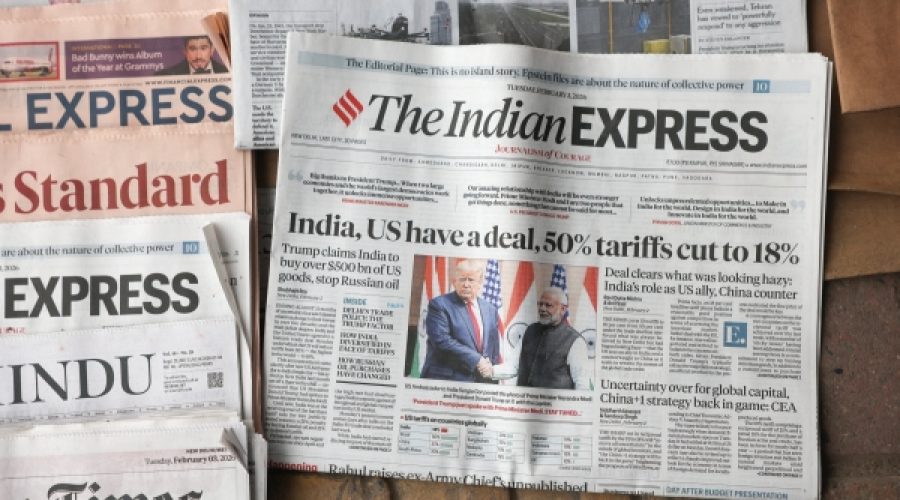
President Donald Trump announced on Monday that the United States has reached a trade agreement with India aimed at reducing some of the steep tariffs previously imposed on Indian imports.
According to Trump’s social media statement, the deal involves the U.S. lowering its tariffs on Indian exports to 18%, down from the 50% tariffs that had been applied following difficult negotiations last year. In return, India agreed to reduce its tariffs on certain American goods and to stop purchasing Russian oil.
While specific details were limited, the agreement is expected to ease tensions between the two countries. The high tariffs had diminished India’s appeal as a manufacturing destination, especially for companies relocating from China. Analysts believe this agreement could restore India’s strategic economic alignment with the U.S.
Indian Prime Minister Narendra Modi expressed his satisfaction with the tariff rollback on social media but provided few details, including any confirmation about halting Russian oil imports. Modi highlighted the benefits of cooperation between the world’s two largest democracies and praised Trump’s leadership for global peace and prosperity.
Trump emphasized that India would phase out tariffs and non-tariff barriers on U.S. products completely, potentially reaching zero. He also claimed that Modi agreed to increase purchases of American energy, technology, agricultural products, and coal, with potential oil imports from the U.S. and Venezuela replacing Russian oil. Trump projected these purchases could amount to $500 billion.
Cornell University trade policy expert Eswar Prasad said the deal could restore India’s position as a major economic and geopolitical partner, particularly if finalized before India’s recent trade deal with the European Union. He noted it was significant that Modi appeared willing to ease restrictions on U.S. agricultural exports, despite the sector’s political sensitivities in India. However, Prasad pointed out that issues like U.S. immigration policies and remaining tariffs would still pose challenges.
The White House has yet to release further details but is expected to do so soon. Past Trump-era preliminary agreements have often been frameworks with many unresolved issues. Some previous deals, such as those with South Korea and the European Union, have faced obstacles recently.
India recently forged trade agreements with the European Union, Britain, Oman, and New Zealand, aiming to diversify its markets. The absence of a deal with the Trump administration had been a point of contention for India, as the U.S. is the country’s largest trading partner. Trump’s tariffs had escalated to among the highest on Indian goods, complicating bilateral trade.
Trump had expressed frustration about India’s trade barriers, including tariffs affecting American automobiles and motorcycles. Despite efforts during his first term, a trade agreement was never reached. Optimism grew early in his second term with Modi’s visit to Washington, but Trump subsequently imposed higher tariffs and urged India to stop buying Russian oil.
Disputes over agricultural market access and political tensions between India and Pakistan complicated negotiations. Indian industries such as pharmaceuticals, auto parts, and chemicals largely favored increased trade openness, whereas agricultural sectors resisted tariff reductions to protect small-scale farmers from economic displacement.
Indian officials were also concerned about planned U.S. tariffs on pharmaceuticals related to national security and stricter U.S. student visa policies, given India is now the largest source of foreign students in the U.S.
The tariffs imposed significant challenges for U.S. companies sourcing from India, especially those shifting production out of China. Although the new 18% tariff is a reduction, critics argue it still represents a heavy burden on small businesses and consumers compared to pre-tariff levels.
Dan Anthony, executive director of We Pay the Tariffs, a coalition of over 800 small businesses opposing the levies, called the agreement a “permanent tax hike,” citing a 600% tariff increase compared to 2024 rates. He noted that before Trump’s policies, U.S. importers paid approximately 2.5% tariffs on Indian goods—a rate now locked six times higher.
This article originally appeared in The New York Times.
Special Analysis by Omanet | Navigate Oman’s Market
The recent US-India trade agreement, reducing tariffs to 18%, signals a potential realignment in global trade dynamics that could shift manufacturing and investment flows in the region. For businesses in Oman, this creates opportunity to leverage India’s strengthened economic ties with the US by exploring joint ventures or supply chain integrations that tap into expanded markets. Smart investors should consider the risks of tariff volatility but also the strategic advantages of positioning Oman as a complementary trade hub amid evolving US-India relations and India’s growing global manufacturing prominence.