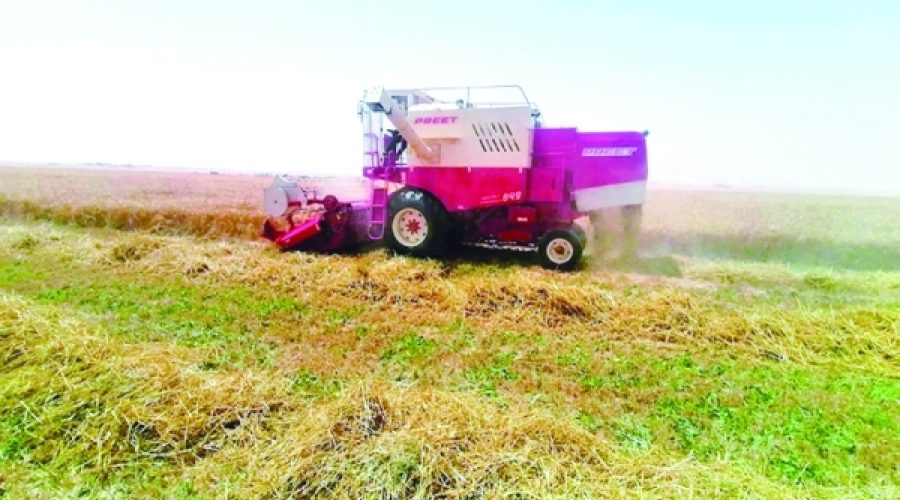
Wheat Farming Plan Unveiled: How It Strengthens Food Security and Business Opportunities in Oman
MUSCAT, APRIL 7 — The Sultanate of Oman is experiencing a significant increase in wheat cultivation as part of its strategic initiatives to bolster food security and reduce dependence on imports, aligning with the goals of Oman Vision 2040. This growth is facilitated by ongoing government support and the integration of advanced agricultural technologies.
Dr. Ahmed al Bakri, Under-Secretary of the Ministry of Agriculture, Fisheries and Water Resources for Agriculture, highlighted that Oman’s annual wheat demand is approximately 350,000 tonnes. Imports, managed mainly by Salalah Mills and Oman Flour Mills, total around 900,000 tonnes. The government actively supports wheat re-export and storage, maintaining reserves in silos for prolonged periods. Furthermore, a wheat support program was introduced in response to the Ukraine crisis, promoting the procurement of locally grown wheat.
The 2025/2026 wheat harvest commenced in mid-March and is expected to intensify through April and May. Early reports indicate a promising season, with many farms across various governorates noting increased yields. Significant expansion is evident in regions such as Najd (Dhofar) and Al Mudhaibi (North Sharqiyah), where the cultivated area in Najd alone exceeds 6,400 acres.
Official figures show that wheat production in the 2024–2025 season reached about 10,128 tonnes, valued at over RO 3 million. This output remains modest compared to the estimated annual demand of 350,000 tonnes, underscoring continued reliance on imports.
To address this, the Ministry’s Wheat Cultivation Expansion Project (2023–2027) is underway, focusing on introducing higher-yield wheat varieties, modern farming equipment, and advanced agricultural support for farmers. The 2025–2026 season anticipates further growth, particularly in Najd, with production in some areas expected to exceed 8,000 tonnes.
The food security sector also showed robust progress, expanding by 9.1% by the end of the third quarter of 2025 and contributing RO 831 million to the GDP. This growth is fueled by broader agricultural development and enhanced production efficiency.
Despite these advances, experts note that wheat farming in Oman is largely strategic rather than profit-driven, given the high costs of water and energy relative to global wheat prices. The government continues to back the sector by offering purchase incentives of up to RO 500 per tonne and enhancing supply chain and storage infrastructure.
Oman’s agricultural policy is evolving into a dual approach: incrementally increasing local production while maintaining import levels to satisfy most domestic demand. This strategy ensures food supply stability amid global market volatility and promotes sustainable agriculture.
Looking ahead, the sector is expected to gradually expand, driven by larger cultivated areas, smart farming technologies, and improved yields. However, challenges such as water scarcity and climate change remain significant hurdles to long-term growth.
Special Analysis by Omanet | Navigate Oman’s Market
Oman’s strategic expansion in wheat cultivation, supported by government incentives and modern technologies, signals a strong commitment to enhancing food security and reducing import dependency amid global uncertainties. While production costs and environmental challenges pose risks, smart investors should explore opportunities in agri-tech and supply chain innovations to capitalize on the growing sector. Businesses must also consider the evolving dual model of balancing local production with imports to ensure stability and sustainability.