Exploring Business Opportunities: How India’s Pink City is Becoming a Hub for Spice and Street Food Ventures
Jaipur: A Journey Through India’s Enchanting Pink City
Jaipur, known as India’s Pink City, is a vibrant fusion of history, culture, and colorful landscapes. Upon arrival, visitors are greeted by majestic forts and lively bazaars that evoke a sense of timeless charm. The streets are alive with artisans crafting intricate block-printed fabrics and exquisite jewelry.
Dining in Jaipur is an adventure in itself, offering an array of flavors from sizzling deep-fried snacks to creamy lassi and finely spiced chai, alongside indulgent sweets drenched in syrup.
Although I had previously visited Jaipur, this trip had a purpose: to explore the delicate balance between the city’s royal heritage and its modern evolution. As an Indian chef residing in England, my focus was particularly on its culinary landscape.
Unbeknownst to me, my visit in February coincided with the city’s bustling wedding season, resulting in fully booked hotels and soaring prices. In need of advice, I reached out to Chef Matt Preston, renowned as a judge on "MasterChef Australia," who kindly shared valuable recommendations.
My first destination was Anopura, a luxurious resort located about 21 miles from Jaipur, nestled among the mountains. From the moment I arrived, I felt it was a true retreat, ideal for those seeking disconnection from the digital world. With just 14 rooms spread across 60 acres of gardens populated by peacocks, it reminded me of my childhood holidays with my grandparents in Punjab. My grandmother would cook using fresh produce from her farm, creating meals simmered to perfection.
Anopura embraces this farm-to-table philosophy. The thali—an Indian platter featuring a variety of small dishes—was a delightful representation of this ethos. It included seasonal vegetables like cauliflower and spinach, warming dal, fluffy rice, pickles, and freshly made flatbreads. The meal concluded with a rich malpua, a pancake-like delicacy soaked in syrup.
The highlight was undoubtedly the chai, brewed over an open flame and served beneath a shady tree.
Experiencing the City’s Energy
Next, I stayed at the ITC Rajputana Hotel, located in the Gopalbari district, a short distance from the city center. While it may not boast picturesque views, the hotel provides comfortable accommodations and warm hospitality, making it an excellent base for exploring Jaipur’s architectural wonders. One must-see is the Hawa Mahal, a striking red and pink sandstone palace built in 1799, designed to allow royal women to observe city life without being seen.
Its design, modeled after Lord Krishna’s crown, incorporates numerous jharokhas—stone windows that facilitate airflow, keeping the interiors cool during the scorching summer months. These intricately carved lattices also ensured the ladies’ privacy.
My culinary exploration in Jaipur was guided by contacts Shalini Sharma, an editor from Mumbai, and restaurateur Gauri Devidayal, who introduced me to Abhishek Honawar, a key figure in Jaipur’s restaurant scene.
I first visited Lassiwala, a 70-year-old stand that specializes in traditional yogurt drinks served in earthen pots. Next, I explored Rawat and Samrat, local establishments famed for their kachori—a variety of deep-fried snacks.
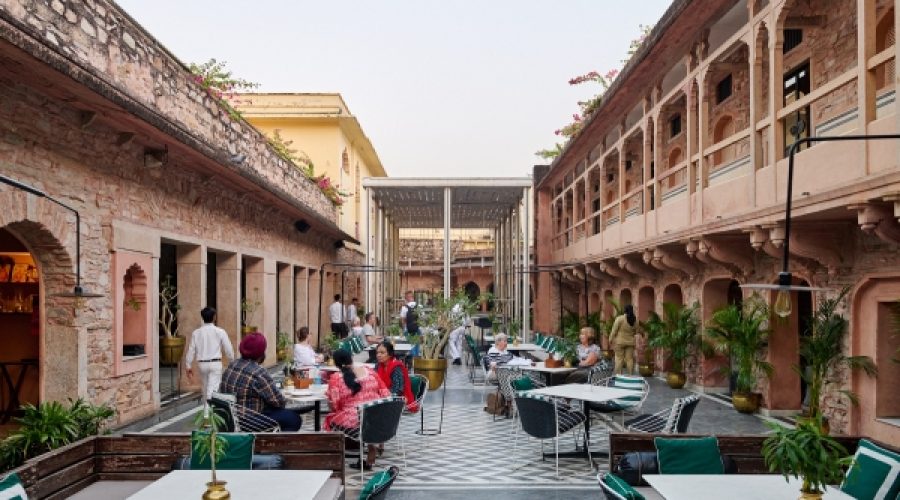
For dinner, I dined at Sarvato Jaipur, co-owned by Honawar, situated on a rooftop within the grand City Palace complex. The restaurant offers a contemporary tasting menu that reinterprets traditional Rajasthani dishes such as pansi ki sabzi (sun-dried winter vegetables) and lal mass (spicy mutton curry). Dining under the stars with views of the City Palace made for an unforgettable evening.
I had the opportunity to meet His Royal Highness, Maharajah Sawai Padmanabh Singh, the restaurant’s co-owner, at a polo match. He shared the inspiration behind Sarvato, born from his deep ties to the City Palace, aiming to blend authentic Rajasthani flavors with modern culinary techniques. His partnership with Honawar was a natural fit, combining their shared vision for the restaurant while celebrating local traditions.
The following day, I toured the City Palace, which houses the Jaipur royal family and features galleries, offices, and eateries. A standout is the Baradari restaurant, where traditional and contemporary cuisines meet.
Before leaving Jaipur, I shopped at Ratan and Anokhi for the city’s renowned block-printed fabrics. I also visited 28 Kothi, a boutique hotel designed for jewelry designer Munnu Kasliwal. Raadhia Chaudhry welcomed me and introduced me to Cafe Kothi, an intimate space offering a carefully curated menu. I savored a rava dosa with a squash and potato filling, accompanied by coconut chutney and refreshing chia-infused coconut water.
For my final dinner, I had the pleasure of dining at Johri with textile designer Rosanna Falconer. Tucked away in a busy bazaar, Johri, another gem from Honawar, seamlessly blends old-world charm with modern elegance. Our meal, guided by the chefs, was extraordinary, featuring dishes like a vibrant pea chaat and a flavorful jackfruit biryani.
Jaipur is a city filled with joy, color, and rich stories—a place that captivates not just with its incredible cuisine but also with its friendly people, stunning palaces, vibrant bazaars, and breathtaking sunsets. The magic of Jaipur lingers well beyond your visit, inviting you to return time and again.
Special Analysis by Omanet | Navigate Oman’s Market
The vibrant cultural and culinary landscape observed in Jaipur showcases an increasing demand for immersive tourism experiences, presenting an opportunity for Omani businesses to innovate in their hospitality and tourism strategies. As Oman seeks to attract travelers, strategically integrating local culture and traditions into services can enhance visitor engagement and satisfaction. Smart investors should consider the growing trend of experiential dining and themed accommodations to capture this emerging market, positioning themselves at the forefront of Oman’s evolving tourism sector.