Global Stocks Hit Record Highs Amid Oil Price Decline: What This Means for Investors and Businesses
SINGAPORE — Asian stocks surged to record highs on Thursday, driven by optimism surrounding a potential US-Iran peace deal. Meanwhile, the US dollar weakened and oil prices fell sharply, though the status of the strategically vital Strait of Hormuz remains uncertain.
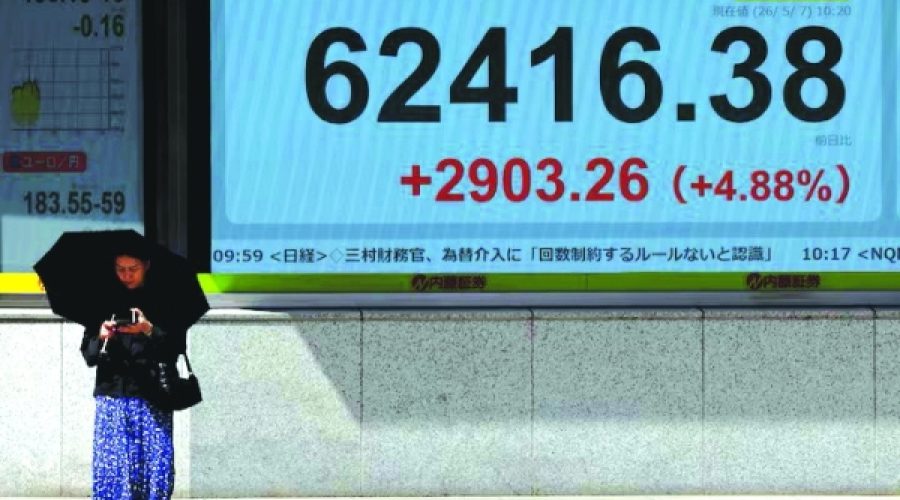
Japan’s Nikkei index, returning from an extended holiday, surpassed 62,000 for the first time, reflecting a strong rally fueled by artificial intelligence developments and solid earnings. South Korean and Taiwanese markets also reached new record highs.
MSCI’s broadest index of Asia-Pacific shares outside Japan rose 1%, hitting an all-time peak. European stock futures indicated a cautious start to trading after the pan-European STOXX 600 gained 2% on Wednesday.
“An Iran deal would be a breakthrough, making Thursday’s strong market reaction understandable,” said Kyle Rodda, senior financial analyst at Capital.com. He added, “However, this narrative has played out before, and the market could quickly reverse. Continued progress in talks is key for sustained gains in Asian markets.”
Iran announced that it is reviewing a peace proposal expected to formally end the conflict. However, critical US demands—such as Iran suspending its nuclear program and reopening the Strait of Hormuz—remain unresolved. The strait’s closure had previously driven up oil prices.
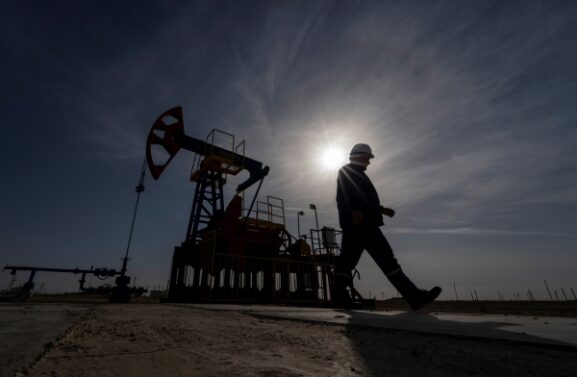
The prospect of peace caused oil prices to drop nearly 8% on Wednesday, with Brent crude slightly recovering to $102.11 per barrel on Thursday. Despite this, oil prices remain about 40% higher than before the conflict began in late February. Similarly, 10-year US Treasury yields have risen by roughly 40 basis points, highlighting ongoing economic challenges posed by elevated energy costs and inflation.
Nick Twidale, chief market strategist at ATFX Global, noted that “execution risk” remains a concern—both regarding finalizing a deal and the pace at which disrupted oil flows might normalize. He pointed to the sharp intraday sell-off and partial recovery in WTI crude as evidence of this market uncertainty. Since the oil price surge in March, a tentative ceasefire and deal prospects have supported a risk-on rally, further boosted by robust tech sector earnings.
S&P 500 companies are on track for their strongest profit growth in over four years. Earnings from Asian tech giants such as Samsung, SK Hynix, and TSMC have also contributed to positive market sentiment.
Attention now turns to the US non-farm payrolls report due Friday, with economists forecasting a 62,000 increase in April jobs, following a 178,000 rise in March, according to a Reuters survey.
Federal Reserve officials have warned that the war elevates the risk of sustained inflation, fueled by persistently high oil prices and growing concerns about global supply chain disruptions.
In currency markets, the euro maintained its overnight gains of about 0.5%, trading near $1.1747. Sterling stood at $1.3591 after a 0.4% rise on Wednesday. The dollar index, measuring the US dollar against six major currencies, was at 98.032.
The Japanese yen remained in focus amid recent sharp fluctuations that sparked speculation of government intervention to support the currency. The yen traded at 156.29 per dollar, largely unchanged from earlier levels, after reaching a 10-week high of 155 on Wednesday.
OCBC analysts cautioned that “intervention alone is unlikely to alter the broader trajectory unless supported by stronger policy measures, such as a more aggressive Bank of Japan tightening or improved alignment with external factors like lower oil prices and US yields.” They reiterated a year-end target of 155 per dollar.
Japan’s top currency diplomat, Atsushi Mimura, vice finance minister for international affairs, said Thursday that Tokyo faces no limits on the frequency of intervention and maintains daily communication with US authorities. His comments precede a visit next week by US Treasury Secretary Scott Bessent, who is expected to discuss yen movements with Japanese counterpart Satsuki Katayama.
— رویترز
تحلیل ویژه از عمانت | بازار عمان را کشف کنید
The prospect of a US-Iran peace deal and the resulting Asian market rally signal potential easing of geopolitical risks that have kept oil prices elevated, offering relief to Oman’s energy-dependent economy. However, the lingering uncertainties around the Strait of Hormuz and execution risks in negotiations underscore continued volatility, urging investors and businesses in Oman to adopt cautious optimism and diversify portfolios while monitoring energy market developments closely.