How AI and Oil Industry Shifts Are Reshaping Global Markets: What Investors Need to Know
Artificial intelligence (AI) has been a major force driving global financial markets in 2026, but the standout performers are not the stocks many might expect.
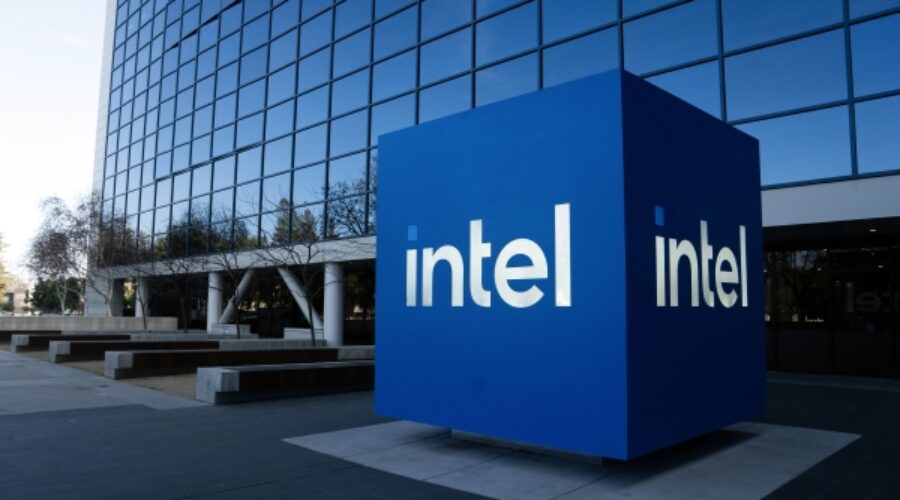
While Nvidia, the world’s most valuable publicly traded company, has delivered an astonishing 21,000% return over the past decade, it is not the leading chipmaker this year. That distinction goes to Intel, a company that only a year ago required a U.S. government bailout but has since staged an impressive recovery. In April 2026 alone, Intel’s shares surged by 114%, and year-to-date through early May, the stock had risen 194.5%—more than nine times Nvidia’s gain.
AI, alongside fluctuating oil prices and geopolitical tensions such as the Arabian Gulf war, is reshaping markets worldwide. Unlike Nvidia, which produces chips primarily used for the development or “training” of AI models, the market rally this year has favored companies supplying semiconductors critical for AI “inference”—the process whereby AI systems provide answers to user queries. Intel is a leading player in this category.
This trend extends beyond the U.S., buoying stock markets in South Korea and Taiwan, driven by major chipmakers including Samsung Electronics, SK Hynix, and Taiwan Semiconductor Manufacturing Company (TSMC). TSMC plays a pivotal role globally as a foundry producing advanced chips designed by companies such as Nvidia.
Emerging markets are benefiting significantly from this chip sector boom. The MSCI Emerging Markets Index, a key benchmark for these economies, has risen 18.8% in 2026, outperforming both the S&P 500’s 9.6% gain and the Roundhill Magnificent Seven ETF’s 6% increase. The ETF holds major U.S. tech giants known to profit from AI enthusiasm, including Alphabet, Amazon, Apple, Meta, Microsoft, Nvidia, and Tesla.
The makeup of the MSCI Emerging Markets Index partly explains this surge: it limits Chinese companies to a 23% weighting while classifying Taiwan and South Korea as emerging markets, with these two countries combined comprising 43.7% of the index. Consequently, TSMC, Samsung, and SK Hynix are its three largest components. Investment in emerging markets via this benchmark effectively doubles as a bet on AI technology, comparable to investing in the tech-heavy S&P 500.
This concentration highlights a broader issue: U.S. stock market indices, dominated by “Magnificent Seven” tech companies and chipmakers, have become highly concentrated and less diversified. The same pattern is now visible globally, with semiconductor stocks leading market gains.
Historically, emerging markets were seen as more distinct from developed markets like the U.S., Western Europe, and Japan, but today true diversification is increasingly difficult to achieve.
While some markets, such as Ghana’s GSE composite index and Nigeria’s NGX all-share index, rank among the top global performers this year, their success is tied to rising oil prices amid the U.S.-Israeli conflict with Iran. Nigeria and Ghana’s roles in oil production have driven gains similar to those of U.S. energy companies like Valero Energy and Halliburton, which have thrived on surging fossil fuel prices.
Underlying the global market movement are semiconductor companies collectively tracked by the Philadelphia Semiconductor Index (SOX). Despite the Philadelphia Stock Exchange itself having diminished following its 2007 merger with Nasdaq, the SOX index remains influential, featuring global chip leaders like Intel, Nvidia, ASML (the Dutch maker of chip-etching machinery), and TSMC. These companies have driven a 63.6% rise in the index this year.
The rapid ascent of the SOX echoes its dot-com boom peak in 2000 before the subsequent bust. Hedge fund manager Michael Burry, known for predicting the 2008 crisis and featured in “The Big Short,” warns that the AI-fueled market surge resembles a tech bubble poised to burst—and this time it affects a tightly interconnected global market.
Beyond market dynamics, geopolitical risks loom large, especially regarding Taiwan and its semiconductor industry’s critical role. Taiwan, home to TSMC, occupies a strategic position comparable to the Strait of Hormuz for oil supply. The recent U.S.-China summit in Beijing underscored ongoing tensions over Taiwan’s status. China insists on eventual reunification with Taiwan, which it views as part of its sovereign territory. In contrast, the United States maintains a policy of “strategic ambiguity,” a stance dating back to the 1972 Shanghai Communiqué.
The semiconductor industry’s importance has contributed to a “silicon shield” that helps preserve Taiwan’s fragile peace. However, President Xi Jinping emphasized to President Donald Trump that the “Taiwan question is the most important issue in China-U.S. relations,” while U.S. Secretary of State Marco Rubio affirmed that America’s policy remains “unchanged.”
Global markets favor the current status quo, but political instability in East Asia could disrupt markets as severely as conflicts near the Strait of Hormuz have done.
In sum, whether driven by AI or oil, no stock market exists in isolation. Geopolitics, technology, and energy remain intertwined, shaping investment landscapes worldwide.
This article originally appeared in The New York Times.
Special Analysis by Omanet | Navigate Oman’s Market
The global surge in AI-driven semiconductor companies, particularly in emerging markets like Taiwan and South Korea, highlights a strategic opportunity for Oman to diversify investments beyond oil by exploring tech-related sectors and partnerships. However, geopolitical tensions around Taiwan and oil chokepoints like the Strait of Hormuz pose risks that could disrupt supply chains and market stability. Smart investors and entrepreneurs in Oman should closely monitor these developments and consider balancing AI tech exposure with energy sector resilience to navigate a highly interconnected and volatile global market.