Duqm Port’s Strategic Rise: Implications for Investors and Businesses in Global Trade Routes
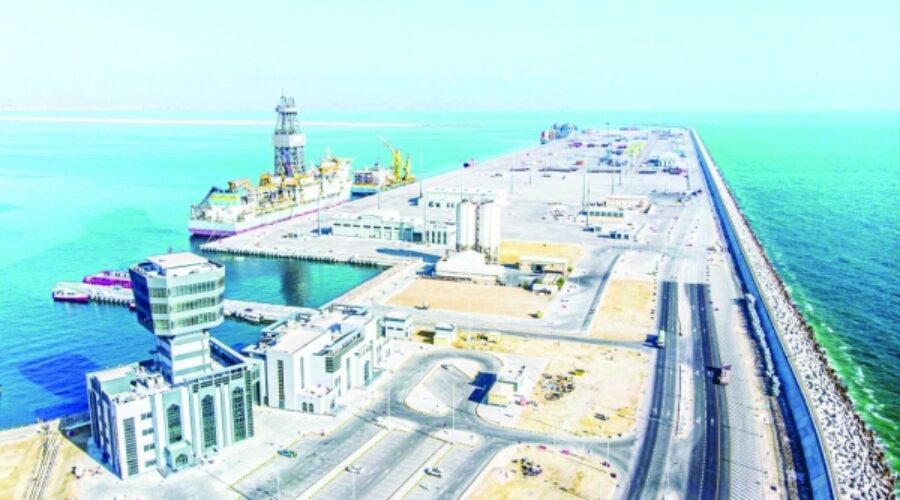
MUSCAT, JUNE 23 – As global trade dynamics shift and the demand for secure, adaptable logistics corridors intensifies, the Port of Duqm is emerging as a pivotal project redefining Oman’s position in international supply chains, according to Reggy Vermeulen, CEO of the Port of Duqm.
In an interview with the Observer, Vermeulen highlighted that Duqm’s rising importance aligns with a global trend towards supply chain diversification, aiming to reduce reliance on conventional maritime routes. This strategic positioning on the Arabian Sea, outside the Strait of Hormuz, enhances the port’s competitive edge, establishing it as a safer and more flexible entry point for regional and international trade.
The Port of Duqm serves as a critical component of Oman’s logistics framework, functioning within an integrated network that connects ports, industrial zones, warehouses, and distribution channels. This connectivity contributes to reduced shipping times, lower operational costs, and improved cargo flow efficiency to global markets.
Traditionally, logistics networks in the Gulf have been centred around a few key hubs, particularly Jebel Ali and Abu Dhabi, which have dominated cargo distribution across the GCC. However, Vermeulen noted that current geopolitical tensions and operational challenges are causing a “complete rerouting” of supply chains, with cargo flows increasingly gravitating towards alternative entry points on the Gulf’s periphery.
Ports such as Fujairah and Khor Fakkan in the UAE, Saudi Arabian ports, and Oman’s growing maritime network are benefiting from this shift. In this evolving environment, Oman is positioned as one of the most resilient logistics hubs in the region, capable of supporting ongoing GCC trade.
While logistics trends may eventually return to more traditional routes as current disruptions settle, Vermeulen maintains that the argument for diversified supply chain corridors is robust. “There needs to be a permanent element of logistics flowing through more secure and stable ports like Oman,” he emphasized, indicating that future disruptions are inevitable.
He underscored that the resilience of supply chains relies on preparedness and redundancy. By keeping Omani logistics routes active and well-practiced during regular operations, they can be swiftly scaled during disruptions to protect regional trade and industrial activities.
Regarding the Port of Duqm’s specific contributions, Vermeulen explained that it occupies a specialized niche within the GCC logistics framework, focusing on high-volume industrial cargo segments, including project cargo, oil and gas shipments, vehicles, and industrial raw materials.
He pointed out that Duqm is increasingly functioning as both an entry and exit point for regional industrial supply chains, where companies import raw materials for processing and subsequent re-exportation. This positions Duqm as a strategic industrial logistics hub, distinct from a conventional gateway for consumer markets.
“Every port has its own specifications,” Vermeulen remarked, noting that Duqm’s competitive strength lies in its capacity to handle industrial-scale cargo volumes and support heavy industries within both regional and global value chains.
تحليل خاص من عمانت | تصفح سوق عُمان
ال ميناء الدقم is poised to become a مركز لوجستي استراتيجي, enhancing Oman’s role in the evolving global supply chain landscape. This shift presents فرص كبيرة for businesses focusing on البضائع الصناعية and raw material processing, while also mitigating risks associated with reliance on traditional routes. المستثمرون ورجال الأعمال should consider leveraging the port’s flexible logistics capabilities to tap into new markets and increase operational resilience in an unpredictable geopolitical climate.