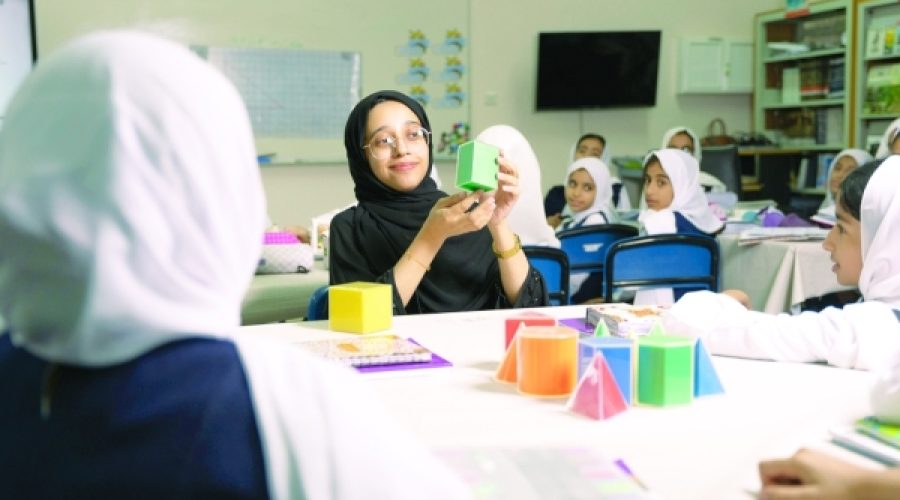
GCC Education Sector Growth to 10.9 Million Students: Key Opportunities for Investors and Entrepreneurs in Oman
المسكات عنب طيب الشذا: The education sector across the Gulf Cooperation Council (GCC) nations is experiencing steady growth, with total student enrollment in general education reaching 10.9 million for the 2023/2024 academic year, according to a report by the GCC Statistical Center.
This marks an increase from 10.4 million students in the 2018/2019 period, reflecting an average annual growth rate of 0.8 بالمئة. Currently, students comprise 17.7 percent of the total GCC population, emphasizing the sector’s increasing demographic and economic importance.
Public education remains the predominant sector, serving approximately 7.6 million students, or 70.2 percent of total enrollment. Conversely, private education is expanding rapidly, growing at an annual rate of 4.8 بالمئة, while public sector enrollment has seen a slight decline of 0.6 بالمئة.
Gender distribution in the classroom is nearly equal, with female students constituting 49.5 percent of total enrollment, translating to around 5.4 million females compared to 5.5 million males. Notably, the growth rate for female enrollment has exceeded that of males, increasing at 2.3 بالمئة annually versus 0.4 بالمئة for males.
The teaching workforce has also seen significant expansion, with the number of educators in public education rising to 940,100 for the 2023/2024 year. This represents an increase of 169,000 teachers over five years, with a 4 بالمئة annual growth rate. The majority of these teachers, approximately 842,000, are in school education, while early childhood education employs around 98,100.
Female educators now represent the majority of the teaching workforce, comprising 63.8 percent and underscoring the crucial role women play in shaping the region’s educational landscape.
The report highlights ongoing advancements in educational infrastructure, fueled by growing demand, higher education initiatives, and scholarship programs. Continuous government investment and policy reforms have led to improvements in quality, innovation, and alignment with labor market needs.
Additionally, GCC countries are making strides to integrate their education systems, accelerate digital transformation, and equip students with skills essential for future readiness—factors that are expected to enhance the global competitiveness of the region’s education sector. — ONA
تحليل خاص من عمانت | تصفح سوق عُمان
ال steady growth in the education sector across the GCC highlights significant opportunities for businesses targeting educational products and services in Oman. As private education expands at a robust pace, smart investors should consider capitalizing on this trend by exploring partnerships with educational institutions or investing in innovative learning technologies. However, with the increasing demand for quality and future-ready skills, organizations must be prepared to adapt quickly to stay competitive in this evolving landscape.