Airlines Brace for Long-Term Disruptions Despite Middle East Truce: What Investors and Business Owners in Aviation Should Know
Paris, France: The airline industry is grappling with significant challenges following six weeks of conflict in the Middle East. Carriers are urgently adjusting routes and cutting costs amid soaring fuel expenses and cautious travelers rethinking their plans—a situation likely to endure even if a fragile ceasefire holds.
Most airlines have suspended operations in the Gulf region, with Air France recently extending its flight suspensions until May 3. Sources indicate this decision was made prior to the recent ceasefire agreement between the United States and Iran.
With jet fuel prices unlikely to return to pre-conflict levels soon, airline CEOs are reconsidering expansion strategies and aircraft orders. Paul Chiambaretto, an aviation expert from Montpellier Business School, highlighted the dual pressures on the industry: “The sector is being hit with two simultaneous shocks—the steep rise in fuel prices, which is the biggest or second-biggest expense for a carrier, and a demand shock, with passengers deciding to wait and see.”
Jet fuel costs have more than doubled, rising from around $830 per ton before the war to over $1,800 per ton in early April, maintaining a high level of $1,786 per ton recently. Pascal de Izaguirre, president of the French aviation federation (FNAM), described the impact as “absolutely colossal,” noting that fuel, which typically accounts for 25 to 30 percent of operating costs, now represents 45 percent.
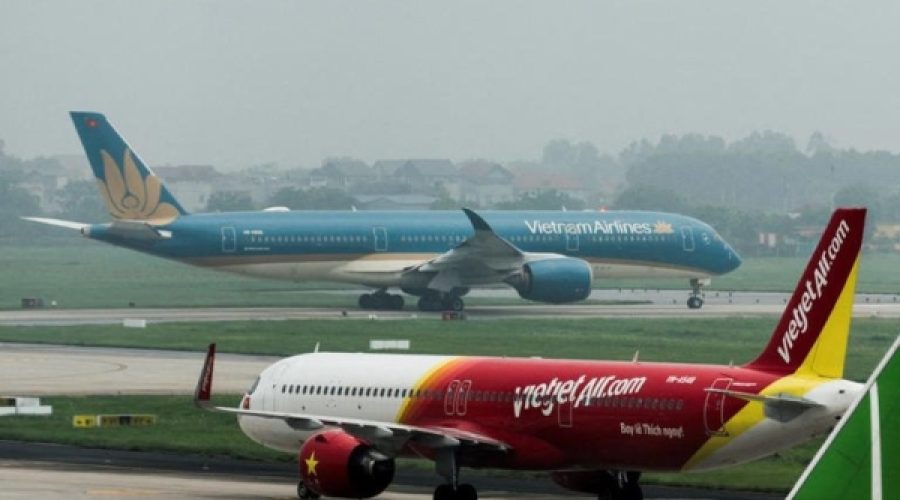
To safeguard profitability, airlines have raised ticket prices and suspended or canceled less profitable routes. For example, Vietnam Airlines has canceled approximately 20 domestic flights weekly starting in April due to fuel shortages.
Fuel surcharges have become common, though they remain relatively modest to avoid deterring customers. De Izaguirre remarked that current surcharges are “far too low” to cover rising costs fully, but airlines are cautious about excessive increases that might harm demand. Conversely, Hong Kong-based Cathay Pacific has repeatedly increased surcharges since February while adding flights to Europe to meet growing demand.
Industry leaders are closely monitoring whether the conflict will alter long-term travel behavior, potentially offsetting regional suspensions. Some carriers do not anticipate resuming Middle Eastern flights until October. Additionally, sustained high oil prices and resultant inflation could reduce both business and leisure travel spending.
Ryanair CEO Michael O’Leary observed shifting travel patterns, noting that travelers initially planning trips over or to the Middle East for Easter holidays have redirected to destinations like Portugal, Spain, Southern France, Italy, and Greece.
The conflict has also disrupted the business model of major Middle Eastern hubs, such as Dubai, Doha, and Abu Dhabi, which serve as pivotal transit points for long-haul flights connecting the Americas, Europe, and Asia. Airport closures following retaliatory strikes have canceled tens of thousands of flights and affected millions of passengers.
Pre-war, Dubai ranked as the world’s second-busiest transit airport after Atlanta, while Doha’s passenger volumes were comparable to Hong Kong and Frankfurt. However, with direct flights now bypassing Gulf hubs, and ongoing operational constraints, these airports face a prolonged recovery, contingent on jet fuel prices falling.
Willie Walsh, director of the International Air Transport Association (IATA), cautioned that even if the ceasefire holds, normalization of jet fuel supplies and pricing could take several months. “I don’t think it’s going to happen in weeks,” he said.
The airline industry thus faces a new operating environment shaped by sustained fuel cost pressures and shifting passenger demand patterns.
Special Analysis by Omanet | Navigate Oman’s Market
The prolonged Middle East conflict and soaring jet fuel prices are triggering a structural shift in global aviation, with airlines cutting routes and increasing fares, which could suppress regional travel demand for months. For Omani businesses, this creates both risks from reduced connectivity and opportunities to position Oman as an alternative regional hub as Gulf airports face operational constraints. Smart investors should consider aviation, logistics, and tourism sectors poised for transformation amid evolving travel patterns and fueled by potential rerouting and new market dynamics.