Battle Over Refreshers Heats Up: What It Means for Beverage Businesses and Investors in Oman
At Caribou Coffee, customers can enjoy a Strawberry Coconutmilk Refresher, while Taco Bell offers a Dragonfruit Berry Aqua Refresca. Sonic recently launched a line featuring a Mango Peach Sparkling Refresher. The competition among refreshers is set to escalate with McDonald’s entering the market.
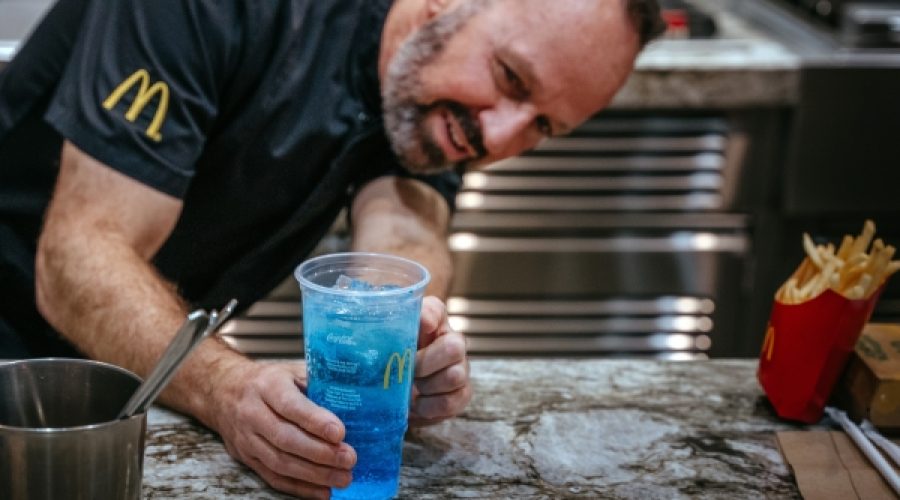
Starting in May, McDonald’s will introduce a vibrant lineup of fruit-flavored refreshers alongside crafted or “dirty” sodas, such as Sprite mixed with blueberry syrup and topped with whipped foam.
Refreshers are defined by being cold and visually striking. Alyssa Buetikofer, chief marketing and customer experience officer for McDonald’s 14,000 U.S. locations, described them as “very Instagrammable.” Beyond that, refreshers vary widely—they may be based on lemonade, green tea, sparkling water, coconut milk, and can be either caffeinated or not.
For McDonald’s, refreshers are more than just attractive beverages; they are a strategic tool to attract younger customers, especially Gen Z and Gen Alpha, and to expand menu options beyond traditional mealtimes. Charlie Newberger, head of beverages and desserts at McDonald’s, noted the category’s appeal and growth among younger consumers.
Additionally, beverages generally yield higher profits than food items, and refreshers often command a premium price compared to fountain sodas. This is crucial as rising costs for ingredients and labor force many customers to opt for value meals over pricier options.
Scott Murphy, chief brand officer at Inspire Brands (owner of Dunkin’ and Sonic), highlighted the high margins of beverages. He noted that refreshers have significantly driven incremental sales growth over recent years. Dunkin’ introduced its citrus refresher line in 2020, and iced drinks—including refreshers—have overtaken hot beverages in sales.
The rapid growth of refreshers at Dunkin’ brought logistical challenges like increasing ice production and sourcing more cups, as the chain sells over 1 billion iced beverages annually.
Due to the broad and varied nature of refreshers, accurately measuring the market’s size and growth is challenging. David Henkes of Technomic explained that refreshers cut across multiple categories, while Claire Conaghan of Datassential remarked that the term “refresher” is loosely applied—sometimes just to a strawberry lemonade.
Starbucks is widely credited with popularizing the refresher in 2012 with its Very Berry Hibiscus, a low-calorie drink with blackberry juice, hibiscus, green coffee extract, and blackberries. Today, refreshers generate $2 billion annually for Starbucks, which recently added a higher-caffeine energy refresher line.
McDonald’s has been exploring beverage innovations for years. In 2023, it launched CosMc’s, space-themed drive-thrus focused mainly on drinks to gauge customer interest in simpler beverage menus compared to Starbucks’ customizable offerings. This initiative revealed a consumer desire for some sweetness and dairy control without overwhelming choices.
Although the standalone CosMc’s closed last spring, McDonald’s began piloting refreshers and dirty sodas at 500 stores in September. During development, the company made adjustments such as removing freeze-dried strawberries from a drink to cut costs, though this reduced customer appeal. They also worked with suppliers to resize boba pearls for easier consumption with standard straws.
At McDonald’s Chicago test kitchen, menu innovation manager Todd Manisco demonstrated making a sweeter lemonade-based refresher with strawberry-watermelon syrup and dried strawberries, poured over ice into McDonald’s signature plastic cup.
Franchisee Scott Rodrick emphasized the new drink line requires minimal store investment and space. He expects competitively priced refreshers supported by a strong advertising campaign to help McDonald’s stand out in the crowded market.
“We may be late to the party,” Rodrick said, “but we are the most interesting guest.”
This article originally appeared in The New York Times.
Special Analysis by Omanet | Navigate Oman’s Market
The global surge in vibrant, customizable refreshers by major chains like McDonald’s highlights a significant opportunity for Omani businesses to innovate in the beverage sector, especially targeting younger, social-media-savvy consumers. For investors and entrepreneurs, capitalizing on high-margin, Instagrammable drinks could drive growth and help differentiate offerings amid rising food costs. However, brands must balance product appeal with operational efficiency, learning from challenges faced by global players in scaling these product lines successfully.