Trump’s Move to Sell Spirit Airlines: What This Means for Investors and Business Opportunities in the Aviation Sector
President Trump Opposes United-American Airlines Merger, Offers Support for Spirit Airlines
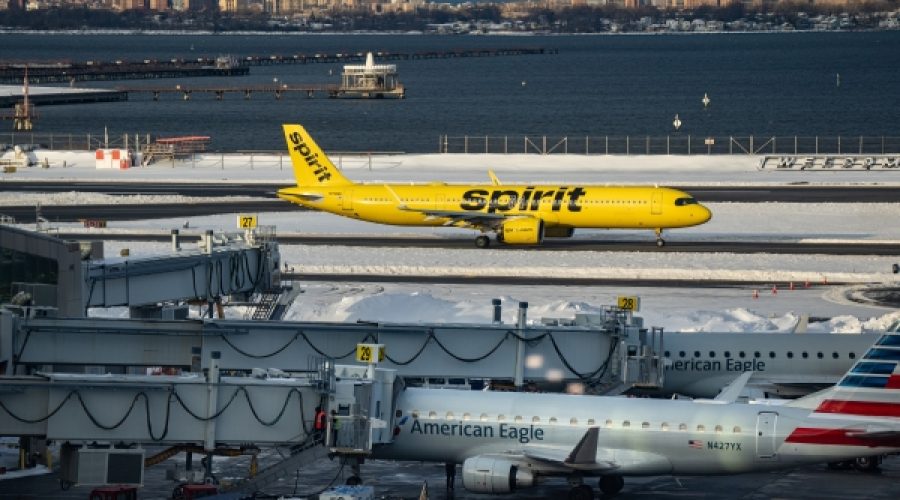
In a recent interview with CNBC, President Donald Trump expressed his opposition to a proposed merger between United Airlines and American Airlines. However, he indicated a willingness to support other airline deals, particularly emphasizing the possibility of rescuing Spirit Airlines from its financial troubles.
Trump remarked, “I don’t mind mergers,” and specifically mentioned that the federal government might consider assistance to keep Spirit Airlines operational. “Spirit’s in trouble, and I’d love somebody to buy Spirit. It’s 14,000 jobs, and maybe the federal government should help that one out,” he stated.
Spirit Airlines is currently experiencing its second bankruptcy in two years, struggling due to intense competition, mounting costs, a failed attempt to merge with JetBlue Airways, and issues with their jet engines. Additionally, the recent increase in jet fuel prices, largely influenced by the ongoing conflict in Iran, has further complicated Spirit’s financial situation.
While the specifics of potential government assistance remain unclear, Trump’s remarks raise questions about how the administration might support Spirit Airlines, especially considering past instances where the U.S. government provided financial aid to airlines, like during the aftermath of the 9/11 attacks and throughout the COVID-19 pandemic. Such interventions typically required congressional authorization.
Spirit’s bankruptcy complicates potential governmental financial involvement, as it restricts the ability of the government to purchase shares in the struggling airline. Any aid from the Trump administration could also set a precedent, encouraging other struggling airlines to seek federal support, particularly those impacted by the current geopolitical situation.
In contrast to his first term, Trump has shown a greater willingness to invest in companies under unconventional circumstances during his current term. Recent government actions include acquiring a 10% stake in Intel and a “golden share” in U.S. Steel in a deal with Nippon Steel, alongside investments in several essential minerals companies aimed at strengthening U.S. supply chains.
Experts have noted that simply injecting government funds may not resolve Spirit’s myriad issues. Jan Brueckner, an economics professor at the University of California, Irvine, pointed out that larger airlines have successfully attracted customers away from low-cost carriers like Spirit by offering more competitive basic economy fares. “Part of Spirit’s troubles are because the legacy airlines now offer a product that sort of mimics the ultra-low-cost-carrier business model,” he explained.
Brueckner is in favor of government backing for Spirit, viewing it as a beneficial gamble. He emphasized that the presence of Spirit Airlines is crucial for maintaining competitiveness in the airline industry, providing affordable options for consumers while enforcing fare discipline among other carriers.
Meanwhile, Transportation Secretary Sean Duffy announced that he would be meeting with executives from several low-fare airlines, including Spirit, in an effort to discuss potential support for these budget carriers, as per the president’s instructions.
Trump’s disapproval of the United-American merger surfaced following disclosures that United’s CEO, Scott Kirby, had discussed the possibility with the president earlier this year. This merger would create one of the largest airlines globally, with American Airlines currently operating more flights than any other airline.
“I know them both very well; I don’t like it,” Trump stated regarding the proposed merger. American Airlines has since dismissed the idea, stating they were “not engaged with or interested” in negotiations with United, while United has chosen not to comment on the matter.
This article was originally published by The New York Times.
Special Analysis by Omanet | Navigate Oman’s Market
The unfolding situation in the U.S. airline industry highlights opportunities for investment in struggling carriers like Spirit Airlines, especially with potential government assistance on the horizon. For businesses in Oman, strategic partnerships or expansions in sectors linked to aviation could yield substantial returns as competitive pressures shift globally. Savvy investors should closely monitor airline trends and consider positioning themselves in markets where government backing may reshape industry dynamics.