PetroTel Energy Set to Ignite Oman’s Upstream Sector: Key Business Opportunities from New Discoveries
MUSCAT: PetroTel Energy, a U.S.-based exploration and production company, has invested over $700 million in its upstream oil and gas assets in Oman. The company is now gearing up to commercialize significant hydrocarbon discoveries located in complex geological formations.
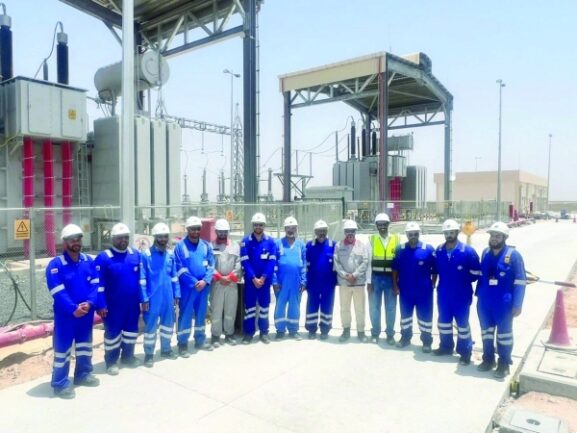
In Oman, PetroTel Energy operates through its wholly owned subsidiary, PetroTel Oman LLC, which manages Block 17. This block spans approximately 2,378 square kilometers of onshore and near-shore land in the Musandam Peninsula, featuring various oil and gas prospects, including the Tibat and Ash Sham fields. Development efforts are underway, supported by infrastructure that includes processing facilities and a short offshore pipeline linking production to the existing Musandam gas plant. The current focus is on leveraging underdeveloped hydrocarbon resources in the area.
Anil Chopra, Founder and CEO of PetroTel Energy, announced that a major light oil discovery has been achieved in Block 17, following the drilling of five exploration wells and multiple sidetracks. Two of these wells were drilled from onshore to offshore utilizing extended-reach drilling technology, with one reaching a record depth of 24,767 feet (7,549 meters)—the longest well ever drilled in Oman. Future drilling could extend to 27,000 feet (8,230 meters).
Commenting on the discovery, Chopra stated, “We have experienced sustained flow rates of 44-degree API light oil using nitrogen lift and electric submersible pumps (ESPs) and are prepared to advance to full-scale production. The field development plan has been submitted to the government. Our strategy involves increasing output through high-hp ESPs or by utilizing an innovative artificial lift system that employs associated gas,” he explained during an interview with The Energy Year, a prominent energy news portal.
In the Dhofar Governorate, PetroTel Oman Onshore—the company’s subsidiary—operates Blocks 39 and 67, which collectively cover 13,379 square kilometers. Utilizing U.S. drilling technology, PetroTel has reported seven discoveries and submitted three field development plans after drilling 10 exploration wells, including two sidetracks.
“Our discoveries in Blocks 39 and 67 could be among the largest in Oman, both in terms of volume and surface area. Although the terrain and tight formations will necessitate substantial investments, similar fields in the U.S. are commercially viable and account for 80-90% of production. PetroTel is committed to commercializing these discoveries, having already established significant infrastructure to access our remote well locations,” Chopra remarked.
Importantly, the total investment in Oman now exceeds $700 million. Of this amount, approximately $490 million has been allocated to Block 17, while about $235 million has been directed toward Blocks 39 and 67.
Looking ahead, PetroTel Energy is exploring partnership opportunities and potential farm-ins beyond its existing upstream portfolio. “We are always open to partnerships. Our goal is to accelerate towards full-scale production and monetize our discoveries in Block 17 and Blocks 39 and 67,” Chopra stated.
“We have been analyzing the geology of other blocks in Oman for the past 20 years, and our technology has uncovered promising prospects that have been overlooked by other operators. We are currently in discussions regarding farm-ins with several companies seeking to benefit from our financial, technological, and operational expertise,” he concluded.
Special Analysis by Omanet | Navigate Oman’s Market
The recent $700 million investment by PetroTel Energy in Oman underscores a significant opportunity for local businesses in the oil and gas sector to engage in collaborative ventures and technology transfers. This development not only presents a chance for enhanced infrastructure and production capabilities but also introduces risks related to operational investments in complex formations. Smart investors should consider aligning with PetroTel’s plans for partnerships and farm-ins to leverage technological advancements and capitalize on the immense potential of underdeveloped hydrocarbon resources in the region.