RO 200 Million Industrial Deals in Oman’s Zones: What This Means for Investors and Business Growth
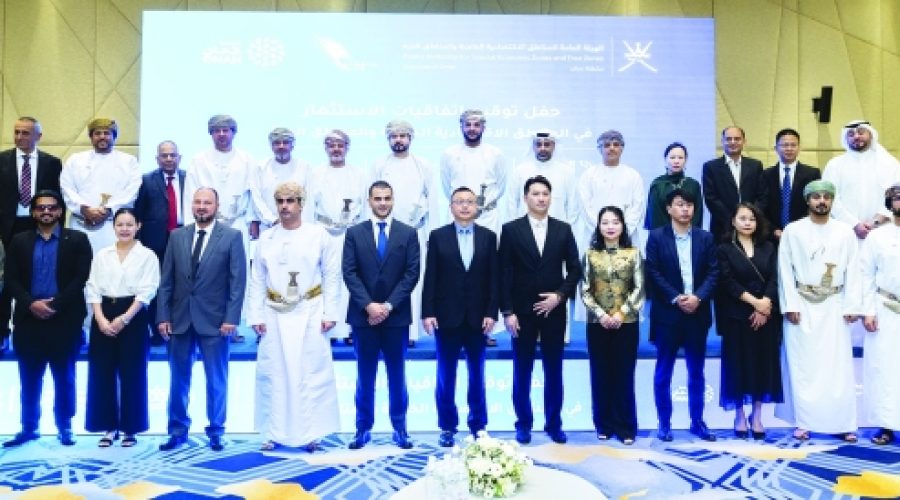
MUSCAT, APRIL 26 — The Public Authority for Special Economic Zones and Free Zones (OPAZ) has inked investment agreements exceeding RO 200 million to develop a diverse portfolio of industrial projects across the Special Economic Zone at Duqm (SEZAD), Salalah Free Zone, and Khazaen Economic City. These initiatives reinforce Oman’s strategic efforts to enhance industrial diversification and localize high-value manufacturing.
The agreements encompass a wide array of sectors, including electric vehicle (EV) battery materials, specialized steel production, cement and infrastructure products, plastic pipe manufacturing, adhesives, tile processing, and pharmaceutical logistics. This range reflects a concerted push to strengthen domestic supply chains and reduce import dependency.
Qais bin Mohammed al Yousef, Chairman of OPAZ, highlighted that the substantial and varied investments reflect rising investor confidence in Oman’s economic zones. He stated, “The signing of these agreements, with a total investment value exceeding RO 200 million, marks a significant step toward advancing economic diversification across various governorates and bolstering Oman’s status as a regional hub for premium investments.”
Al Yousef emphasized the distribution of projects across multiple zones as a testament to Oman’s competitive investment climate. “These initiatives demonstrate the trust of both local and international investors in the attractive investment environment offered by our economic and free zones,” he added.
He further noted OPAZ’s ongoing efforts to enhance its investment framework through incentives, regulatory flexibility, and infrastructure development. “We are building an integrated system of incentives, adaptable regulations, and state-of-the-art infrastructure designed to boost industrial value addition, support localization of advanced technologies, and foster sustainable business opportunities, in alignment with Oman Vision 2040,” Al Yousef said. He also indicated that the next phase will accelerate the implementation of high-impact projects supported by stronger strategic partnerships.
Dr. Said bin Khalifa Al Quraini, Director General of Investment Development at OPAZ, underscored the growing role of economic zones as vital investment enablers. “The zones have become crucial economic drivers, supported by flexible regulations, attractive incentives, and streamlined business processes, complemented by continuous investor services at every stage, including aftercare,” he noted. He added that the investment momentum remains strong, with total investments in the zones reaching RO 22.4 billion by the end of last year, marking a 6.8 percent increase compared to 2024.
Duqm Anchors Metals Expansion
A flagship project within this investment package is the establishment of a RO 41 million steel mould manufacturing plant by Alshaya Group at SEZAD. The facility will have an initial production capacity of approximately 306,000 tonnes annually.
Eng. Ahmed bin Ali Akaak, CEO of SEZAD, stated that the project will enhance the industrial ecosystem within the zone. “This facility represents a significant addition to steel-related industries, supporting downstream industries and value chains, aiding industrial diversification, and reducing import reliance,” he said.
The plant, covering about 107,000 square meters, is expected to commence commercial production in 2028, with output projected to reach 342,000 tonnes annually by 2030.
Abdul Latif Mohammed Alshaya, Chairman of Alshaya Group, praised Duqm’s strategic advantages. “Duqm provides a strategic location as a multi-sector industrial hub connected to a major port, combined with integrated infrastructure and appealing incentives that offer logistical flexibility and cost benefits,” he explained.
He added that the plant will use Electric Arc Furnace (EAF) technology, noted for its lower carbon footprint compared to conventional steel production methods, positioning it to capitalize on future green hydrogen developments.
Salalah Advances EV Supply Chain
In Salalah Free Zone, GFCL EV Advanced Materials is investing RO 35 million to establish a facility producing active anode materials used in lithium batteries for electric vehicles. This marks the company’s second project within the zone.
Dr. Ali bin Mohammed Tabouk, CEO of Salalah Free Zone, emphasized the agreement’s significance in strengthening the zone’s role in advanced industries. “This agreement is a strategic milestone that reinforces Salalah Free Zone’s position as a regional hub for advanced industries, especially in clean energy and electric vehicle technologies,” he said.
He observed that the project’s scale reflects growing global confidence in Salalah’s capabilities. “Attracting a project of this magnitude highlights our ability to compete internationally and investor trust in the investment environment’s efficiency and integrated infrastructure,” he added.
Industrial projects constitute approximately 93 percent of total investments in Salalah Free Zone, where cumulative investments have reached around RO 4.5 billion, underscoring its robust industrial focus.
Khazaen Broadens Industrial Base
Khazaen Economic City secured four investment agreements valued at more than RO 12.8 million, spanning manufacturing and pharmaceutical sectors.
Key projects include a RO 6 million glue production and tile processing plant by Al Fadan International, a RO 5 million infrastructure and cement products factory by Al SUMMITS for Trading and Industry, a RO 1.2 million pharmaceutical warehouse by Overseas Investment, and a RO 600,000 plastic pipe manufacturing plant by Virgent Forest Trading.
Eng. Salim bin Suleiman al Thuhli, CEO of Khazaen Economic City, noted that these agreements consolidate the city’s status as a pivotal industrial hub. “These agreements enhance our position as an integrated business environment, fostering diversified economic activities, stronger supply chains, and increased industrial value addition,” he said.
He added that the steady influx of projects reflects growing investor confidence and supports sustainable industrial growth.
Pipeline Expands with New Cooperation
Additionally, OPAZ signed a memorandum of cooperation with Majan Gulf Investment to develop three projects valued at over RO 110 million across economic and free zones. The agreement focuses on identifying investment opportunities, assessing project requirements, allocating suitable land, and facilitating collaboration with international investors, including those from China.
These latest agreements highlight Oman’s ongoing progress in building an industry-driven, diversified economy anchored by competitive economic zones and an expanding portfolio of strategic investments.
Special Analysis by Omanet | Navigate Oman’s Market
Oman’s strategic push to diversify its industrial base via economic zones, with over RO 200 million in new investments, signals strong confidence in its economic zones as hubs for high-value manufacturing and advanced technologies. For businesses, this opens opportunities to integrate into growing localized supply chains, especially in clean energy, EV materials, and steel production, while reducing import reliance. Smart investors should capitalize on the incentive-driven, flexible regulatory environment, focusing on sectors aligned with Oman Vision 2040 and sustainable industry trends such as green steel and EV battery components.