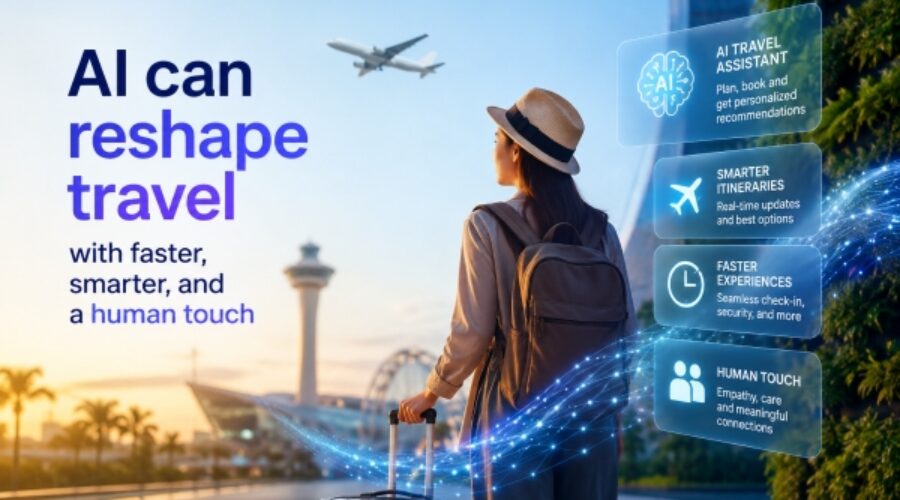
How AI Innovation is Transforming the Travel Industry: Faster, Smarter Solutions for Business Growth
Despite frequent disruptions caused by geopolitical tensions, the travel industry remains one of the largest employers worldwide and is expected to recover faster than many other sectors. While periodic downturns due to adverse geopolitical and global financial conditions are anticipated, a significant emerging concern in the job market is the increasing role of Artificial Intelligence (AI). AI promises to streamline global travel, often minimizing or eliminating human interaction.
Maher Koubaa, Executive Vice President of the Travel Unit and Managing Director EMEA at Amadeus IT Group, told Oman Observer, “We have an industry that is resilient and continues to drive significant volumes. The question before us is whether to expand the current infrastructure to cater for that volume or to use automation and AI to remove friction—such as queues at airports—and handle more passengers.”
He emphasized that AI will enhance the capabilities of employees serving customers, stating, “There will be an element of augmentation that will increase the capability of the people, and AI will not replace the people who provide end services to the customers or clients.”
Addressing the protection of travelers’ personal information, Koubaa said, “Protecting travelers’ personal information requires stronger governance, and that’s why we invest heavily in this area. Last year alone, we allocated €1.4 billion to research and development, covering both our own projects and those built with partners. We have migrated our entire technology stack to the cloud, enabling us to benefit from our cloud partners’ investments—which are 10 to 20 times greater—in cybersecurity, resilience, and data privacy. This ensures sensitive travel data is managed securely.”
Amadeus, a provider of software, processing, and distribution solutions for the travel and tourism industry, believes AI will help process larger volumes of passengers and support employees in delivering superior customer service, enhancing human capabilities rather than replacing them.
AI is already integrated into airport operations to offer a seamless, end-to-end traveler experience. Through biometrics and automation, passengers may no longer need to present passports, interact with staff, or endure long queues. Personalized airport experiences will enable travelers to know exactly how much time they will spend at each stage of their journey.
Trials have demonstrated that AI airline agents can identify bookings, comprehend verbal change requests, propose new options, explain fare differences, and initiate payments. These agents can handle multiple calls simultaneously in travelers’ preferred languages, significantly reducing waiting times. Amadeus has successfully tested this technology, which is now ready for deployment.
Roles of AI in Air Travel
AI shows strong capabilities in planning, booking, and servicing personalized trips. It identifies opportunities across airline touchpoints—websites, mobile apps, and call centers—and seamlessly integrates with AI assistants like Microsoft Copilot and ChatGPT to enhance customer engagement.
AI agents optimize marketing by detecting underperforming routes, recommending campaign strategies, generating digital advertisements, allocating budgets across various channels, and reporting results.
Additionally, AI supports aircraft turnaround by monitoring maintenance, crew schedules, refueling, and other processes to recommend coordinated plans.
By overcoming data fragmentation, AI enables airlines to deliver customized offers and tailored digital experiences. It orchestrates each traveler’s journey, aligning individual needs with the airline’s strategic priorities.
Special Analysis by Omanet | Navigate Oman’s Market
The integration of AI in the travel industry presents significant opportunities for Omani businesses to enhance operational efficiency and customer experience through automation and personalized services. However, it also creates risks related to data security and potential workforce shifts, urging investors and entrepreneurs to focus on strong cybersecurity measures and AI-human collaboration models to stay competitive and resilient amid evolving market dynamics.