Shipping Firms Advise Vessels to Avoid Gulf: Implications for Trade and Business Operations in Oman
Major Shipping Lines Suspend Navigation in Gulf Amid Escalating Tensions
On Saturday, two prominent shipping companies announced the suspension of navigation through the Gulf in response to rising hostilities involving the United States, Israel, and Iran.
Reports from Iran’s Tasnim news agency indicated that the Islamic Revolutionary Guards Corps (IRGC) had cautioned several vessels that the Strait of Hormuz—a crucial channel for oil shipment from the Gulf—was “essentially closed.”
France’s CMA CGM, the world’s third-largest container shipping company, issued a statement advising its vessels in the Gulf to “take shelter.” Additionally, the company announced the suspension of passage through the Suez Canal due to the ongoing regional conflict. “All ships currently in the Gulf or en route have received instructions, effective immediately, to seek shelter,” read the statement. It further noted that passage through the Suez Canal would remain suspended until further notice, with ships being rerouted around the Cape of Good Hope, significantly extending their journey by thousands of kilometers.
Hapag-Lloyd, the fifth-largest container shipping company globally, also stated that it would halt all transit through the Strait of Hormuz until further notice. Other shipping lines, including Denmark’s Maersk, have warned clients of potential delivery delays as vessels are rerouted.
In light of the escalating military activities, the United States has advised ships to avoid the Gulf. The Strait of Hormuz, often threatened with blockage by Iranian officials in the event of a U.S. attack, serves as a critical transit point for global oil trade.
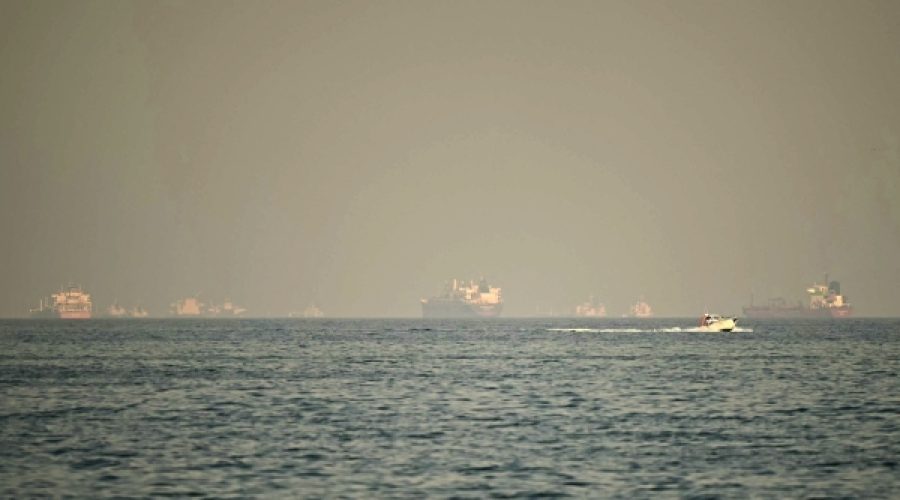
Data from the maritime analytics firm Marine Tracker reveals a significant decrease in traffic through this vital trade route, with numerous oil tankers turning back or being halted at the strait. The European Union’s naval mission in the Red Sea confirmed that vessels had received communications from the IRGC declaring the Strait blocked to traffic, despite the absence of an official closure order.
The Strait of Hormuz frequently experiences incidents involving ship seizures and attacks. This essential corridor connects the Gulf to the Indian Ocean and is positioned between Iran and Oman’s Musandam exclave.
Shipping association BIMCO has cautioned that commercial vessels with ties to Israel or the United States might be at an increased risk of being targeted.
According to the U.S. Energy Information Administration (EIA), approximately 20 million barrels of crude oil passed through the Strait of Hormuz daily in 2024, accounting for nearly 20 percent of global liquid oil consumption.
Special Analysis by Omanet | Navigate Oman’s Market
The suspension of navigation through the Gulf significantly impacts businesses in Oman, raising the stakes for logistics and supply chain management amidst heightened regional tensions. This situation presents both risks for disruption and an opportunity for local firms to explore alternative shipping routes and partnerships. Smart investors should consider diversifying their supply chains and investing in contingency plans to mitigate potential delays and capitalize on emerging maritime needs.