Asian Shares Dip on Chipmaker Decline: What This Means for Investors Ahead of US Jobs Data
Asian shares declined on Thursday as investors rotated out of chipmakers following a strong quarterly performance, while currency and bond markets awaited U.S. jobs data that could provide insights into the likelihood of interest rate hikes.
Oil prices dropped to new four-month lows, with Brent crude falling 0.8% to $71 per barrel. This decline followed U.S. President Donald Trump’s remarks that talks with Iran in Qatar had been positive, alongside increased oil tanker traffic through the Strait of Hormuz.
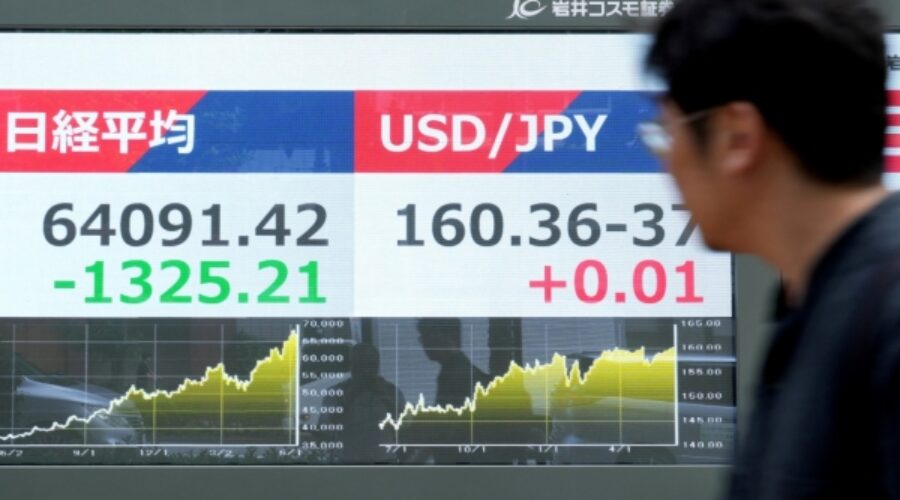
On the day, MSCI’s broadest index of Asia-Pacific shares excluding Japan fell 0.8%, and Japan’s Nikkei dropped 1.1%, extending losses from the start of the quarter. South Korea’s KOSPI plunged 2.7%, adding to a 2% decline on Wednesday after an extraordinary 68% surge in the second quarter driven by soaring AI-related demand for memory chips.
Key chipmakers took a hard hit, with SK Hynix down 7.7% and Samsung falling 6.2%. This followed news that Meta Platforms is developing a cloud business aimed at selling excess AI computing capacity, boosting Meta shares by 8.8% overnight.
In contrast, Hong Kong’s Hang Seng index rose 1.8%, bucking the broader regional trend.
Foreign investors sold Asian equities at the fastest pace in at least 16 years during the first half of 2026. The sharp AI-driven rally led investors to trim their largest winners in South Korea and Taiwan, while seeking opportunities in undervalued stocks.
Market focus is now on the U.S. non-farm payrolls report due Thursday, ahead of the Independence Day holiday on Friday. Economists surveyed by Reuters forecast job growth of 110,000 in June, though estimates vary widely from 25,000 to 200,000, indicating a high chance of surprises. The unemployment rate is expected to remain steady at 4.3%.
Chris Weston, head of research at Pepperstone, noted that equity traders generally prefer a “Goldilocks” outcome: solid job creation alongside stable unemployment. Such a scenario would likely keep the probability of near-term rate hikes low and be welcomed by equity markets.
At the Sintra Forum, Federal Reserve Chair Kevin Warsh stated that inflation risks have eased recently, but this has provided only temporary relief to U.S. Treasuries. He reaffirmed his commitment to the 2% inflation target and indicated he would disappoint those expecting looser monetary policy. Markets currently assign about an 80% chance of a rate hike in September.
Treasury yields rose in anticipation of strong jobs data, potentially increasing bets on near-term rate hikes. The U.S. 2-year yield increased by 1 basis point to 4.1785%, up 9 basis points for the week, while the 10-year yield held steady at 4.4811% after rising 10 basis points this week.
Higher Treasury yields supported the U.S. dollar. The euro fell 0.4% overnight against the dollar after European Central Bank President Christine Lagarde said inflation and growth risks have become more balanced. The euro remained steady in Asian trading at $1.1379.
The Japanese yen was little changed at 162.59 per dollar, after hitting a fresh 40-year low of 162.84 on Wednesday. This decline has prompted warnings of possible intervention from Tokyo. However, previous interventions in April and May, costing nearly 12 trillion yen, had only short-lived effects.
Gold rebounded 0.5% to $4,050 an ounce following a challenging quarter.
Special Analysis by Omanet | Navigate Oman’s Market
The recent global market volatility, driven by fluctuations in Asian equities, oil prices, and U.S. interest rate expectations, signals heightened uncertainty for businesses in Oman reliant on export and energy sectors. The decline in oil prices and potential U.S. rate hikes pose risks of tighter financial conditions and reduced liquidity, urging smart investors and entrepreneurs to focus on diversifying portfolios and seeking opportunities in less-volatile sectors, possibly leveraging regional trade dynamics through the Strait of Hormuz. Strategic vigilance on global macroeconomic indicators will be crucial to navigate upcoming market shifts.