Oil Prices Plunge and Stocks Surge: What Iran’s Declaration of Hormuz Reopening Means for Investors and Businesses
Oil prices fell sharply by over 10 percent on Friday following Iran’s announcement that the Strait of Hormuz would remain fully open for the duration of the ceasefire with the United States, prompting a surge in global stock markets.
Iran’s Foreign Minister Abbas Araghchi declared on the social media platform X that “passage for all commercial vessels through the Strait of Hormuz is declared completely open for the remaining period of ceasefire.”
The Strait of Hormuz, a critical maritime chokepoint through which about one-fifth of the world’s crude oil typically passes, had been subject to Iranian disruptions amid the US-Israeli offensive. This had propelled oil prices to nearly $120 per barrel, raising concerns about potential global economic disruptions.
Following the announcement, benchmark oil prices — Brent crude and the US West Texas Intermediate (WTI) — both dropped below $90 per barrel.
Kathleen Brooks, Research Director at XTB, commented, “This news is having an immediate impact on markets.” She added that the development brings hope for a swift end to the conflict and a return to stability in global supply chains.
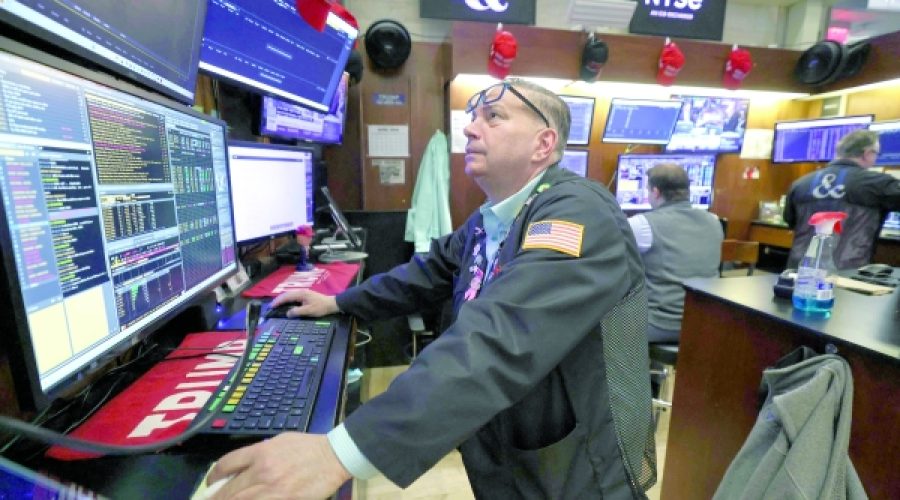
At the market open, Wall Street’s key indexes responded positively, with the S&P 500 and Nasdaq Composite extending gains following record highs reached the previous evening.
It remained unclear whether Araghchi was referring to the 10-day ceasefire agreement between Lebanon and Israel, effective from midnight, or the earlier two-week ceasefire between Iran and the United States that began on April 8. Nevertheless, his statement strengthened expectations for additional peace negotiations and a possible extension of the ceasefire, despite US President Donald Trump’s assertion that the US blockade on Iranian ports remains active.
Meanwhile, French President Emmanuel Macron and UK Prime Minister Keir Starmer convened an allied meeting to discuss the possibility of deploying a multinational force to guarantee free trade through the Strait of Hormuz once hostilities subside.
David Morrison of Trade Nation highlighted the rapid and significant rebound of the S&P 500 — nearly 12 percent in just over two weeks — as a key driver of the ongoing rally. He noted that many investors caught off guard by the swift market recovery, especially those who had sold shares early in the conflict, are now buying back positions at higher prices, leading to potential losses.
Morrison also pointed to a “fear of missing out” phenomenon fueling record stock market levels, underpinned by strong earnings growth reported in the first quarter.
European markets showed gains by afternoon, with Frankfurt and Paris rising by two percent. Conversely, most Asian markets closed lower; Tokyo was among the biggest decliners after hitting a record high on Thursday, and Taiwan’s TAIEX index fell after surpassing a market capitalization of $4.14 trillion. This milestone positioned TAIEX ahead of London’s FTSE 100, making it the world’s seventh-largest stock index by value, according to Bloomberg data.
— AFP
Special Analysis by Omanet | Navigate Oman’s Market
The reopening of the Strait of Hormuz and subsequent sharp decline in oil prices present a strategic inflection point for Omani businesses, potentially easing energy costs but also pressuring oil-dependent revenues. Smart investors and entrepreneurs should pivot towards diversification and resilience-building, capitalizing on stable trade routes and global market optimism while hedging against oil price volatility. This environment also opens doors for innovation in non-oil sectors and enhanced regional trade initiatives.