Oil Prices Reach Four-Year Peak Amid Trump Blockade Warning: What Investors and Businesses in Oman Need to Know
Oil prices surged over five percent to reach a fresh four-year high on Thursday, while global stock markets declined following U.S. President Donald Trump’s indication that the blockade of Iranian ports could persist for months amid stalled peace talks.
Tehran submitted a new proposal this week aimed at reopening the strategically vital Strait of Hormuz. However, President Trump reportedly expressed skepticism about Iran negotiating in good faith. According to reports from The Wall Street Journal, Trump instructed national security officials to prepare for an extended blockade to pressure Iran into abandoning its nuclear program.
During a meeting with oil industry executives on Tuesday, a White House official — speaking anonymously — revealed that Trump discussed measures to ease the impact on global oil markets and to sustain the blockade if necessary, while minimizing effects on American consumers.
In an interview with Axios, Trump asserted, “The blockade is somewhat more effective than the bombing. They are choking like a stuffed pig. And it is going to be worse for them. They can’t have a nuclear weapon.” He emphasized that the naval blockade would remain until a satisfactory deal on Iran’s nuclear program is achieved.
On his social media platform Truth Social, Trump posted, “Iran can’t get their act together. They don’t know how to sign a nonnuclear deal. They better get smart soon!” accompanied by an image of himself wielding an assault rifle with the caption, “NO MORE MR. NICE GUY!”
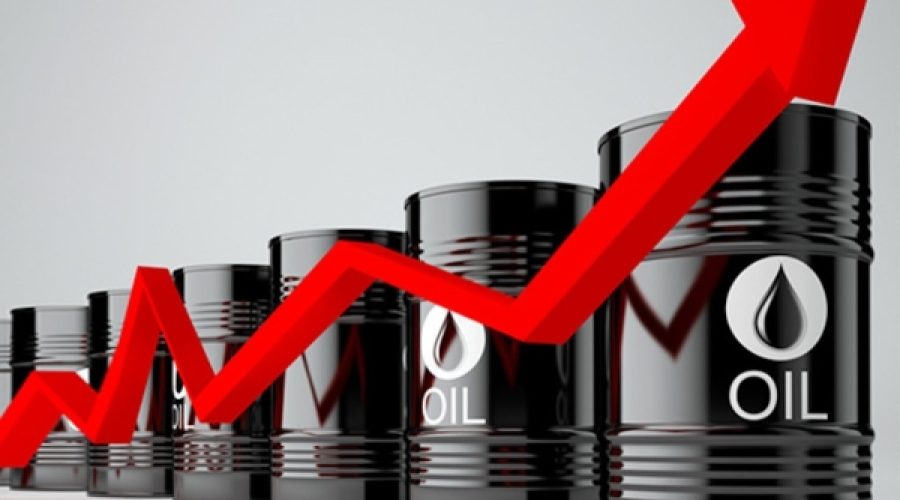
The prospect of the Strait of Hormuz — through which one-fifth of the world’s oil and gas flows — remaining closed for an extended period caused crude prices to spike to their highest levels since 2022, following Russia’s invasion of Ukraine. Brent crude for June delivery surged 6.8 percent to $126 per barrel, while West Texas Intermediate climbed over three percent, surpassing $110.
Market analysts noted a shift among traders toward the expectation that the crisis will be prolonged rather than brief.
Meanwhile, stock markets across Asia experienced predominantly downward pressure, with declines in Tokyo, Hong Kong, Mumbai, Sydney, Seoul, Bangkok, Manila, and Jakarta. Conversely, gains were observed in Shanghai, Singapore, Wellington, and Taipei.
The U.S. dollar, regarded as a safe haven amid geopolitical tensions, strengthened against other currencies.
Despite the volatility, equity investors remain somewhat optimistic, buoyed by a resurgence in artificial intelligence (AI) stocks. This rally contributed to multiple record highs on Seoul’s Kospi index. Samsung Electronics posted a remarkable 750 percent increase in operating profit, driven by strong demand for AI-related semiconductor chips and forecasting continued growth for the coming quarter.
Similarly, tech giants Microsoft, Meta, and Alphabet, Google’s parent company, reported earnings surpassing market expectations, driving U.S. stock futures upward.
Stephen Innes of SPI Asset Management cautioned that the current positive sentiment might be vulnerable. He observed, “History tells us that this widening divide between stocks, oil, and rates can only stretch so far before the physical shock bleeds into the real economy. Expensive energy is not abstract. It moves quietly through the system, from the pump to logistics to margins, eventually surfacing in the data that central banks respond to after the fact.”
Investors are also watching for signals regarding future Federal Reserve policies after an unusually high level of dissent during its recent meeting — four members opposed parts of the statement, the highest since 1992. The Fed decided to hold interest rates steady amid inflation concerns fueled by rising energy costs, though three members objected to implying an easing bias in the statement, and one member, Stephen Miran (appointed by Trump), advocated for a rate cut.
This session marked the final Federal Reserve meeting chaired by Jerome Powell, with Kevin Warsh, the president’s nominee, slated to succeed him next month. Throughout much of his second term, Trump criticized Powell for not lowering borrowing costs quickly enough.
Special Analysis by Omanet | Navigate Oman’s Market
The prolonged US blockade of Iranian ports and rising oil prices to a four-year high signal significant risks and opportunities for Omani businesses. While energy exporters may benefit from higher revenues, increased oil prices and geopolitical instability could disrupt trade and raise operational costs across sectors. Smart investors should monitor global energy market dynamics closely and consider diversification strategies to mitigate risks associated with prolonged supply disruptions and volatile markets.