Prime Assets Set to Drive Significant Growth in Oman’s Property Market in H1: What Investors Need to Know
MUSCAT, APRIL 5 — Oman’s real estate market is projected to experience steady, selective growth in the first half of 2026, driven by resilient non-oil sector expansion, disciplined development, and sustained demand for income-generating properties, according to the 2025 Annual Market Report by Hamptons International.
This positive outlook follows strong performance in the latter half of 2025 across Oman’s principal real estate centers—Muscat, Al Duqm, Suhar, and Salalah—each demonstrating distinct yet complementary market trends aligned with their unique economic roles.
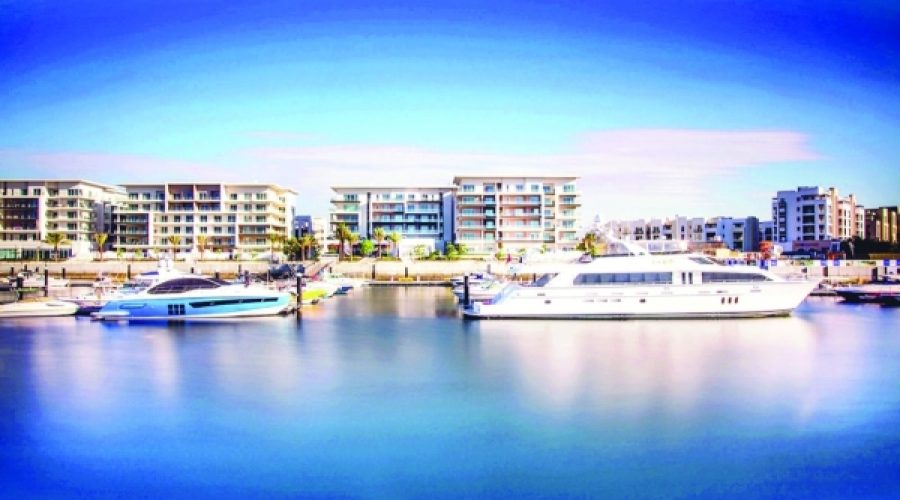
Muscat emerged as the busiest and most liquid market, supported by government-led urban regeneration, ongoing infrastructure projects, and consistent end-user demand. The report highlights that prime assets continue to outperform secondary properties, as investors increasingly favor quality, efficiency, and income security. This preference is expected to persist into 2026, with capital values buoyed by well-located, income-producing assets, while secondary properties face greater scrutiny over leasing risks and specifications.
Al Duqm solidified its status as a strategic industrial and logistics hub, propelled by growth within the Special Economic Zone, increased port activity, and sustained government investment. Demand remains concentrated on industrial land, logistics facilities, and infrastructure-linked developments. Hamptons International describes Al Duqm’s long-term outlook as “stable to positive,” with income-backed assets anticipated to surpass more speculative land investments.
In Suhar, market conditions remained steady, supported by consistent demand for warehousing, manufacturing, and port-related industrial spaces. The city, underpinned by an established logistics ecosystem, is expected to maintain stable performance, although significant growth is limited unless further asset enhancements or expansions occur. Stable yields are forecasted, underpinned by durable income streams.
Salalah is gaining momentum, driven by tourism-related investment and port-linked logistics activity. The report notes strengthening fundamentals across hospitality, mixed-use, and logistics sectors, fueled by seasonal tourism growth and improved regional connectivity. The outlook for the first half of 2026 is positive, especially for assets aligned with tourism diversification and trade flows.
At the macroeconomic level, Oman’s 2025 economic expansion has reinforced the real estate sector’s prospects. Growth led by logistics, manufacturing, tourism, and the non-oil private sector aligns with the nation’s diversification goals under Oman Vision 2040. Ongoing investments in ports, free zones, and industrial clusters, alongside rising foreign direct investment, continue to drive real estate demand.
Looking forward, transaction activity is expected to remain selective, with investors prioritizing assets offering predictable cash flows, long lease terms, and reliable counterparties. Development pipelines are projected to remain cautious, as feasibility increasingly depends on construction costs, financing conditions, and absorption risks.
Rental performance across most sectors is forecast to remain stable, with modest gains anticipated in logistics, hospitality, and prime mixed-use projects. Capital values are expected to stay largely steady, supported by improving income fundamentals and limited oversupply, although yields may face pressure for assets with weaker quality or tenant profiles.
Overall, Hamptons International concludes that Oman’s real estate market is transitioning toward fundamentals-driven growth, with an enhanced focus on institutional-grade assets and long-term, income-focused investment strategies.
Special Analysis by Omanet | Navigate Oman’s Market
Oman’s real estate sector is poised for steady, fundamentals-driven growth in 2026, underpinned by non-oil economic expansion and disciplined development. Smart investors should prioritize prime, income-generating assets with long lease profiles to mitigate risk amid rising construction costs and financing challenges. Opportunities lie in logistics, tourism-linked hubs like Salalah, and industrial zones such as Al Duqm, aligning closely with Oman Vision 2040’s diversification and infrastructure focus.