Brent Crude Nears $100 Amid Gulf Tensions: What This Means for Oman’s Energy Investors and Businesses
Oil prices rose modestly while global stocks declined on Friday following a flare-up of hostilities between the US and Iran in the Middle East. Despite the tensions, many equity markets, especially in Asia, remained poised for strong weekly gains driven by robust demand for artificial intelligence (AI) technologies.
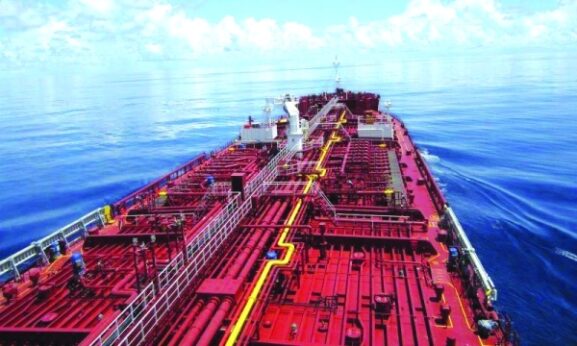
Benchmark Brent crude futures increased by approximately 0.5%, reaching $100.50 per barrel. Meanwhile, European stocks dropped by 0.6%, and US stock futures rose by 0.5%.
Investors were also closely monitoring local election losses faced by Britain’s ruling Labour Party, which could put pressure on Prime Minister Keir Starmer. Despite this, the British pound edged higher, and UK assets generally followed the trend of European markets as election results gradually emerged.
Tensions in the Gulf intensified as the US and Iran exchanged fire, and the United Arab Emirates faced renewed attacks, challenging a month-long ceasefire. Both parties downplayed the severity of the situation, leaving market participants uncertain.
Jan von Gerich, chief analyst at Nordea, commented, “The market seems to be taking every chance to price in a quick end to the war. But it seems unlikely there’s going to be an agreement. I still think there are going to be disruptions in the Strait of Hormuz for a longer time, and it won’t be resolved any time soon.”
In Europe, the STOXX 600 index fell 0.6%, with notable declines in Frankfurt and Paris, where markets dropped approximately 0.9%.
Asian markets slipped from their recent peaks but maintained strong weekly performance, buoyed by strong revenue reports and spending commitments from major US AI companies benefiting regional semiconductor manufacturers. MSCI’s broadest index of Asian shares outside Japan declined 0.9%, though South Korea’s KOSPI gained 0.1%, marking a weekly rise exceeding 13.5% — its largest since 2008 — supported by rallies in Samsung and SK Hynix stocks.
Taiwan’s benchmark index rose 7% over the week, while Japan’s Nikkei increased by 5.4%. European markets were set for a modest 0.2% weekly gain, and in the US, the S&P 500 and Nasdaq advanced by 1.5% and 3%, respectively.
The US dollar weakened slightly and was on track for a second consecutive weekly decline. The Japanese yen remained under focus after Japan intervened in currency markets earlier in May to curb its depreciation, according to a source familiar with the matter. The dollar last traded down 0.1% against the yen at 156.77, heading for a second weekly fall.
The euro was valued at $1.1767, while China’s yuan, Asia’s best-performing currency since the outbreak of the Middle East conflict, hovered near 6.8 per US dollar — close to levels not seen since 2023.
Markets awaited the release of the US nonfarm payroll report, with economists forecasting an addition of 62,000 jobs in April, following a 178,000 gain in March, according to a Reuters survey.
Nordea’s von Gerich noted, “The labor market is still holding up reasonably well. Since the focus is on the Middle East and the impact comes via inflation more than growth, especially in the US, maybe the payrolls report is not quite as crucial as it has been sometimes in the past.”
In Britain, early local election results showed significant losses for Labour, although Starmer affirmed he would not resign.
ING analysts observed, “Gilts are already under scrutiny due to inflation risks, and adding political uncertainty to the mix could further push global investors to look elsewhere.” Britain’s 10-year gilt yield fell 3.5 basis points to 4.91%, remaining near a three-decade high.
تحلیل ویژه از عمانت | بازار عمان را کشف کنید
The recent US-Iran tensions and instability in the Gulf underscore the ongoing geopolitical risks impacting the Strait of Hormuz, a critical passage for global oil supply, which keeps oil prices elevated and supply chains uncertain. For businesses in Oman, this means heightened volatility in energy markets and potential cost pressures but also opportunities for increased oil revenuesسرمایهگذاران و کارآفرینان هوشمند باید در نظر بگیرند diversifying investments to mitigate geopolitical risks while leveraging the sustained demand in energy and technology sectors, particularly in AI and semiconductor industries, showing robust global growth.