Impact of Steel Tariffs on Tin Can Manufacturers: How Rising Costs Affect Food Prices and Your Business
YORKVILLE, Ohio — The humble tin can is emerging as a significant challenge for President Donald Trump’s tariffs on steel. Over a year ago, Trump introduced high tariffs on steel in an effort to limit imports and support domestic production. However, since then, imports of the steel used to manufacture cans have surged, leading American can makers to rely heavily on foreign supplies, now burdened by the tariffs.
Scott Breen, President of the Can Manufacturers Institute—a trade group representing major U.S. can manufacturers—remarked, "We have to import all this tin plate. There’s not any more being produced here than there was before."
Unlike some of Trump’s tariffs, which have faced legal challenges, the steel tariffs enjoy robust legal backing. They were implemented under a national security provision in the Trade Expansion Act and are set at 50%, higher than many other import taxes.
A tin can constitutes about one-third of the wholesale price of canned fruits and vegetables. As tariffs have raised the cost of tin plate, prices for canned goods have also increased, affecting households that rely on staples like corn and beans. Government data indicates that in March, canned fruits and vegetables were 5.7% more expensive than the previous year, in contrast to a 2% increase for all food sold at home.
According to Harbor Intelligence, over 80% of the tin plate used in the United States last year was imported. Tin plate is produced in significantly lower quantities than the steel used in automobiles and construction, making it less attractive for large steel manufacturers. Nonetheless, U.S. Steel, the country’s largest tin plate producer, has announced plans to increase production, restarting operations next year at its facility in Gary, Indiana. This may indicate that Trump’s tariffs are encouraging investment in domestic production.
A spokesperson for the Commerce Department, responsible for the steel tariffs, stated that tin plate mills had closed under President Joe Biden, suggesting that Trump’s policies are improving conditions for tin plate manufacturers, as evidenced by U.S. Steel’s announcement.
Despite the potential increase in supply from U.S. Steel, industry executives predict that American can makers will continue to import over two-thirds of their tin plate in the coming years.
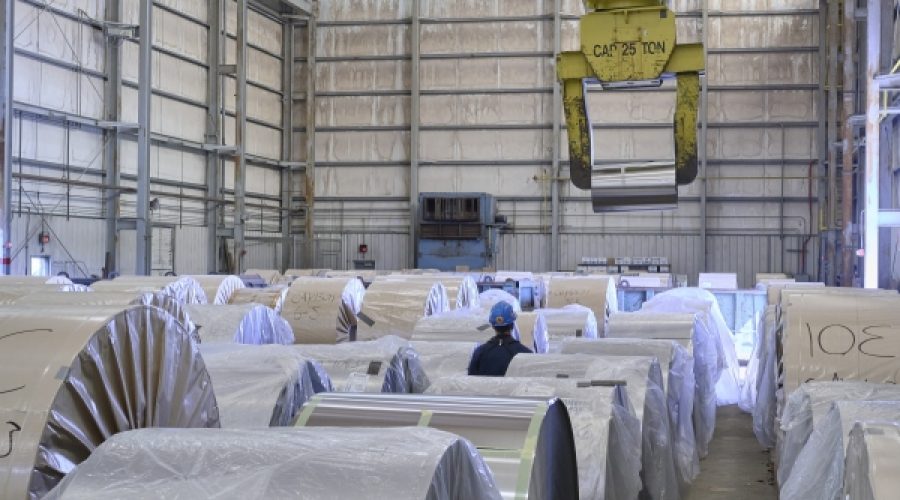
Dave Luptak, CEO of Ohio Coatings, a company that produces tin plate, noted the challenges faced in the tin plate market. His factory in Yorkville, Ohio, employs United Steelworkers union members and produces tin plate by coating thin steel (‘blackplate’) with tin. In the previous year, the facility generated 162,000 tons of tin plate for its customers.
Luptak supports Trump’s tariffs, believing they protect American steel from foreign competition, especially from China, where production is heavily subsidized. However, Ohio Coatings imports approximately 75% of its blackplate, subjecting it to tariffs. He explained that the impact of tariffs is somewhat mitigated, as suppliers have adjusted their prices, but he acknowledged that profit margins have been squeezed.
"Our margins are challenged," Luptak stated, further indicating that Ohio Coatings has requested the Trump administration to consider temporarily waiving tariffs on blackplate, which would provide time for domestic manufacturers to enhance production and reduce dependence on imports.
A decade ago, American producers generated over 60% of the tin plate and other packaging steel used in the U.S., but last year this figure fell below 20%. Many American steel companies have shut down tin plate production lines, citing inability to compete with imports, leading to a reliance on Ohio Coatings and U.S. Steel as the primary domestic suppliers. U.S. Steel also produces blackplate, some of which is sold to Ohio Coatings.
While U.S. Steel did not specify the expected output from its Gary facility, its spokesperson indicated that production levels would depend on multiple factors. Recently, as part of a deal with Japan’s Nippon Steel, the U.S. government obtained a "golden share" in U.S. Steel, which might influence its operations.
Cleveland-Cliffs, another American steel producer, ceased tin plate production following a loss in an "antidumping" case at the International Trade Commission in 2024. Despite this setback, U.S. Steel has initiated its own case, alleging that tin plate imports from China, Taiwan, and Turkey are undercutting domestic prices.
U.S. Steel’s petition suggests a significant price discrepancy, claiming that imported Turkish tin-mill products averaged $1,057 a ton last year, compared to $1,083 a ton in 2023. The company noted that while Turkish products were previously 75% cheaper than American ones, they are now only 8% cheaper.
As the tariffs increase costs for U.S. canned goods, imports of foreign canned products are on the rise, benefiting from a loophole that exempts food-filled cans from steel tariffs. The Can Manufacturers Institute has urged for the inclusion of canned foods in these tariffs, warning that failure to do so could lead to a market surge of foreign canned goods.
Scott Lincicome from the Cato Institute argued against imposing tariffs on food, citing affordability concerns for voters. He noted, "When you raise the cost of making stuff in the United States, you make production here less competitive globally."
این مقاله در ابتدا در [ادامه مطلب] منتشر شد. نیویورک تایمز.
تحلیل ویژه از عمانت | بازار عمان را کشف کنید
ادامه دارد tariff impact on the tin can industry underscores potential فرصتها و ریسکهای کسبوکار در عمان, especially those involved in manufacturing and food processing. With افزایش هزینهها for canned goods due to U.S. tariffs, there may be a growing demand for affordable alternatives in the Middle East market, presenting an فرصتی برای تولیدکنندگان داخلی. However, smart investors should consider the risk of import exposure, as reliance on foreign sources could affect pricing and competition in Oman’s food supply chain.