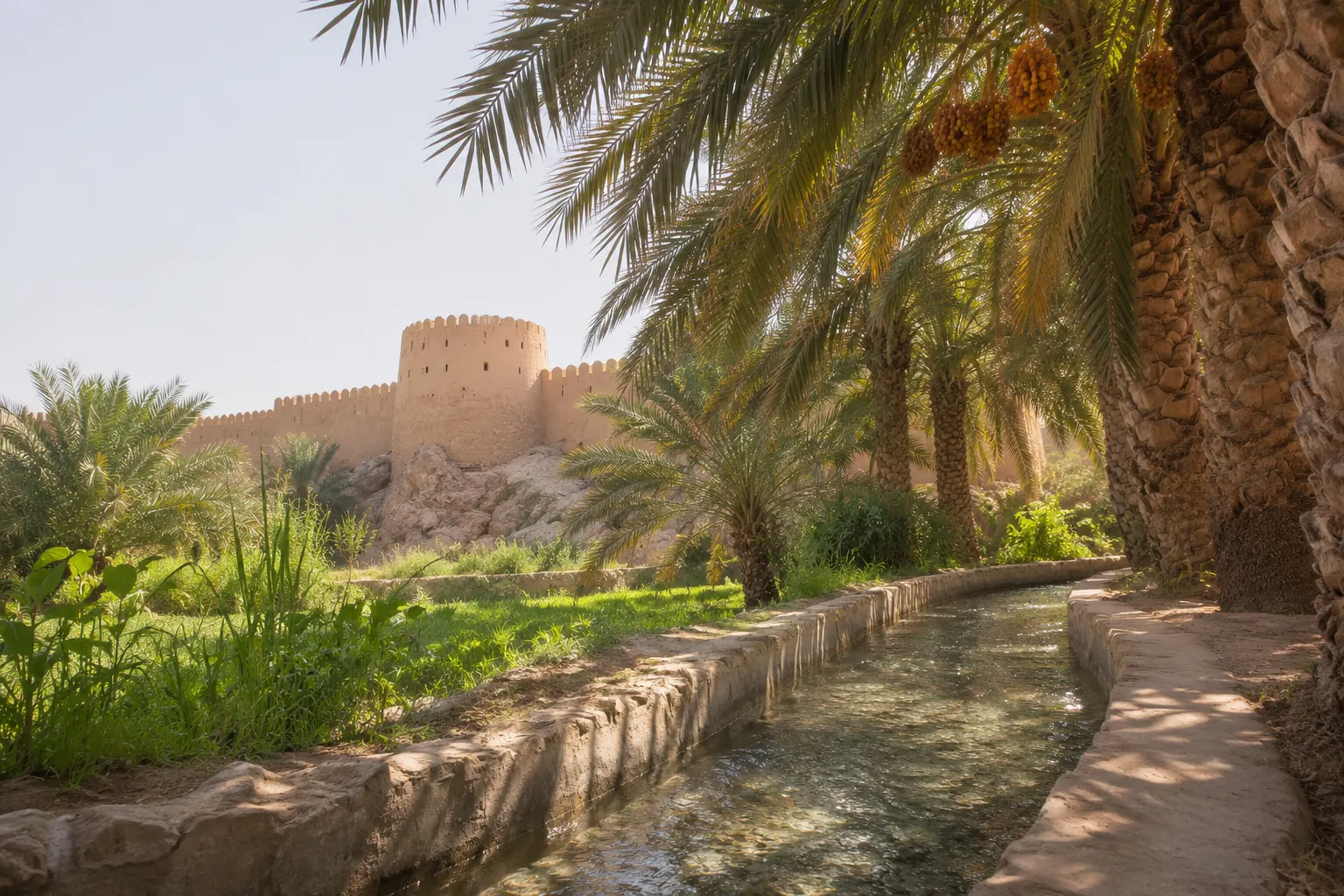
Oman's history shows in the places people built: forts over the oases, ports for the frankincense trade, and water channels that still run today. Its five UNESCO World Heritage Sites are the best way into that story.
Oman's five World Heritage Sites
Bahla Fort (1987)
A huge mud-brick fort and oasis in Ad Dakhiliyah, built by the Banu Nebhan between the 12th and 15th centuries. It was Oman's first World Heritage listing.
Bat, Al-Khutm and Al-Ayn (1988)
Three clusters of tombs and settlements from the third millennium BCE in Ad Dhahirah, linked to copper extraction.
The Land of Frankincense (2000)
Sites in Dhofar that tell the story of the frankincense trade: the trees of Wadi Dawkah, the caravan stop at Shisr, and the ports of Khor Rori and Al Baleed.
The Aflaj Irrigation Systems (2006)
Aflaj are water channels that have been in use since at least the year 500. Oman has around 3,000 working systems, and five represent the listing, across Ad Dakhiliyah, Al Batinah and Ash Sharqiyah South.
The Ancient City of Qalhat (2018)
A trading hub in Ash Sharqiyah South and a secondary capital of the Kingdom of Hormuz from the 11th to the 16th century. The Portuguese attacked it in the 16th century and it was later abandoned. The Bibi Maryam mausoleum still stands there.
The capital's living history
In Muscat, you can see the old and new side by side. Mutrah Souq still runs as a traditional market, Al Mirani Fort dates in its present form to Portuguese rebuilding in 1588, and the National Museum tells the wider story across 14 galleries. The Sultan Qaboos Grand Mosque and the Royal Opera House show modern Oman.
Planning a visit
The sites are spread across the country, so plan by region. Start with the governorates of Oman, check which visa you need, and look for a rental car if you are heading inland.
Frequently asked questions
How many UNESCO World Heritage Sites does Oman have?
Five: Bahla Fort (1987), the archaeological sites of Bat, Al-Khutm and Al-Ayn (1988), the Land of Frankincense (2000), the Aflaj Irrigation Systems (2006) and the Ancient City of Qalhat (2018).
What is a falaj?
A falaj is a traditional water channel that carries water to farms and villages. Oman has around 3,000 working systems, and five of them represent the World Heritage listing.
What was Oman's frankincense trade?
Frankincense was gathered in Dhofar and shipped from ports such as Khor Rori and Al Baleed. The trade is why those places are listed as the Land of Frankincense.