Jaguar’s Powerful Engine Innovation: What It Means for Investors and Business Growth Opportunities
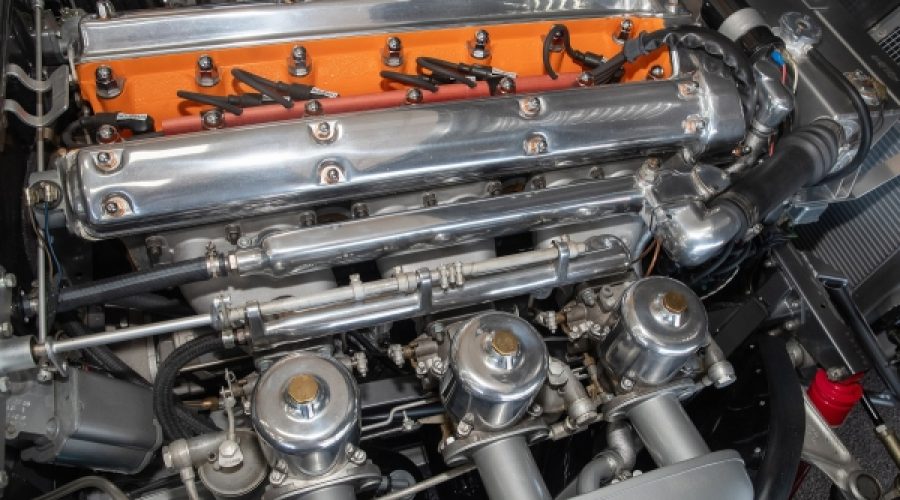
During World War II, as German bombs rained down on Coventry, England, Jaguar engineers on fire-watch duty atop the company’s factory laid the foundation for an extraordinary engine that would come to define the brand’s legacy in both racing and passenger cars. This powerplant, later known universally as the XK engine, was developed under the leadership of chief engineer William Heynes. Initially intended not as a racing engine but as a durable, future-proof passenger car engine, the XK became Jaguar’s secret weapon for 42 years.
In a bold strategic shift two years ago, Jaguar committed to producing only electric vehicles, a transition supported by a burgeoning electric racing program. The brand has made significant progress in Formula E, with electric Jaguars securing first and second place at the recent Madrid ePrix. Ian James of Jaguar TCS Racing described the victory as a “truly special moment.”
Jaguar’s history since the XK engine era has been turbulent. Ford acquired Jaguar in 1999, incorporating it into its Premier Automotive Group and expanding its product line, though the business failed to turn a profit. A later acquisition by Tata Motors of India briefly boosted sales. Whether Jaguar’s renewed focus on electric vehicles and electric racing will replicate the transformative impact of the XK engine remains uncertain, but reclaiming the glory of 75 years ago will be challenging.
In 1953, Heynes detailed the innovative design of the XK engine in a paper titled “The Jaguar Engine,” highlighting key features such as hemispherical combustion chambers and a durable dual-overhead-cam valve train. Drawing inspiration from the prewar BMW 328 engine and praising the hemispherical design adopted by Chrysler’s powerful hemi V8s, Heynes emphasized the engine’s aluminum cylinder heads, which improved cooling and reduced weight by 70 pounds compared to cast iron.
The XK engine debuted at the 1948 London Motor Show, powering the Jaguar XK120 sports car. Producing about 160 horsepower in its initial street-legal form, the XK120 was the world’s fastest production car at the time, with a top speed indicated by its name. Enhanced versions, such as the XK120c, soon followed.
Jaguar continually refined the XK engine for greater performance. The brand’s first Le Mans victory came in 1951 with the XK120-based C-Type sports car. By 1953, improved Dunlop disc brakes helped Jaguar secure multiple top finishes at Le Mans. The D-Type continued this winning streak, claiming victories from 1955 to 1957. Consumer models like the XK140 and XK150 featured increasingly powerful XK engines and gained popularity among racers globally. In total, XK-powered Jaguars won Le Mans five times in the 1950s.
Though initially reluctant about using racing to refine products, Heynes eventually recognized the benefits of closely aligning racing engines with production models. This approach significantly enhanced Jaguar’s development work and brand image. Still, the XK engine’s primary purpose was to serve as a reliable, long-lasting passenger car engine—a goal it achieved with remarkable success.
Even after Jaguar ended official motorsport participation, the XK engine powered a variety of models into the 1990s. A crowning achievement came in 1961 with the unveiling of the E-Type at the Geneva International Motor Show, a vehicle revered for its groundbreaking design and beauty—praised even by Enzo Ferrari. While a twelve-cylinder E-Type appeared a decade later, the XK-powered Series 1 remains the most valued.
The XK engine remained integral to Jaguar’s lineup, powering the XJ sedan until 1987 and Daimler limousines until 1992, forming the cornerstone of the brand’s identity.
This article originally appeared in The New York Times.
Special Analysis by Omanet | Navigate Oman’s Market
Jaguar’s transition from its iconic XK engine legacy to a full electric vehicle strategy, highlighted by its success in Formula E racing, underscores a bold shift towards future-proofing automotive innovation. For businesses in Oman, this signals growing global momentum around electric vehicles (EVs), presenting significant opportunities in EV adoption, infrastructure development, and green technology investments. Smart investors and entrepreneurs should now consider pivoting towards sustainable mobility solutions and supporting industries to capitalize on the global shift away from combustion engines.